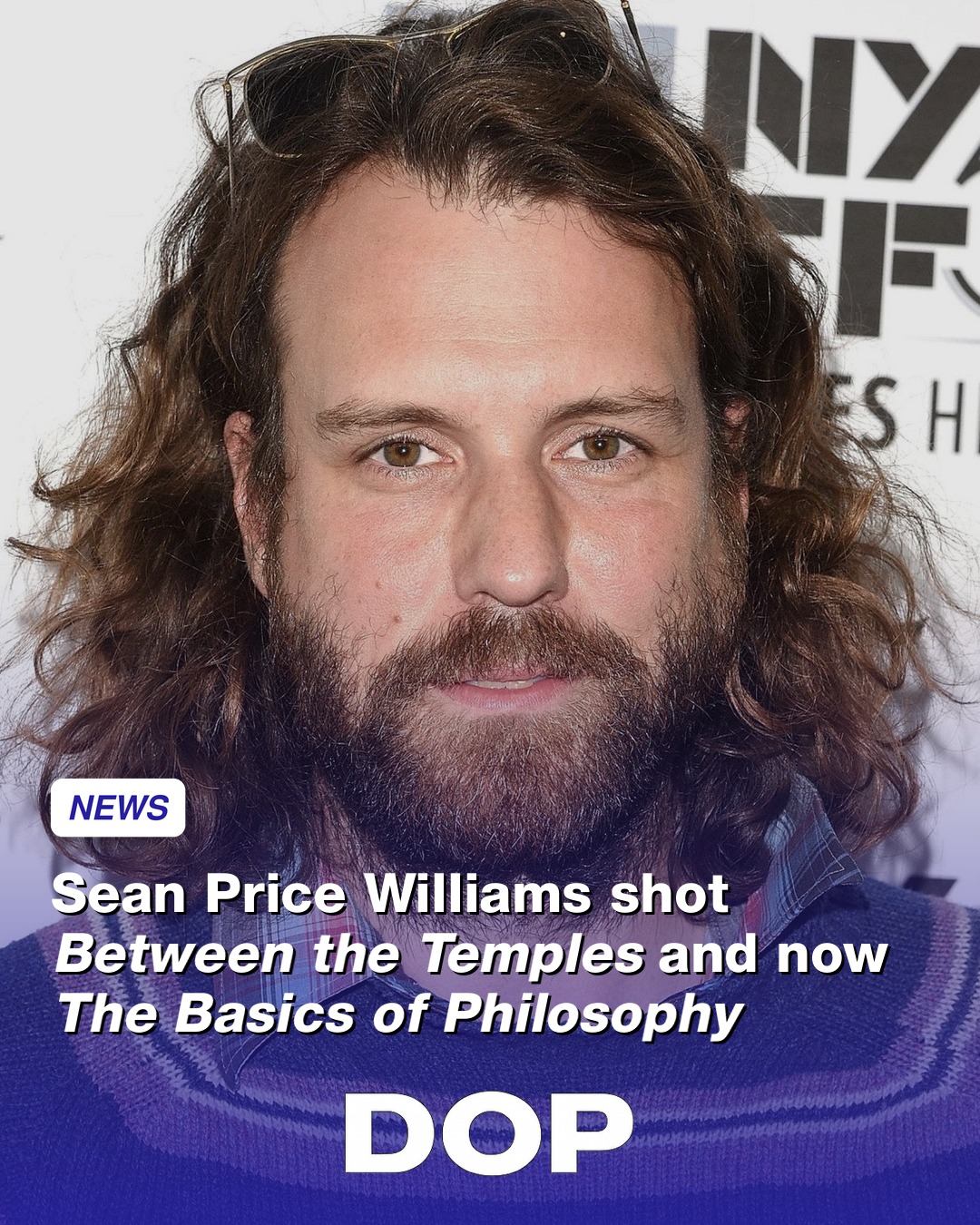
In the often-homogenized landscape of modern cinema, certain voices cut through with an undeniable authenticity, a visual signature that feels both deeply personal and universally resonant. Sean Price Williams is unequivocally one of those voices. With the impending premiere of Paul Schrader's The Basics of Philosophy at Venice, shot by Williams, the industry once again turns its gaze to a cinematographer whose work consistently defies easy categorization, prioritizing emotional truth over pristine polish.
Williams's collaboration with Schrader is particularly intriguing, given Schrader's long-standing exploration of existential angst and the 'man in a room' archetype. One can anticipate a visual language that will be stark, unflinching, and intimately tied to the psychological turmoil of Jack Huston's philosophy professor. Williams’s hallmark is his ability to imbue everyday spaces with a sense of lived-in reality, often using available light or practicals to sculpt an environment rather than overtly paint it. This approach fosters a rawness that is less about technical perfection and more about capturing the visceral, unvarnished truth of a moment.
The Grain of Truth: A Stylistic Signature
To understand Williams's impact, one must look beyond the immediate project. His filmography is a testament to a consistent, evolving philosophy. In films like Alex Ross Perry’s Her Smell, Williams masterfully leveraged the inherent characteristics of 16mm film stock, often pushed, to convey the chaotic, drug-fueled descent of Elisabeth Moss’s rock star. The grain isn't merely an aesthetic choice; it becomes a textural representation of psychological distress, a visual metaphor for the character's unraveling. The handheld immediacy, the often-tight framing, and the kinetic energy of the camera work in Her Smell are direct extensions of the narrative’s frenetic pulse.
“For me, cinematography is about finding the inherent character of the light and letting it speak, not forcing it into submission. It’s about being present with the actors and the story.”
His work on Nathan Silver’s Between the Temples, while perhaps more contained than Her Smell, likely continues this exploration of character-driven intimacy. Williams possesses a rare gift for capturing performances in a way that feels unmediated, as if the camera is merely an observer rather than a manipulator. This often involves a preference for longer takes, allowing scenes to breathe and actors to fully inhabit their roles, a technique that requires both trust from the director and an almost telepathic understanding between DP and performer.
From Independent Grit to Director's Chair
Williams's recent directorial debut, The Sweet East, which he also photographed, offers an even deeper insight into his complete artistic vision. Here, his visual grammar, honed over years of lensing other directors' stories, takes center stage in his own narrative. The film showcases his continued fascination with American landscapes and the eccentricities of its inhabitants, all rendered through his distinctive, often grainy, and always evocative lens. The freedom of directing his own material undoubtedly allowed for even bolder experiments in visual storytelling, reinforcing his reputation as an auteur of the image.
Consider also his work on Harvest, another recent credit that speaks to his versatility within the independent sphere. While specific details on its visual approach are less publicized, it's safe to assume Williams brought his characteristic blend of naturalism and emotional intensity to the project. He rarely relies on elaborate, stylized lighting setups; instead, his genius lies in his ability to find the drama and mood within existing light, or to augment it subtly to enhance the narrative without drawing undue attention to the craft itself.
Williams’s choice of camera and lenses often reflects this philosophy. While he has worked with digital cameras, his affinity for film, particularly 16mm, is well-documented. The organic texture, the distinct color science, and the tactile quality of film stock perfectly align with his aesthetic of raw reality. When working digitally, he often employs older, characterful lenses that introduce subtle imperfections, flares, fall-off, unique bokeh, that counteract the sometimes clinical perfection of modern sensors, imbuing the image with a more human, less sterile feel. This deliberate choice underscores his commitment to an image that feels handcrafted, lived-in, and emotionally resonant.
As The Basics of Philosophy prepares for its premiere, we anticipate a film that will not only challenge its characters intellectually but also envelop its audience visually in Sean Price Williams’s uniquely captivating and profoundly honest world. His work is a powerful reminder that true cinematic artistry often lies not in flawless execution, but in the courage to embrace imperfection in pursuit of a deeper, more authentic truth.