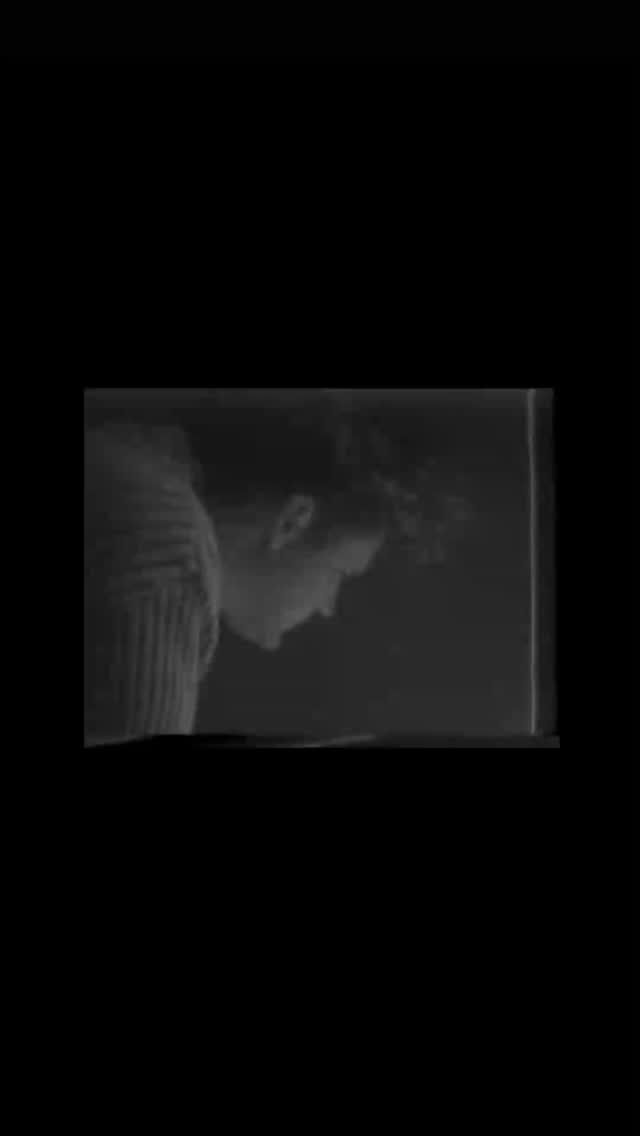
When David Lynch unleashed Eraserhead upon midnight-movie audiences in 1977, cinema was altered forever. It was a film that felt less like a product of Hollywood and more like an artifact dug up from an abandoned factory floor. The suffocating, industrial nightmare that Henry Spencer inhabits owes its existence to Lynch's years living in Philadelphia, a city whose grime, hostility, and desolate architecture burned deeply into the director's psyche. But translating that oppressive atmosphere onto celluloid required an incredible feat of photographic discipline and technical ingenuity.
The visual signature of Eraserhead is defined by its unrelenting, high-contrast monochrome palette. Originally photographed by Herbert Cardwell and finished by Frederick Elmes, ASC, after Cardwell’s tragic passing during production, the film stands as a masterclass in black-and-white tonal control. Shot predominantly on 35mm Kodak Plus-X stock using Mitchell and Arriflex camera packages, the team leaned heavily into dense blacks and razor-sharp specular highlights to construct a world that felt both tactile and detached from reality.
Translating Industrial Decay to High-Contrast 35mm
Achieving the film’s singular look required an almost obsessive approach to light shaping. Elmes and Lynch rejected the forgiving, diffused key lighting that was popular in mid-70s American cinema. Instead, they embraced hard, point-source tungsten units, carefully shaped with small flags, snoots, and custom-cut cutters to cast slivers of light across pitch-black rooms. Sets were often painted in specific grays and deep matte blacks to swallow spill, forcing the viewer’s eye strictly where the cinematographers commanded.
The lighting setups were notoriously slow and painful to execute. In Henry’s claustrophobic apartment, single bare bulbs and concealed inkies provided minimal base exposure, pushing the 35mm stock to its absolute limit while keeping shadow areas completely clean of light pollution. This meticulous contrast management meant that every texture, from the peeling wallpaper to the grease on a dinner plate, felt laden with psychological weight.
In Eraserhead, shadow is not merely the absence of light; it is a physical, suffocating material sculpted frame by painstaking frame.
Precision Under Financial Siege
What makes the visual accomplishment of Eraserhead even more astonishing is the harrowing conditions under which it was made. Just three months into production at the American Film Institute’s Greystone Mansion stables, the budget evaporated entirely. Production ground to a screeching halt, freezing the set in time. Most indie projects would have collapsed under this weight, but Lynch and Elmes refused to compromise their vision or simplify their lighting schemes to speed up shooting.
The film was kept alive over a grueling four-year period through sheer passion and the extraordinary generosity of production designer Jack Fisk and his wife, actress Sissy Spacek. Spacek and Fisk routed portions of their own paychecks directly to the production, allowing Lynch to buy 35mm short ends and pay for small laboratory runs. This piecemeal workflow meant that lighting setups had to be meticulously mapped and logged in continuity notebooks so that scenes shot months, or even years, apart matched seamlessly in contrast and grain structure.
A Blueprint for Atmospheric Storytelling
This agonizingly slow pace ultimately worked to the film's artistic advantage. It allowed Frederick Elmes and Lynch the time to experiment with slow exposure tricks, subtle optical effects, and deep-focus compositions that gave the film its dreamlike logic. Elmes would go on to shoot Blue Velvet and Wild at Heart for Lynch, as well as masterpieces for Jim Jarmusch and Ang Lee, but his work on Eraserhead remains a foundational text in atmospheric lighting.
For modern cinematographers working in an era of high-ISO digital sensors and quick turnarounds, Eraserhead serves as a vital reminder of the power of intent. True visual mood is not created by accident or added in post-production; it is carved out of the darkness with light, patience, and unyielding devotion to the frame.