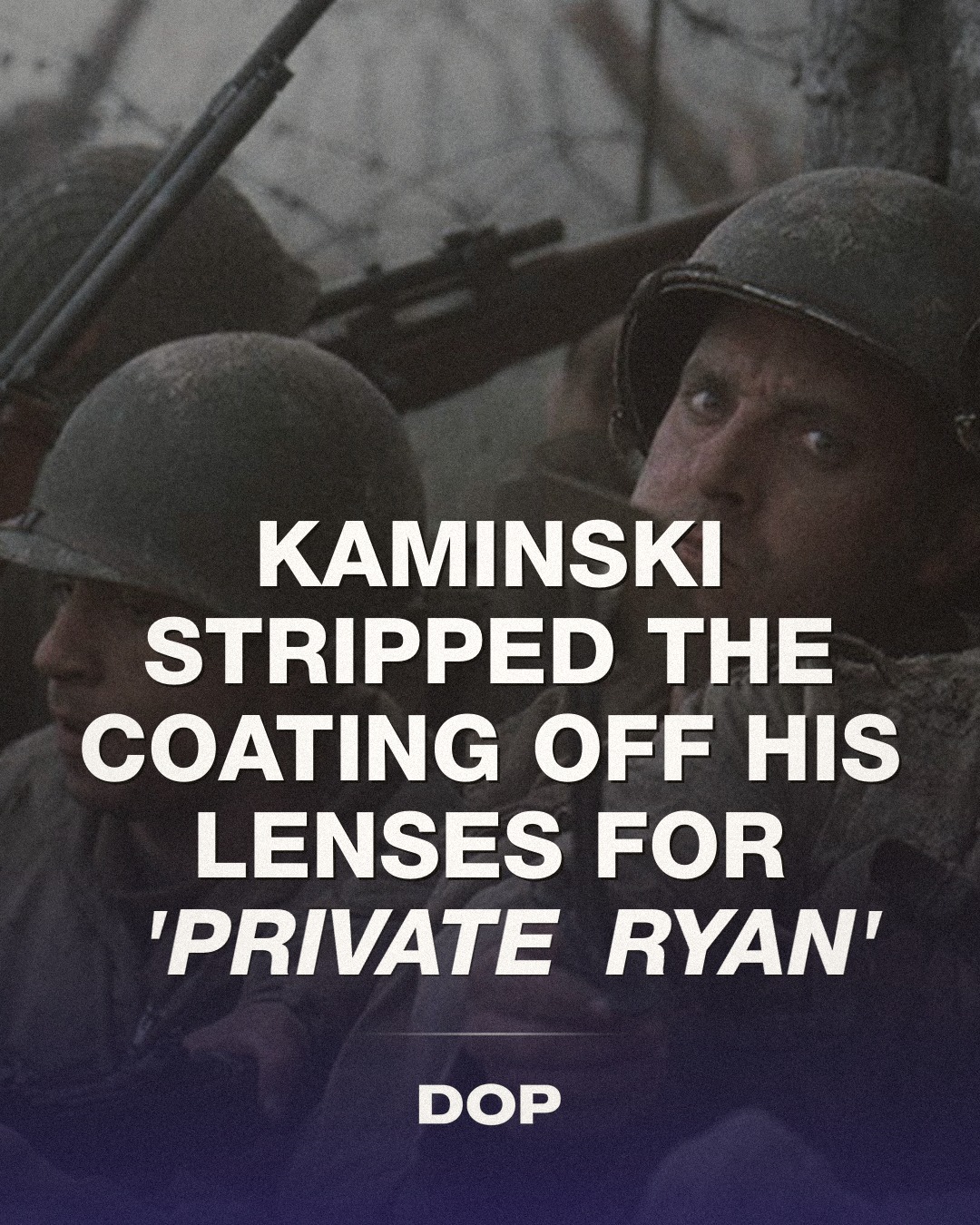
When Steven Spielberg and Janusz Kaminski set out to depict the D-Day landings in Saving Private Ryan, they weren't aiming for conventional cinematic beauty. Their goal was a visceral, unflinching, and historically resonant portrayal of chaos, fear, and the brutal reality of war. The resulting aesthetic, particularly the iconic Omaha Beach sequence, was a masterclass in intentional deconstruction, a deliberate breaking of established cinematographic rules to forge a new visual truth.
Kaminski, already a frequent collaborator with Spielberg, understood that the standard Hollywood approach to battle scenes, clean, epic, and often romanticized, would betray the film's core intent. His vision was to transport the audience directly into the 1944 battlefield, echoing the raw, immediate quality of period newsreels. This wasn't achieved through mere stylistic flourishes; it was a deeply technical, almost surgical dismantling of the cinematic image, starting with the very glass capturing it.
The 'Broken' Lens: A Gateway to Gritty Realism
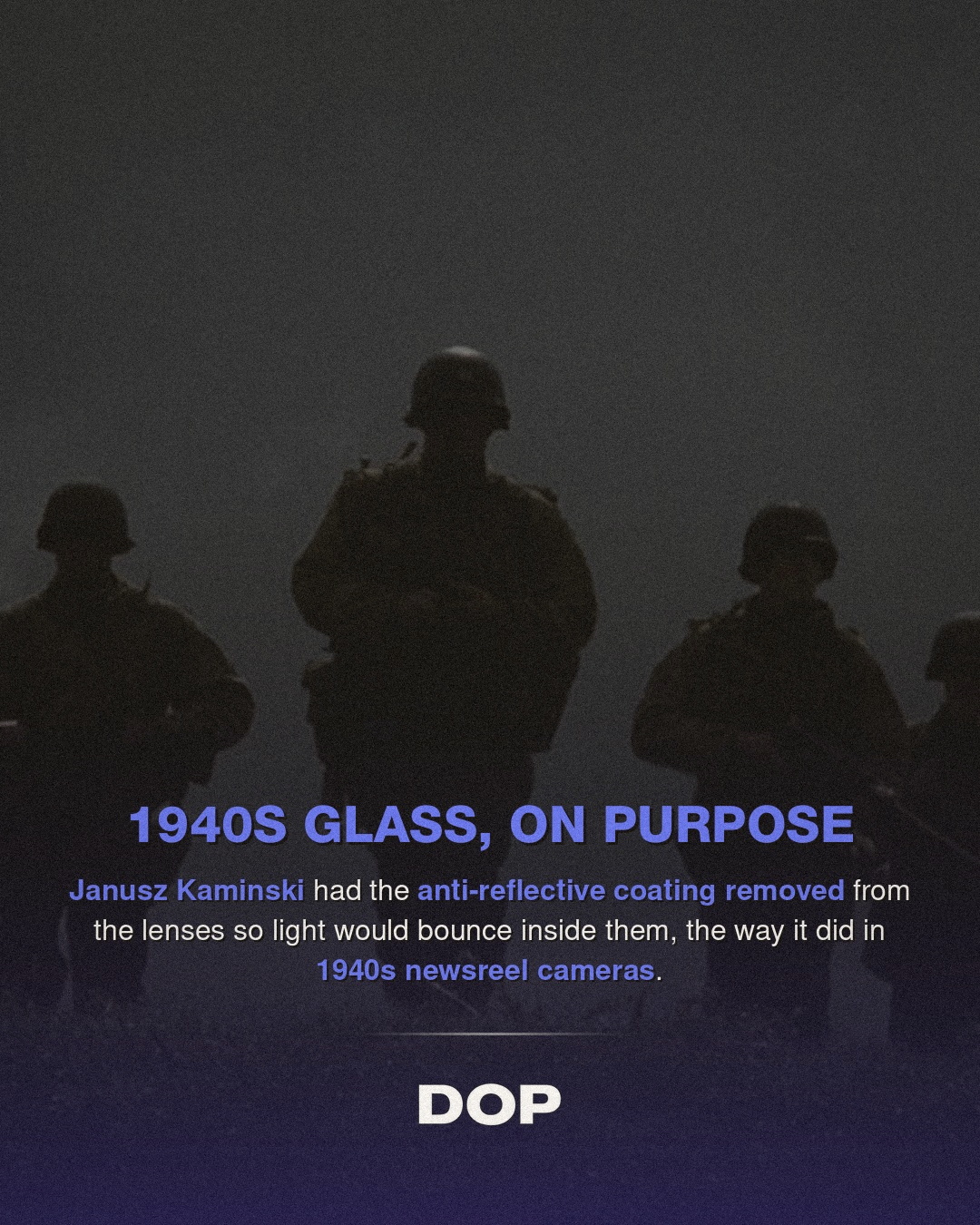
One of the most radical decisions Kaminski made involved the primary tool of his trade: the lens. He famously had the anti-reflective coating stripped from his lenses. This wasn't an act of vandalism but a brilliant, calculated move to mimic the optical characteristics of vintage photographic equipment. Modern lens coatings are designed to reduce internal reflections and increase contrast, yielding a cleaner, sharper image. By removing them, Kaminski intentionally introduced lens flare, halation, and a subtle desaturation effect directly into the negative. This allowed light to scatter and bounce within the lens elements in a manner reminiscent of 1940s newsreel cameras, imbuing the footage with an immediate, almost documentary feel. It created a visual texture that felt aged, imperfect, and jarringly authentic, instantly distancing the film from the polished look of contemporary blockbusters.
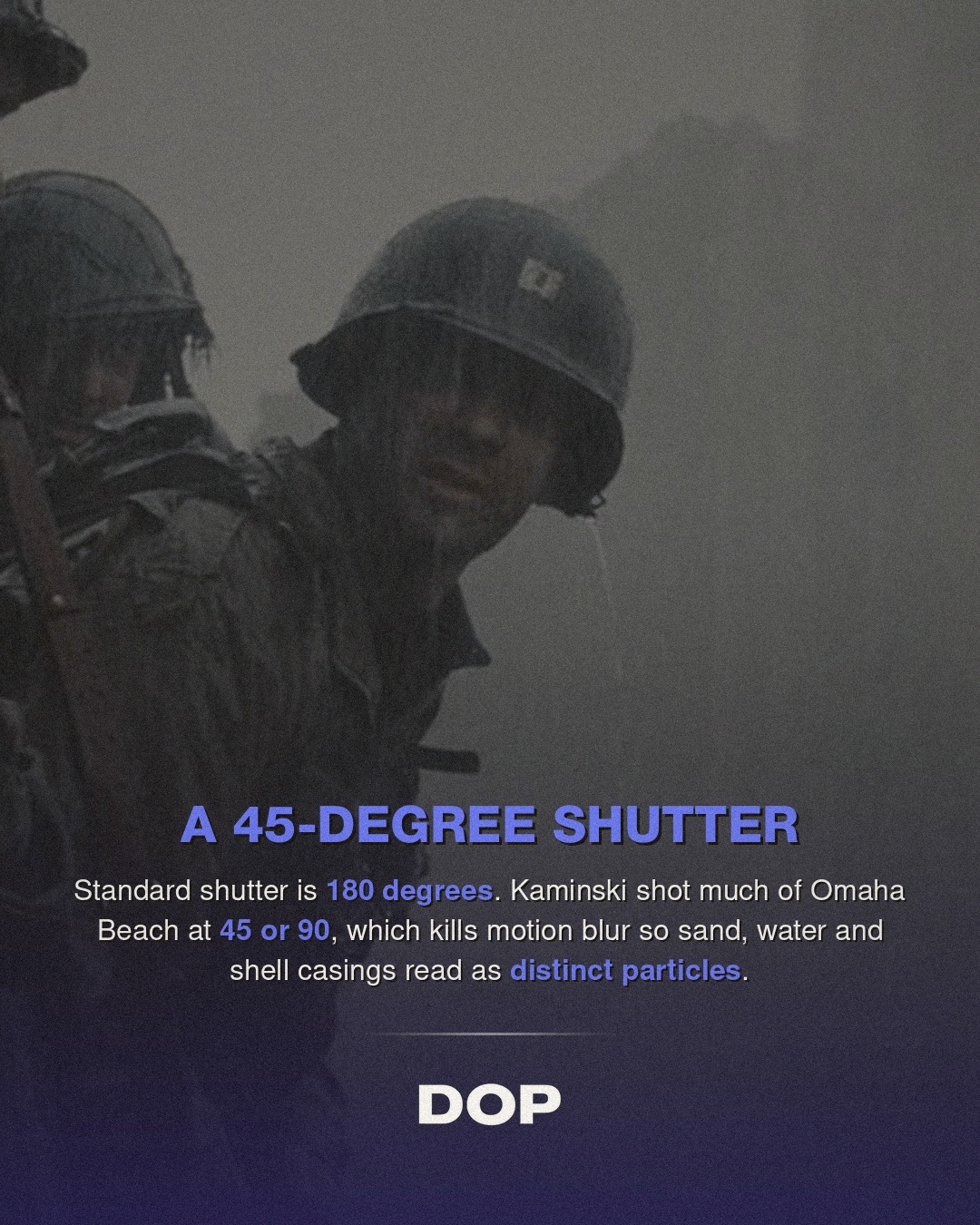
This 'broken' lens approach was complemented by unconventional shutter angles. While the industry standard for smooth motion blur is a 180-degree shutter, Kaminski shot much of the Omaha Beach sequence at 45 or 90 degrees. This dramatically reduced motion blur, creating a staccato, almost hyper-real effect. Each individual grain of sand, every splash of water, every shell casing became a distinct, sharp entity, even amidst rapid movement. The effect is disorienting, amplifying the chaos and making the viewer acutely aware of every violent impact. It’s a technique that forces the eye to process information differently, mirroring the sensory overload of combat. It’s a testament to Kaminski’s courage and Spielberg’s trust that such a fundamental departure from convention was embraced.
"Kaminski’s 'broken' lens approach and aggressive shutter angles were not mere stylistic choices; they were a profound philosophical statement about how war should be seen, felt, and remembered on screen."
The Post-Production Alchemy: Desaturation and Deepening Contrast
The visual transformation didn't end in-camera. The film prints then underwent a specialized process known as ENR (Eastman Kodak Negative Retouching) at 70 percent. This photochemical process, typically used for increasing contrast and deepening blacks, was applied with a specific intensity to strip saturation from the image while simultaneously enhancing its density and grit. The result was a muted, almost monochromatic palette, dominated by desaturated greens, grays, and browns, with reds appearing as stark, almost alien splashes. This choice further grounded the film in a stark reality, eschewing the vibrant, heroic color schemes often associated with war epics. The desaturation made the violence feel colder, more clinical, and undeniably real, while the deepened contrast added a palpable sense of weight and despair to the visuals.
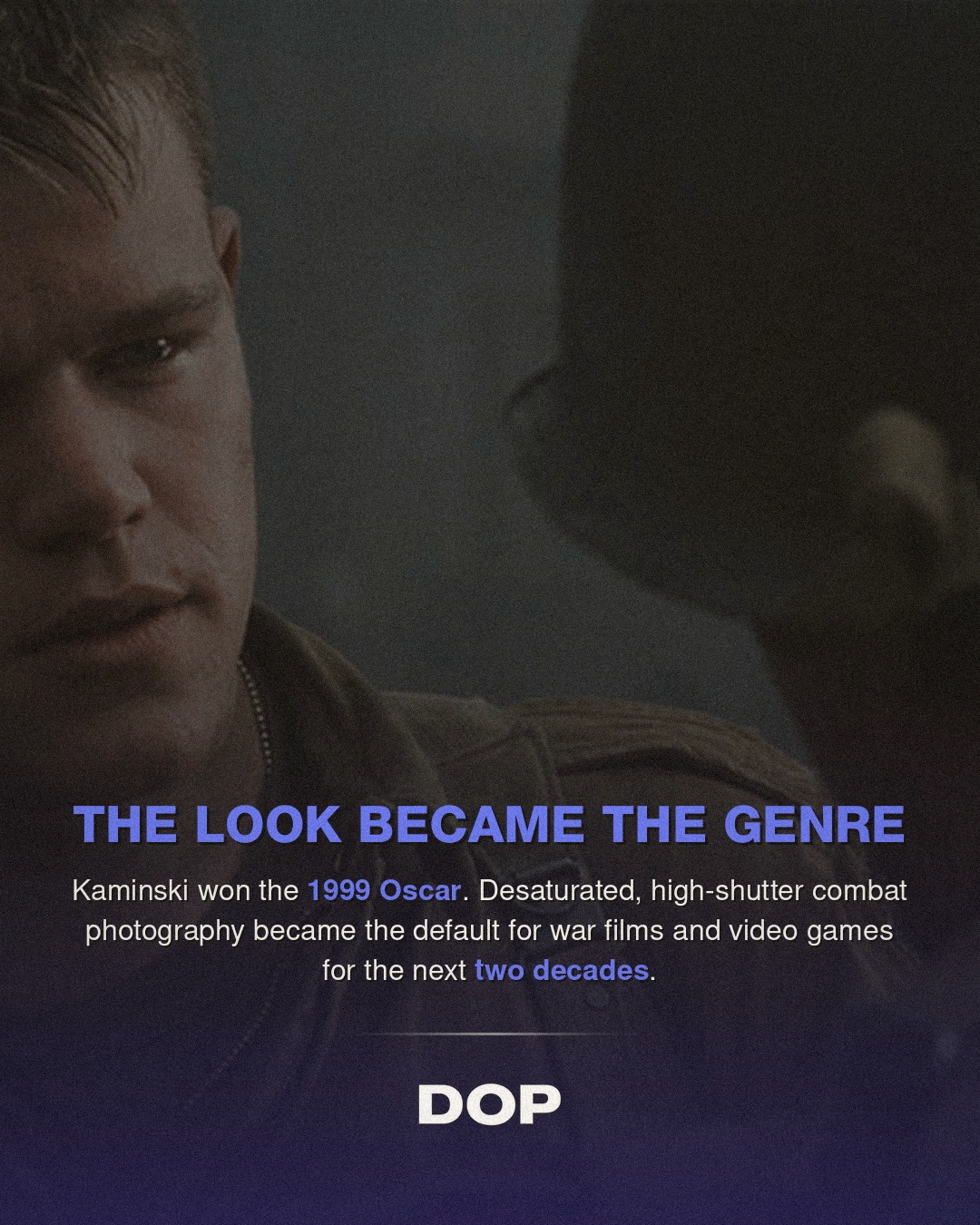
Kaminski’s lighting philosophy also played a crucial role. Opting for a naturalistic, often overcast look, he avoided dramatic, theatrical lighting. Instead, he embraced the diffuse, often flat light of the real world, further enhancing the documentary feel. This was particularly evident in the beach scenes, where the natural, often harsh daylight was allowed to define the environment, rather than being sculpted by artificial means. The combination of these in-camera and post-production techniques created a look that was revolutionary, earning Kaminski his second Academy Award for Best Cinematography in 1999.
A Lasting Legacy: Reshaping War Cinema
The impact of Saving Private Ryan’s cinematography was immediate and profound. Its desaturated, high-shutter aesthetic became the default visual language for war films for the next two decades. From Band of Brothers to Black Hawk Down, and countless others, the 'Kaminski look' became shorthand for authenticity and grit in depicting conflict. While some might argue that this led to a certain homogenization of war film aesthetics, it undeniably elevated the standard for visual realism and emotional impact in the genre.
Kaminski, a master of light and shadow, consistently pushes boundaries. His work, whether on the stark black and white of Schindler's List or the vibrant hues of Bridge of Spies, showcases a profound understanding of how visual choices serve narrative and emotional truth. In Saving Private Ryan, he didn't just photograph a story; he crafted an experience, stripping away the artifice of cinema to lay bare the brutal heart of war. His intentional 'breaking' of the camera created an image that is not merely seen, but felt, a powerful testament to the transformative power of purposeful cinematography.