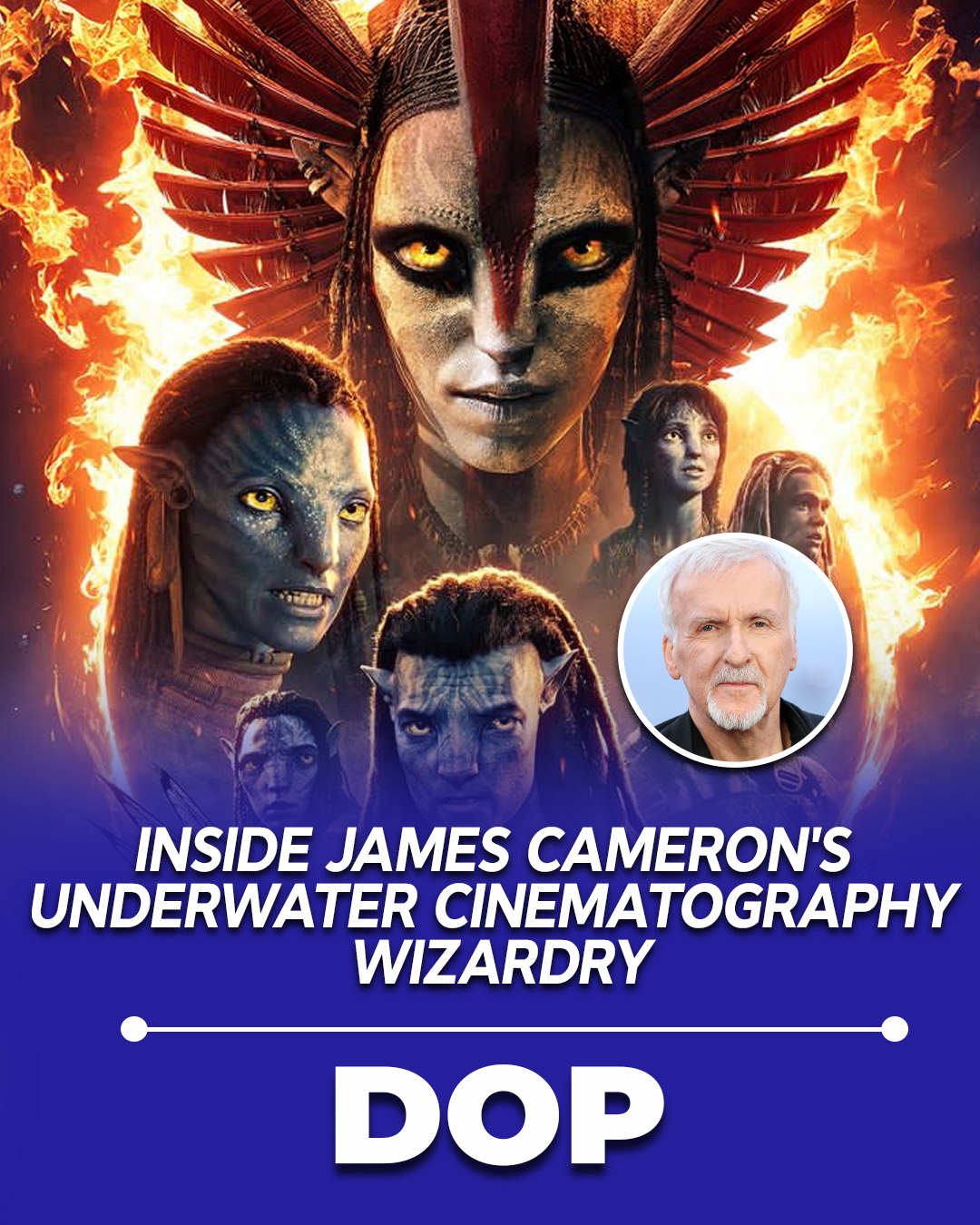
The announcement that Russell Carpenter ASC is once again joining James Cameron for Avatar: Fire and Ash sends a ripple of excitement through the cinematography community. This isn't just another sequel; it's a continuation of a groundbreaking visual odyssey, and Carpenter's presence guarantees a masterful hand at the helm of Cameron's ambitious vision. His Academy Award-winning work on Titanic cemented his status, but his ongoing collaboration on the Avatar saga has truly showcased his adaptability and pioneering spirit, navigating the uncharted waters of virtual production and immersive 3D.
Carpenter's relationship with the Avatar universe began in earnest with The Way of Water, where he was tasked with translating Cameron's hyper-realistic underwater worlds into a believable, emotionally resonant spectacle. This wasn't merely about capturing images; it was about designing a visual language from the ground up, working within the confines and possibilities of custom-built 3D camera systems. The technical demands were immense, requiring a deep understanding of stereoscopy, performance capture, and the nuanced interplay of light in an entirely digital environment. His success lay in making the technology invisible, allowing the audience to be fully immersed in Pandora's aquatic splendor.
The Evolution of a Visual Language
For Fire and Ash, Carpenter's challenge is two-fold: maintaining the visual consistency established in the previous films while pushing the boundaries into new territories. Pandora is a world of incredible biodiversity and extreme environments, and each new locale demands a specific visual signature. We can anticipate new lighting conditions, perhaps exploring volcanic landscapes or other elemental extremes hinted at by the film's title. This requires not just technical prowess but an artist's eye for color, texture, and mood, ensuring that these new environments feel organic and integral to the established aesthetic.
"The beauty of working on Avatar is that you're constantly inventing, constantly pushing the boundaries of what's possible. It's a cinematographer's dream and nightmare all at once."
Consider the lighting philosophy employed in The Way of Water. Carpenter and his team meticulously crafted the underwater light, often replicating the complex caustics and refractions that define marine environments. This wasn't achieved through simple digital overlays but through a combination of practical lighting on set for performance capture and sophisticated digital rendering, all guided by Carpenter's keen eye. The result was a world that felt tangible, where light played a crucial role in defining depth, atmosphere, and the very texture of the water itself.
Technical Mastery and Artistic Vision
The core of the Avatar films' visual identity lies in their pioneering use of performance capture and virtual production. Carpenter's role extends beyond traditional cinematography; he is an architect of the digital frame. He operates within a virtual camera system, composing shots and directing digital light sources in a way that blurs the line between live-action and animation. This demands not just an understanding of photographic principles but also a profound grasp of computer graphics and real-time rendering. The custom 3D camera systems, often developed in-house by Cameron's Lightstorm Entertainment, are extensions of Carpenter's artistic will, allowing him unprecedented control over the stereoscopic image.
The choice of sensor and lens character in a fully digital pipeline is a fascinating discussion. While the final image is rendered, the initial capture of actor performances and practical elements still relies on high-resolution cameras, often large format, that provide the foundational data. Carpenter's experience with various camera systems, from the Super 35 film he utilized on Titanic to the digital behemoths of today, informs his approach to texture, depth of field, and dynamic range. He understands how different 'virtual lenses' can affect the emotional impact of a scene, even when those lenses exist primarily in software.
As Avatar: Fire and Ash moves into production, we can anticipate Carpenter's signature blend of technical innovation and classical cinematic storytelling. He's not just operating a camera; he's orchestrating an entire visual ecosystem, ensuring that every frame contributes to the immersive, emotional journey of the audience. His continued collaboration with Cameron is a testament to his ability to not only meet but exceed the demands of the most visually ambitious projects in cinema today. The future of Pandora's visual splendor is in exceptionally capable hands.
This article contains affiliate links. We may earn a small commission at no extra cost to you. Learn more.