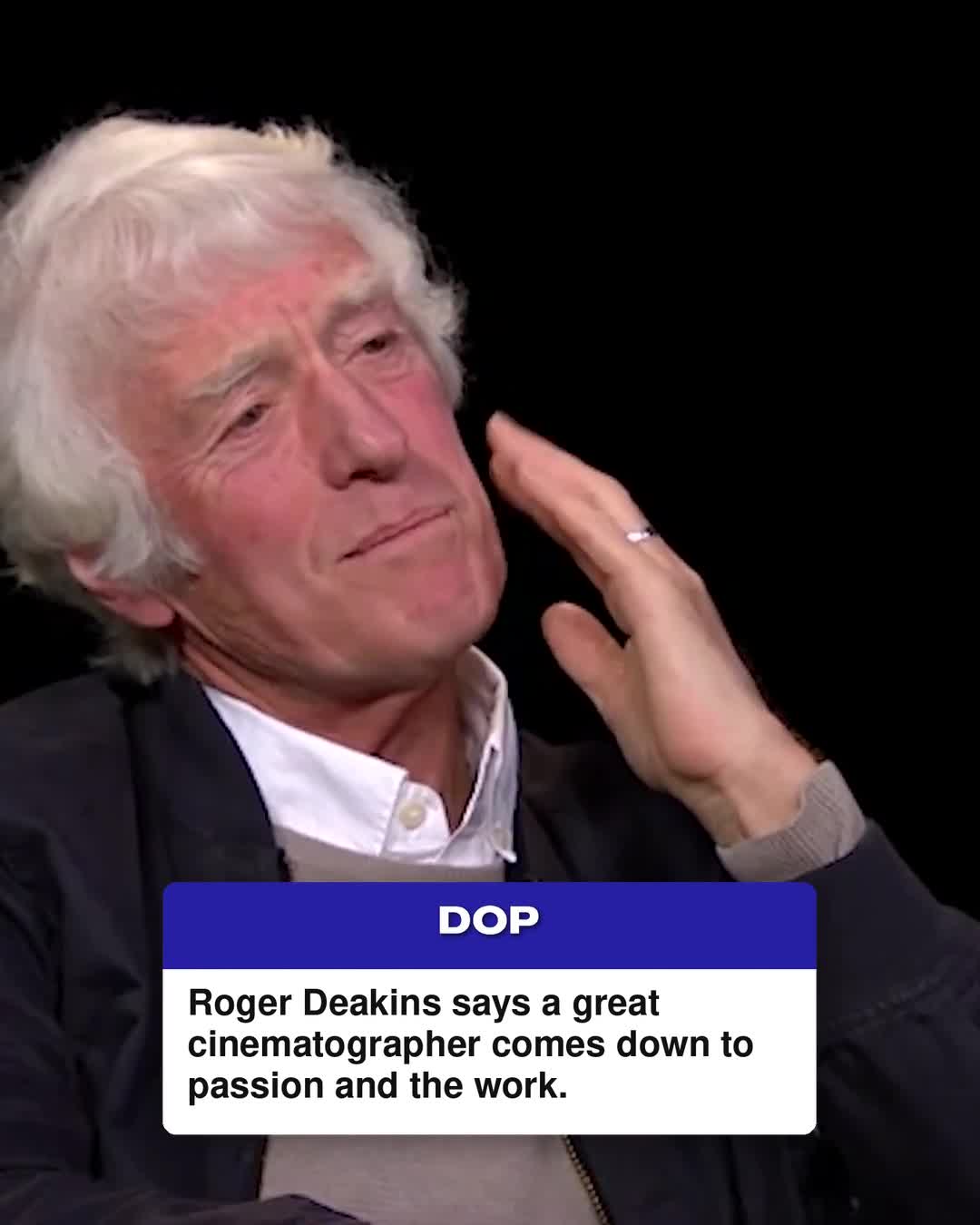
In an industry often obsessed with the latest gear, proprietary techniques, and the elusive 'eye' of a cinematographer, it's refreshing to hear a titan like Roger Deakins distill the essence of great work to something as fundamental as passion. When posed with the question of what qualities define a great cinematographer beyond intuition, Deakins, with characteristic humility and directness, flipped the inquiry on its head. His answer was simple, yet profound: passion. This isn't just about liking what you do; it’s about an all-consuming drive that permeates every decision, every frame, and every collaboration.
Deakins' statement resonates deeply within the hallowed halls of cinematography. It speaks to the countless hours spent meticulously planning a shot, the dedication to understanding the nuances of light, and the relentless pursuit of visual storytelling that elevates a mere sequence of images into a cinematic experience. For Deakins, whose filmography includes masterpieces like Blade Runner 2049, 1917, The Shawshank Redemption, and No Country for Old Men, this passion isn't a theoretical concept; it's the bedrock of his unparalleled career. His work consistently showcases a profound commitment to serving the story, employing light and shadow not as mere embellishments, but as integral narrative elements.
The Deakins Doctrine: Craft Over Glamour
To understand Deakins' perspective, one must look at his approach. He's famously pragmatic, often opting for simplicity and efficiency over ostentation. While he's certainly no stranger to cutting-edge technology, his pioneering work with virtual production on 1917 is legendary, his choices are always driven by creative necessity, not trend. Take his preference for certain camera systems; while he's wielded everything from the Arricam ST to the Alexa 65, his choice is always about the specific project's needs. For Sicario, for instance, the gritty realism demanded a certain aesthetic, often achieved through natural light and subtle fill, leveraging the Alexa's dynamic range to capture desolate landscapes and tense interiors with stark clarity.
His lighting philosophy, too, is a testament to this passion for the craft. Deakins rarely employs elaborate, over-lit setups. Instead, he sculpts light, often from single sources or carefully placed practicals, to create mood and depth. He understands that light isn't just illumination; it's emotion. The haunting, ethereal glow in The Assassination of Jesse James by the Coward Robert Ford, often achieved through natural light augmented by soft bounces and subtle tungsten units, perfectly encapsulates the film's melancholic tone. This meticulous yet understated approach requires an immense passion for observation and an almost spiritual connection to the interplay of light and shadow.
“The great films, like any artist's work, come down to passion and the work itself, and that he does not think it is anything else.”
Beyond the Gear: The Soul of Cinematography
Deakins’ emphasis on passion transcends the technical. It’s about the soul of cinematography. It’s the drive that pushes a DP to experiment with lens choices, perhaps favoring the slightly softer, more organic fall-off of older anamorphic glass for a period piece, or the clinical precision of modern sphericals for a sci-fi epic. It’s the commitment to understanding color science, not just as a post-production tweak, but as an intrinsic part of image capture, shaping the look from the moment light hits the sensor. His consistent collaboration with colorist Peter Doyle further exemplifies this dedication, ensuring that the initial vision carries through to the final grade with integrity.
This passion is what fuels the endless learning, the adaptation to new challenges, and the resilience needed to navigate the demanding environment of a film set. It’s the internal fire that compels a cinematographer to push boundaries, to find innovative solutions, and to constantly refine their visual language. It’s not just about the technical execution, but about the emotional investment in every frame, ensuring that the visual narrative serves the overarching story with authenticity and impact. In Deakins' world, intuition is honed by experience, but it is ignited and sustained by an unyielding passion for the art of telling stories with light.
So, for aspiring DPs and seasoned veterans alike, Deakins' plainspoken truth serves as a powerful reminder. While mastering the tools and techniques is essential, the true differentiator, the quality that elevates good work to great, is an enduring, relentless passion for the craft. It's the silent force that drives the pursuit of perfection, the courage to innovate, and the dedication to making every frame count. In an industry that often prioritizes the tangible, Deakins reminds us that the most vital ingredient is profoundly intangible: the heart you pour into the work itself.