In an era where digital perfection often reigns supreme, the work of cinematographers like Rob Hardy, ASC, BSC, serves as a vital reminder that true artistry often lies in the embrace of imperfection. His approach to lensing Supergirl is a masterclass in this philosophy, building upon a distinctive visual language he has honed over years, most notably in his collaboration on Blade Runner 2049. Hardy’s choices for Supergirl, from camera and lenses to lighting and composition, are not merely technical specifications; they are bold artistic statements that challenge conventional wisdom and redefine what a superhero narrative can look like.
The foundational choice for Supergirl, the Sony VENICE 2 with its 8K sensor, immediately signals a commitment to resolution and detail. However, Hardy’s pairing of this cutting-edge digital workhorse with Panavision Auto Panatar anamorphics, described as “genuinely old glass,” reveals a profound understanding of lens character. These vintage anamorphic lenses, with their inherent aberrations, unique bokeh, and organic flares, introduce a layer of imperfection that the digital sensor meticulously captures. Hardy's refusal to have them 'detuned' is crucial; it means he actively sought to preserve their original, untamed characteristics, the very qualities that modern lenses often strive to eliminate. This decision creates a rich, textural image that feels both contemporary in its clarity and timeless in its optical personality, a deliberate juxtaposition that grounds the fantastical elements of the story in a tangible, almost nostalgic reality.
The Intentional Embrace of 'Misbehaving' Light
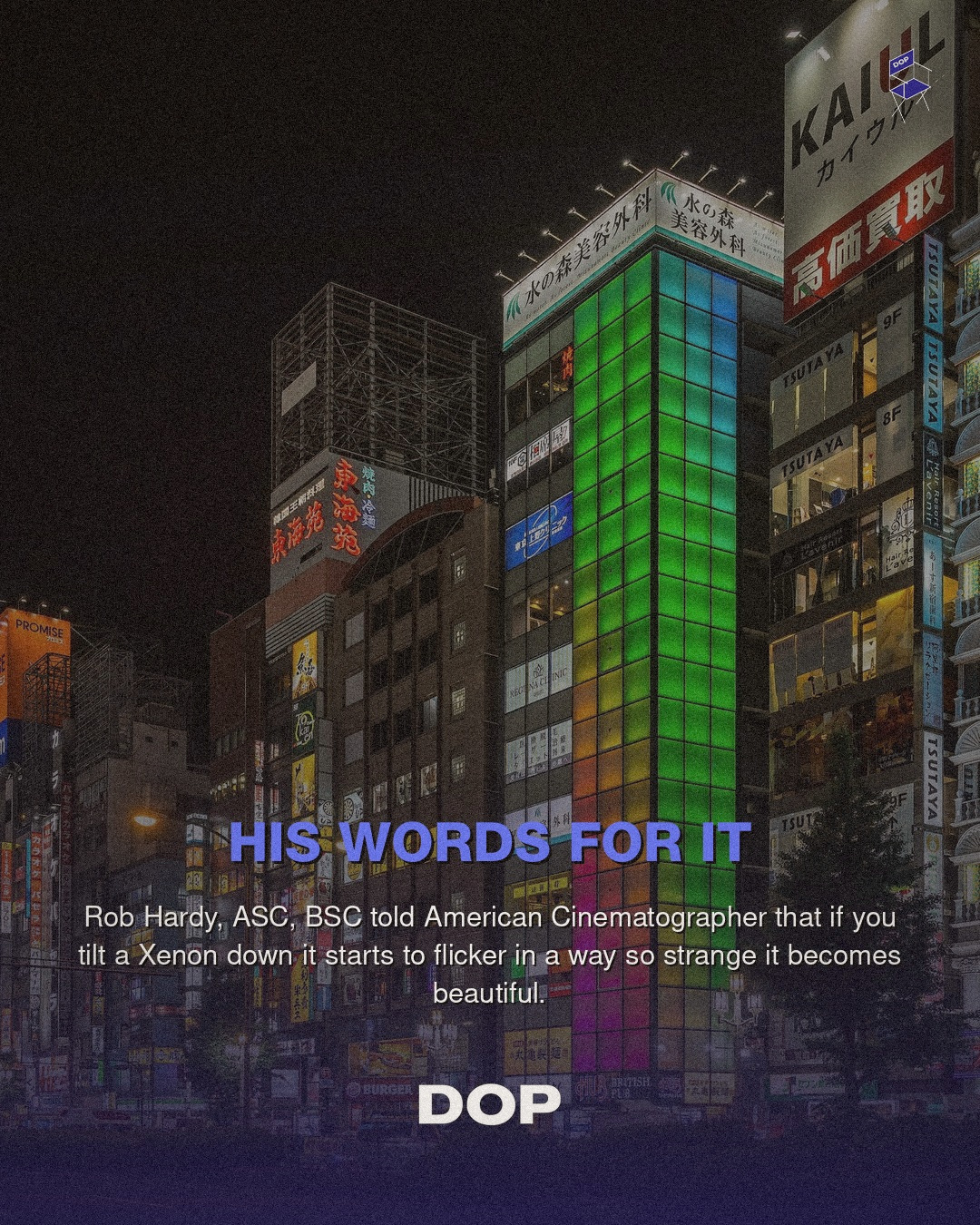
Perhaps no aspect of Hardy's methodology for Supergirl is more emblematic of his artistic courage than his lighting philosophy. Drawing directly from his experience on Blade Runner 2049, where he worked alongside the legendary Roger Deakins, Hardy leaned heavily into the use of Xenon and neon sources. These aren't just arbitrary choices; Xenon lamps, known for their powerful, often harsh, and sometimes unstable output, and neon, with its distinct color casts and graphic linearity, are tools that require a deep understanding of light to harness effectively. His commitment to lighting sets a full 360 degrees further underscores a desire for immersive, volumetric illumination, allowing actors and cameras to move freely without encountering flat, unmotivated shadows.
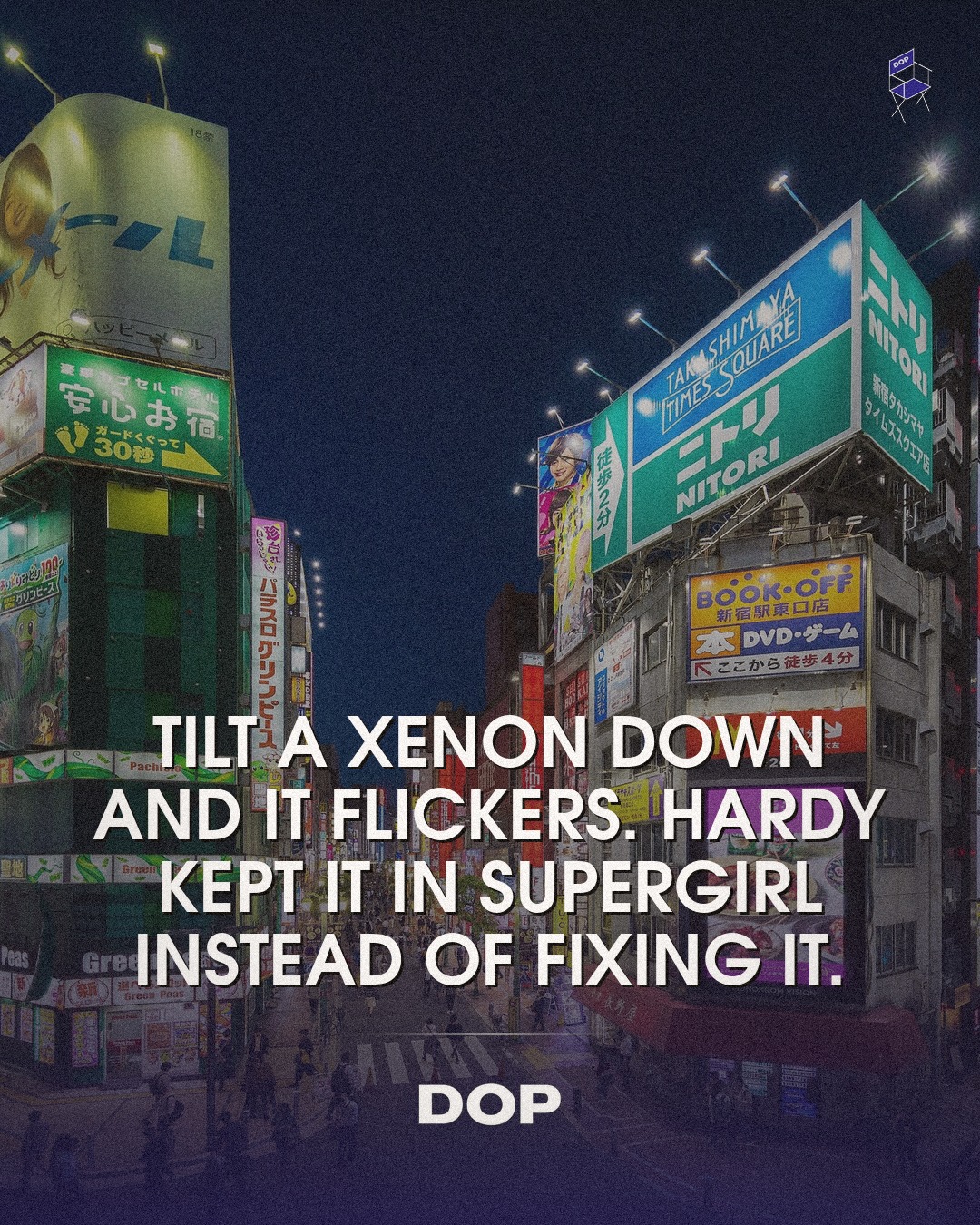
A lamp that misbehaves can be the shot. Tilting a Xenon down makes it flicker so strangely it becomes beautiful, and he kept it.
The anecdote shared in American Cinematographer regarding a Xenon lamp that “misbehaved” perfectly encapsulates Hardy's approach. When a Xenon, tilted down, began to flicker strangely, many cinematographers might have immediately sought to correct or replace it. Hardy, however, recognized the inherent beauty in this flaw, choosing to keep it. This isn't just about serendipity; it's about an acute visual sensibility that can identify and integrate unexpected optical phenomena into the narrative. This 'misbehaving' light becomes more than just illumination; it becomes a character in itself, imbuing scenes with an unpredictable, visceral energy that can heighten tension, convey unease, or simply add a unique visual signature.
Composing for Dual Screens: A Technical and Artistic Challenge
Another fascinating technical constraint Hardy embraced was the simultaneous composition for both the standard 2.39:1 widescreen aspect ratio and the taller 1.90:1 IMAX frame. This is no small feat. It demands a rigorous discipline in framing, ensuring that key information, leading lines, and emotional beats are preserved and compelling in two vastly different aspect ratios. It requires a deep understanding of negative space and how it will be perceived in both formats. This dual-frame approach speaks to Hardy's meticulous planning and his ability to foresee how his images will translate across diverse viewing experiences, from a traditional cinema screen to the towering immersive presence of IMAX. It’s a testament to his comprehensive vision, where every element, from the choice of glass to the placement of light, serves a larger, multi-platform storytelling purpose.
The visual signature of Rob Hardy is one of controlled chaos, of intentional imperfection. His work on Supergirl, much like his contributions to Blade Runner 2049, demonstrates a cinematographer who isn't afraid to push boundaries, to prioritize character and mood over sterile perfection. He understands that the soul of an image often resides in its texture, its flaws, and its unique optical fingerprint. By pairing the formidable resolution of the VENICE 2 with the idiosyncratic charm of vintage Panavision glass, by embracing the raw, unpredictable power of Xenon and neon, and by meticulously composing for multiple aspect ratios, Hardy isn't just shooting a film; he's crafting a visual manifesto. He reminds us that sometimes, the most beautiful images are born when a lamp, or indeed an entire approach, dares to misbehave.
This article contains affiliate links. We may earn a small commission at no extra cost to you. Learn more.