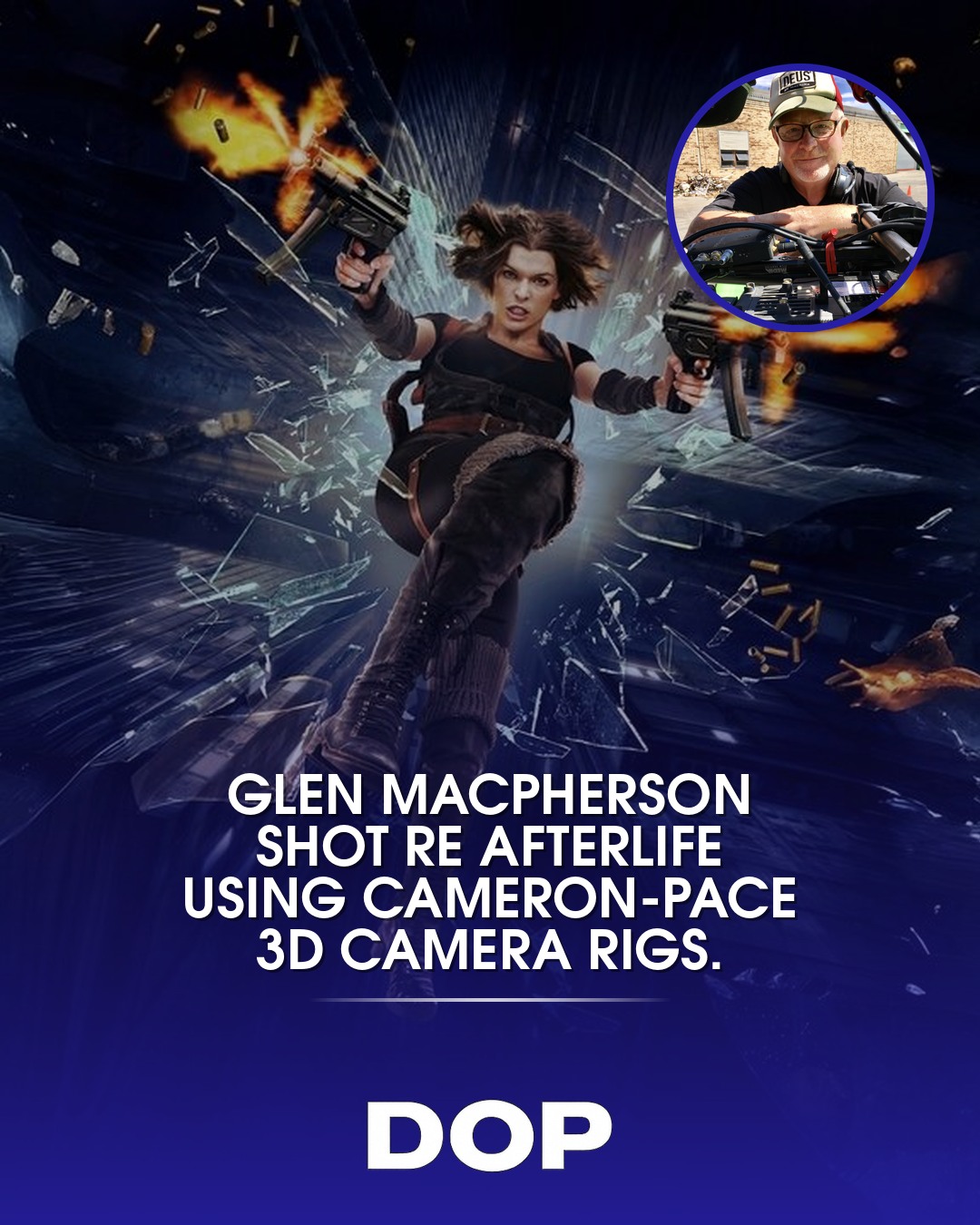
In the annals of cinematic innovation, there are moments when technological leaps intersect with artistic ambition, forever altering the visual landscape. One such confluence occurred with 2010's Resident Evil: Afterlife, a film that, despite its genre trappings, stands as a pivotal chapter in the history of native 3D cinematography. At its helm was Director of Photography Glen MacPherson, CSC, tasked with translating Paul W.S. Anderson's kinetic vision through the formidable lens of the Fusion Camera System, a technology synonymous with James Cameron's own pursuit of immersive storytelling.
The Fusion Camera System, also known as the Cameron-Pace 3D system, was a beast of a rig. Unlike later, more streamlined stereoscopic solutions, this setup involved two full-sized cameras meticulously aligned to capture the left and right eye perspectives simultaneously. For Afterlife, MacPherson and his team primarily utilized a pair of Sony CineAlta F35 cameras, known then for their excellent dynamic range and color reproduction, feeding into a complex network of stereoscopic processors and monitors. This wasn't merely about mounting two cameras side-by-side; it was an intricate dance of interaxial distance, convergence points, and precise lens matching, all managed in real-time on set by dedicated stereo technicians.
Mastering the Stereoscopic Language of Action
MacPherson's challenge was unique: how to integrate this technically demanding system into the fast-paced, often chaotic grammar of a Resident Evil film. The franchise thrives on rapid cuts, dynamic camera movements, and exaggerated action beats. Native 3D, particularly with early systems, often favored slower, more deliberate compositions to allow the audience's eyes to adjust to the depth. MacPherson, however, worked closely with Anderson to defy these conventions, demonstrating that stereoscopic imagery could not only keep pace with but also enhance high-octane sequences.
Consider the film's iconic opening sequence or the memorable fight scenes. The precision required for stereo convergence across these rapid edits was paramount. A slight misalignment or an errant convergence point could shatter the illusion, leading to eye strain and a diminished viewing experience. MacPherson's team employed sophisticated on-set tools and a rigorous monitoring pipeline to ensure that each shot maintained comfortable depth cues, even as cameras sped through environments or characters engaged in intense combat. This was not merely technical execution; it was an intuitive understanding of how 3D could be leveraged to amplify impact, pulling the audience deeper into the visceral world of the Umbrella Corporation.
"Working with the Fusion Camera System on Afterlife was like learning a new visual language. Every decision, from lens choice to lighting, had to be filtered through the prism of stereoscopy. It was an immense technical undertaking, but the creative payoff, when done correctly, was undeniable."
The Technical Nuances: Lenses, Lighting, and Depth Management
The choice of lenses for Afterlife was also critical. While the F35s offered a superb canvas, the demands of 3D meant that aberrations, particularly chromatic aberration and geometric distortion, could be amplified and become more noticeable in stereoscopic space. MacPherson and his team likely gravitated towards prime lenses with excellent optical characteristics and minimal breathing, ensuring consistent image quality across both eyes. Wide-angle compositions, often a staple of action films, presented their own set of challenges, requiring careful management of depth to avoid exaggerated perspective or uncomfortable planar separation.
Lighting, too, took on new dimensions. While the fundamental principles remained, the interplay of light and shadow could be exploited to enhance perceived depth. Stronger raking lights, for instance, could accentuate textures and create a greater sense of dimensionality. Conversely, flat lighting could diminish the 3D effect. MacPherson's lighting philosophy on Afterlife skillfully blended practical effects with atmospheric lighting, often utilizing strong backlighting and rim lighting to separate subjects from backgrounds, a technique inherently beneficial for stereoscopic presentation.
The profound impact of Resident Evil: Afterlife lies in its role as a trailblazer. It was one of the first major studio narrative productions to extensively adopt the Cameron-Pace system outside of Cameron's own productions like Avatar. This commitment to native 3D, rather than post-conversion, placed immense responsibility on MacPherson and his crew. Every stereo decision made during principal photography directly impacted the entire post-production and exhibition pipeline. The depth budget, the perceived 'pop' or 'recession' of objects, the comfort levels for the audience – all were meticulously crafted on set. This foresight and technical mastery contributed significantly to the peak of native 3D capture, a period when studios eagerly sought to differentiate theatrical releases and capitalize on the format's commercial surge.
Glen MacPherson's work on Resident Evil: Afterlife serves as a powerful reminder of a time when cinematic innovation was driven by the pursuit of true immersive experiences. It highlights the immense skill and dedication required to master nascent technologies and integrate them seamlessly into the art of visual storytelling. While the fervor for native 3D has since evolved, the lessons learned and the techniques pioneered by cinematographers like MacPherson continue to inform our understanding of depth, perspective, and the boundless possibilities of the cinematic image.