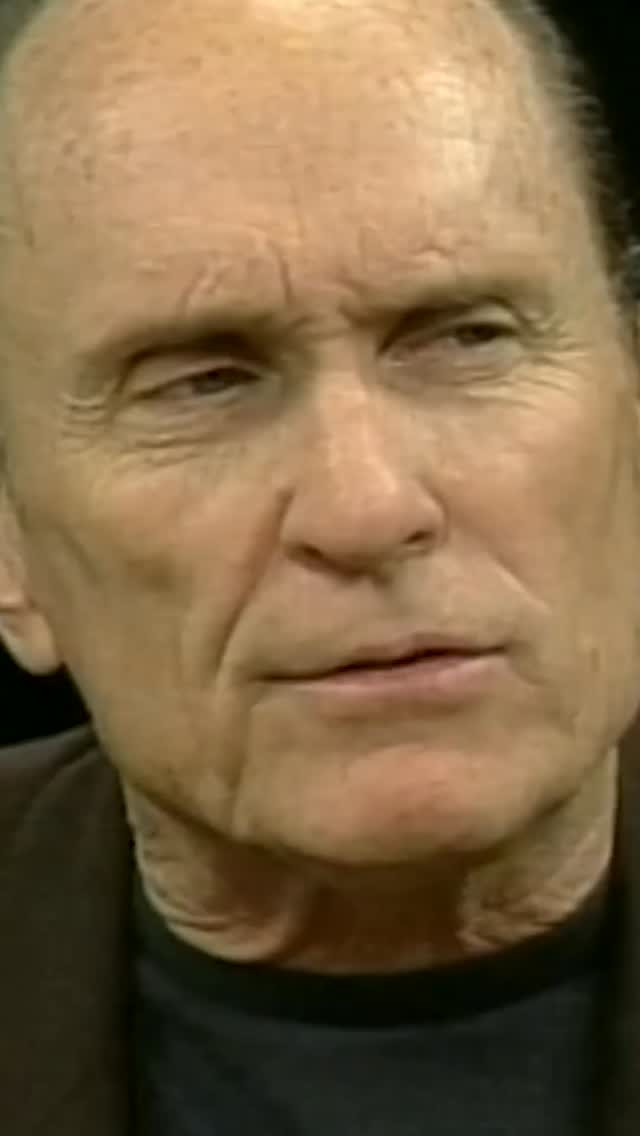
The news of Robert Duvall's passing at 95 years old reverberates through the film community, touching not just the hearts of fans, but the very craft of cinematography itself. Duvall wasn't just an actor; he was a force of nature, a chameleon who inhabited roles with such profound authenticity that he became an extension of the frame. For cinematographers, working with Duvall must have been both a challenge and an immense privilege, an opportunity to capture raw, unfiltered human emotion that few performers could deliver.
His career spanned decades, from his chilling debut as Boo Radley in To Kill a Mockingbird, where the camera meticulously framed his silent, watchful presence, to his iconic portrayal of Tom Hagen in The Godfather saga. In those films, Gordon Willis, ASC, famously embraced deep, often shadowy compositions, and Duvall’s understated power thrived within that visual language. He could convey volumes with a subtle shift in his gaze, a slight clench of his jaw, or a quiet, deliberate movement. These nuanced performances were a gift to the camera, allowing DPs to explore the interplay of light and shadow on a face that could simultaneously be stoic, vulnerable, and menacing.
The Art of the Unadorned Performance
Duvall's approach to acting was often described as naturalistic, almost anti-performance. This suited cinematographers who sought to capture unvarnished reality. He wasn't one for grand gestures or theatrical flourishes; his power lay in his stillness, his groundedness, and the profound depth he brought to every character, no matter how small. Think of his Col. Kilgore in Apocalypse Now, a character who could have easily veered into caricature. Vittorio Storaro, ASC, AIC, with his bold, expressionistic lighting, found in Duvall a performer capable of anchoring the surreal chaos around him. The famous helicopter scene, bathed in the glow of dawn, with Kilgore’s defiant surf monologue, is a masterclass in how a cinematographer can work with an actor to create an unforgettable tableau.
“Duvall’s face was a canvas of experience; every wrinkle, every expression told a story that the lens was eager to capture.”
His work in films like Tender Mercies, for which he won an Oscar, showcased his ability to portray quiet desperation and resilience. Cinematographer Freddie Francis, BSC, known for his stark, often gritty visuals, found in Duvall a perfect collaborator. The film's muted color palette and natural light approach accentuated Duvall's raw, unvarnished portrayal of Mac Sledge, a country singer seeking redemption. The camera lingered on his face, allowing the audience to witness the internal struggle and fragile hope etched into his features.
A Legacy Through the Lens
Duvall's filmography is a testament to his versatility and his unwavering commitment to his craft. From the sweeping landscapes of Lonesome Dove, where he embodied Gus McCrae with a larger-than-life presence that still felt entirely authentic, to the intimate dramas where he played the flawed patriarch, he consistently gave cinematographers rich material to work with. His performances were never about stealing the spotlight but about enriching the narrative, making him an invaluable asset to any director and DP.
His ability to embody characters so completely meant that cinematographers could focus on enhancing the emotional truth of a scene through their lighting, framing, and camera movement, knowing that Duvall would deliver the performance. He was an actor who understood the power of the frame and how his presence within it could communicate volumes without a single word. He allowed the camera to be a silent observer, a confidante, and a storyteller in its own right.
As we mourn the loss of Robert Duvall, we also celebrate a career that profoundly impacted the art of filmmaking. He leaves behind a legacy of indelible performances that will continue to inspire actors and cinematographers alike, reminding us of the profound synergy between performance and visual storytelling. His face, etched into cinematic history, will forever be a masterclass in what it means to truly live a character before the camera, a true cinematographer's actor.