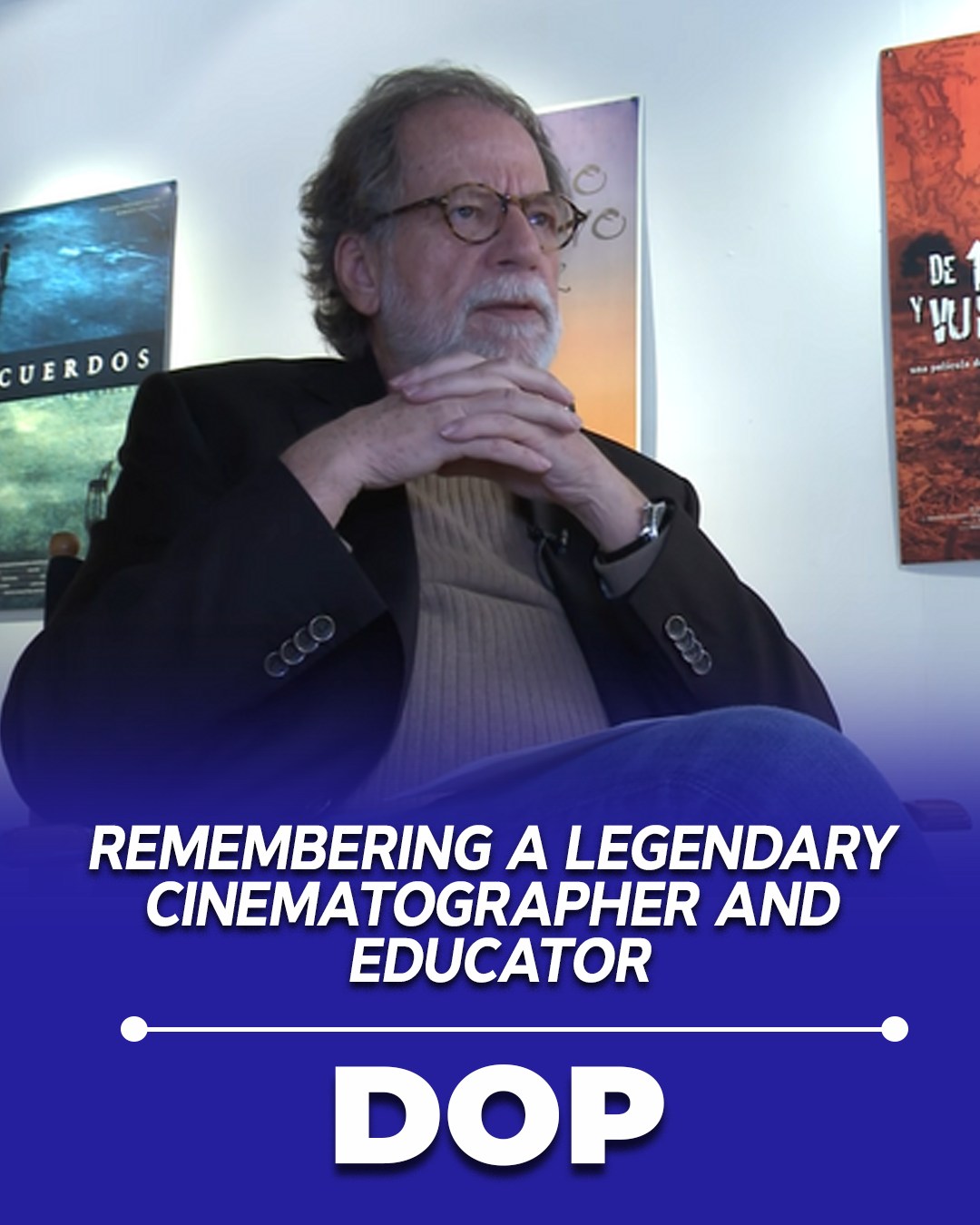
The world of cinematography recently mourned the passing of Henner Hofmann ASC AMC at the age of 75. Hofmann, a German-American cinematographer, left an indelible mark on both the small and large screens over a career spanning more than four decades. His legacy is not merely one of prolific output, but of a nuanced visual language that transcended geographical and stylistic boundaries, making him a true transatlantic visionary.
Hofmann's journey was characterized by a remarkable versatility, allowing him to navigate the distinct demands of episodic television and feature filmmaking with equal finesse. While specific credits often remain unsung for cinematographers, Hofmann’s filmography speaks to a deep understanding of visual narrative. He was known for his meticulous approach to lighting, often favoring a naturalistic yet artful illumination that served the story without drawing undue attention to itself. This philosophy, a hallmark of many great DPs, allowed his images to resonate deeply, grounding character and emotion within a believable, beautifully rendered world.
A Bridge Between Continents: Technique and Influence
One of the most striking aspects of Hofmann’s career was his dual membership in both the American Society of Cinematographers (ASC) and the Austrian Cinematographers Association (AMC). This wasn't merely a testament to his international career; it reflected a unique synthesis of cinematic sensibilities. From the ASC, he embraced the technical rigor, the pursuit of cutting-edge tools, and the often faster-paced production environments of Hollywood. From his European roots and the AMC, he likely drew on a tradition of more deliberate, art-house influenced visual storytelling, where composition, light, and shadow are meticulously crafted to evoke mood and meaning.
“Hofmann’s work often exemplified the best of both worlds: the technical precision and narrative drive of American cinema, fused with the artistic depth and atmospheric subtlety often associated with European filmmaking.”
This dual perspective undoubtedly enriched his approach. Whether he was working on a high-stakes television drama or a more intimate feature, Hofmann consistently demonstrated an ability to adapt his visual strategy. He understood that different stories called for different tools and techniques. While he worked in an era that saw significant shifts in camera technology, from film to digital, Hofmann's focus remained steadfast on the fundamental principles of light, composition, and color. He was not one to chase fads but rather to master the instruments at hand to achieve his artistic vision.
The Craft of Storytelling Through Light
In analyzing Hofmann's work, one can often discern a preference for expressive, yet motivated, lighting. He wasn't afraid of shadow, understanding its power to define form, create mystery, and heighten drama. His use of practical lights within a scene, often augmented by carefully placed HMIs or tungsten units, created a sense of authenticity that drew audiences deeper into the narrative. His color palettes, while varying from project to project, often leaned towards a rich, nuanced realism, avoiding overly stylized or artificial looks unless dictated by the story.
While specific technical details like preferred lens sets or sensor choices might not be widely publicized for every project, Hofmann's body of work reveals a DP who understood the character of glass and the nuances of various camera systems. He would have been adept at selecting the right tools, be it the classic anamorphic flare for a cinematic feel or the sharp, clean lines of spherical lenses for a more direct aesthetic, to best serve the emotional core of the scene. His lighting setups, from intricate multi-source configurations to minimalist, single-source designs, were always purposeful, shaping the visual experience to align with the director’s vision.
Henner Hofmann's passing is a significant loss to the global cinematography community. His career stands as a testament to the power of visual storytelling, the importance of technical mastery, and the enriching synergy that can arise when diverse cinematic traditions converge. He leaves behind a legacy of compelling images that continue to inspire and remind us of the profound impact a cinematographer can have on our perception of a story. His contributions will be remembered and studied by future generations of visual artists.
This article contains affiliate links. We may earn a small commission at no extra cost to you. Learn more.