In the high-stakes, often chaotic world of independent filmmaking, where ambition frequently outstrips resources, DPs are constantly challenged to innovate. Evan Weidenkeller's approach to a recent micro-budget horror feature, as chronicled by No Film School, stands as a testament to this spirit. Faced with the daunting prospect of a 40,000-dollar budget and an improbable seven consecutive days to shoot a 90-page script, Weidenkeller didn't just adapt; he fundamentally reimagined the lighting workflow. His mantra, "Put the lights in before day one and stop carrying them," isn't just a pithy saying; it's a profound philosophy for maximizing efficiency and creative control under pressure.
The core of Weidenkeller's solution was structural: by limiting the film to just two primary locations, he eliminated costly and time-consuming mid-day company moves. This strategic decision freed up invaluable production hours, allowing for a more deliberate and comprehensive approach to the visual design. But the real genius lay in his pre-lighting methodology. Instead of the traditional scene-by-scene lighting setup, Weidenkeller and his team, led by gaffer Joe Seiler, pre-lit the entire house location before a single frame was shot. This wasn't merely about placing a few fixtures; it involved a wholesale transformation of the location's inherent lighting capabilities.
The Power of Pre-Visualization and Smart Tech
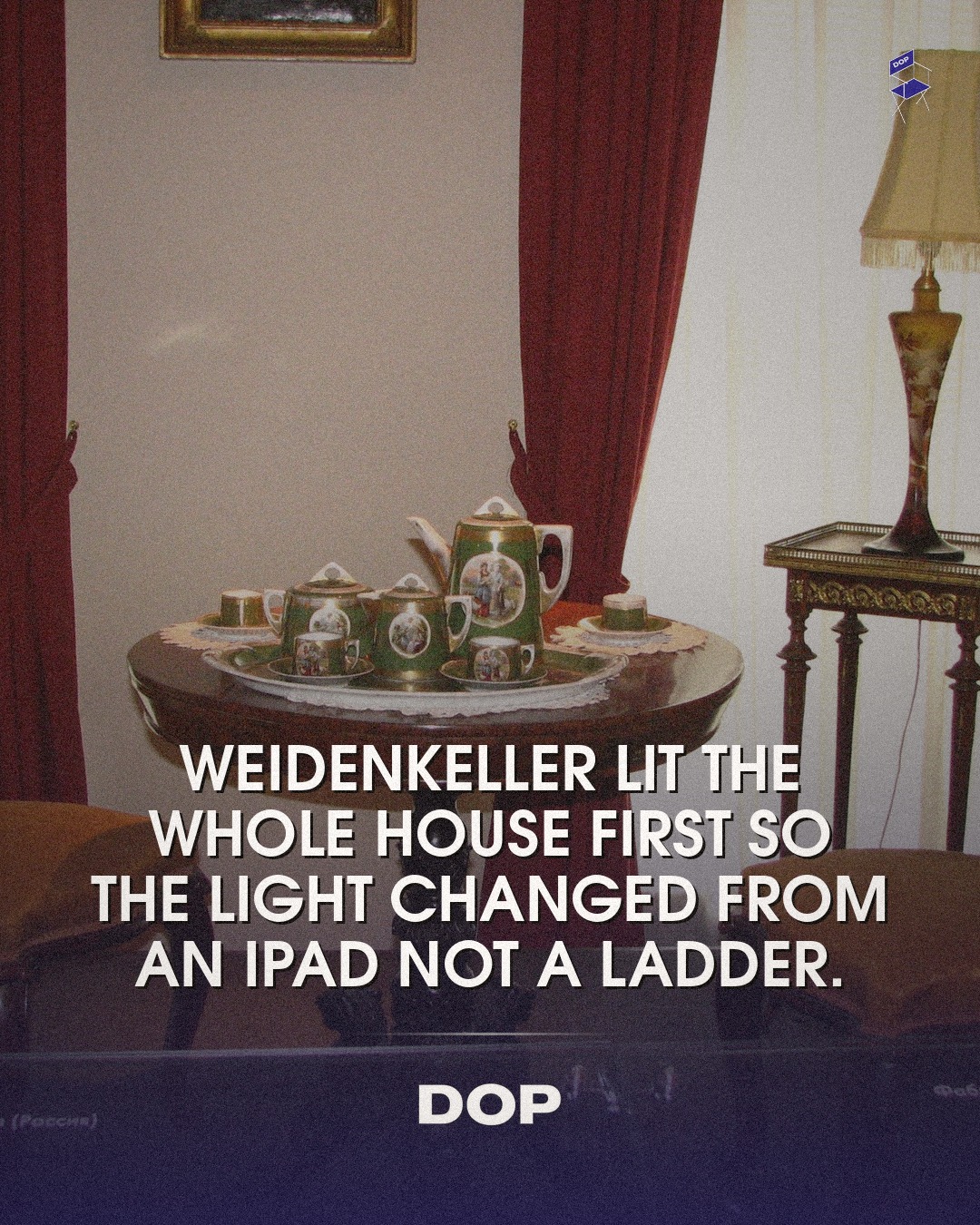
Weidenkeller's vision hinged on leveraging modern lighting technology to its fullest. He eschewed bulky, power-hungry HMIs and traditional tungsten units for an ecosystem built around Aputure fixtures. This choice was strategic on multiple fronts: Aputure's ecosystem, known for its portability, power efficiency, and robust app control, allowed for an unprecedented level of remote manipulation. Every practical bulb in the building was swapped out, replaced with a smart, controllable alternative. This meant that once the initial setup was complete, gaffer Joe Seiler could, from an iPad, dial in intensity and color temperature for any given scene, instantly transforming the mood and time of day without physically touching a single light.
This approach isn't just about saving time; it's about preserving the creative flow and reducing on-set fatigue. Imagine the traditional scenario: a director calls for a slight adjustment to the key light, or a shift from day to night. This often involves repositioning stands, swapping gels, re-cabling, and re-metering, a process that can eat up precious minutes, if not hours. With Weidenkeller's system, these adjustments become instantaneous, allowing for rapid iteration and fine-tuning. This agility is particularly crucial on a tight schedule where every second counts, enabling the DP to experiment with subtle shifts in light quality and direction that might otherwise be deemed too time-consuming.
"The ability to precisely control every light from a tablet, rather than physically moving fixtures, transforms the set into a dynamic canvas, allowing for unparalleled creative flexibility under extreme pressure."
Beyond Efficiency: Crafting the Horror Aesthetic
While the logistical benefits are undeniable, Weidenkeller's method also profoundly impacts the film's aesthetic. For a horror feature, lighting is paramount. The subtle interplay of light and shadow, the oppressive gloom of a dimly lit corridor, or the sudden, jarring flash of a practical light can define the genre's atmosphere. By pre-lighting the entire environment, Weidenkeller wasn't just preparing for efficiency; he was meticulously crafting a consistent, pervasive visual language that could be manipulated on the fly. This holistic approach ensures that the lighting remains cohesive across all scenes within a location, contributing to a more immersive and believable world for the audience.
Consider the psychological impact of light in horror. A slow dimming of the background, a shift from a warm practical glow to a sickly, cool ambient light, these are tools for building tension and dread. With the Aputure ecosystem and iPad control, these transitions can be executed with precision and fluidity, becoming an integral part of the storytelling. The choice of Aputure fixtures, known for their high CRI and consistent color rendition, also means that the quality of light remains professional-grade, defying the film's modest budget. While the specific camera choice wasn't detailed in the original caption, it's safe to assume that a modern, low-light capable digital cinema camera (perhaps a Blackmagic Pocket or a more robust mirrorless option) would have been paired with this lighting strategy to maximize dynamic range and image quality.
The Future of Independent Cinematography
Evan Weidenkeller's work on this horror feature isn't just a clever workaround; it's a blueprint for the future of independent cinematography. It champions the idea that technological fluency, combined with creative problem-solving, can democratize high-quality visual storytelling. His methodology underscores the importance of a DP thinking beyond just the frame, considering the entire production pipeline and how to optimize it for maximum creative output. This isn't just about "getting the shot"; it's about crafting an entire visual experience with intelligence and foresight.
The lesson here for aspiring and established DPs alike is clear: embrace new technologies, challenge conventional workflows, and always seek structural solutions to logistical problems. The "put the lights in before day one" philosophy isn't limited to horror or micro-budgets; it's a scalable strategy that promotes efficiency, consistency, and ultimately, a more refined cinematic vision. It allows DPs to spend less time troubleshooting and more time focusing on the art of light, shadow, and composition, the very essence of our craft.
This article contains affiliate links. We may earn a small commission at no extra cost to you. Learn more.