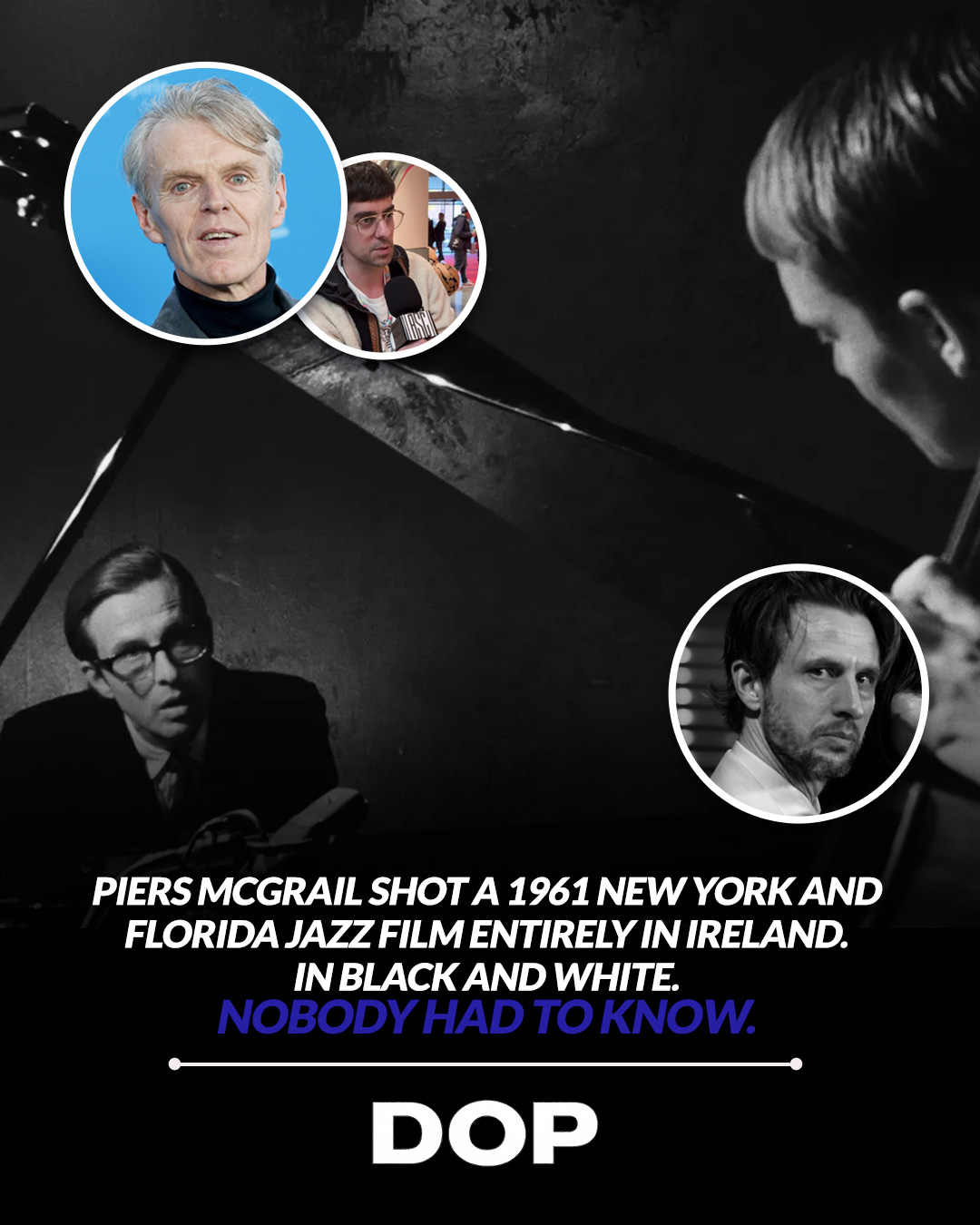
In the often-homogenized world of location scouting and digital set extensions, the announcement of Piers McGrail ISC's work on Grant Gee's Everybody Digs Bill Evans at Berlinale 2026 sent a ripple of intrigue through the cinematography community. The premise alone is a masterclass in audacious problem-solving: a narrative set in 1961 New York and Florida, chronicling the somber period following Bill Evans's bassist Scott LaFaro's death, shot entirely in Ireland. And not just in Ireland, but in stark, evocative black and white. This wasn't merely a creative choice; it was a foundational decision that allowed McGrail to transcend geographical limitations and craft a convincing period piece out of seemingly disparate elements.
The immediate challenge McGrail faced was immense: how to make the verdant, historic landscapes of Ireland vanish, and in their place, conjure the gritty, vibrant, yet melancholic atmosphere of early 60s American jazz clubs and cityscapes? The answer, as the film's premise boldly asserts, lay not in the physical architecture, but in the very fabric of visual storytelling: light, shadow, texture, and the deliberate embrace of monochrome. This project is a testament to the idea that authenticity in period filmmaking isn't solely about meticulous set dressing or location fidelity; it's about the emotional truth conveyed through the lens.
The Power of Monochrome
Black and white cinematography, particularly for a period piece, is often perceived as a shortcut, an aesthetic filter that instantly imbues a film with a sense of the past. However, McGrail's approach to Everybody Digs Bill Evans elevates it far beyond mere aesthetic choice. Here, black and white is not a shortcut; it is the very mechanism that makes the spatial and temporal substitution possible. By stripping away color, McGrail eliminates the tell-tale hues of contemporary Ireland, forcing the audience to focus on form, contrast, and composition – elements that can be meticulously controlled and sculpted to evoke a specific era and locale.
"Shooting a 1961 American jazz narrative in Ireland on black and white requires building period credibility through light, shadow, and visual grammar rather than through the actual locations. McGrail's task: make Ireland disappear and make jazz-era New York emerge in its place."
Consider the technical implications. Without color, the texture of light becomes paramount. McGrail, known for his nuanced and often atmospheric work in films like Calm with Horses and Herself, would have leaned heavily on precise lighting setups to define spaces and moods. Imagine the use of hard, theatrical light to carve out figures on a smoky club stage, or soft, diffused ambient light filtering through a window, casting long shadows across a sparsely furnished room – all designed to replicate the tungsten glow and available light of the era. The choice of black and white also impacts lens selection; characterful vintage glass, or modern lenses designed to emulate older looks, would have been crucial to achieve the desired fall-off, bokeh, and overall 'period' feel, free from the distractions of modern chromatic aberration.
Crafting Atmosphere Beyond Location
McGrail's filmography demonstrates a deep understanding of mood and character, often using natural light and subtle camera movement to imbue scenes with authenticity. For Everybody Digs Bill Evans, his challenge was to apply this sensibility to a manufactured reality. This means a meticulous approach to production design and art direction, working in concert with the cinematography. How do you light a Dublin pub to feel like a Greenwich Village jazz haunt? It's about the placement of practicals, the quality of the light spilling from them, the density of smoke, and the way shadows play on brickwork or plaster. The absence of color demands that every tonal value, every shade of grey, contributes meaningfully to the narrative and the illusion.
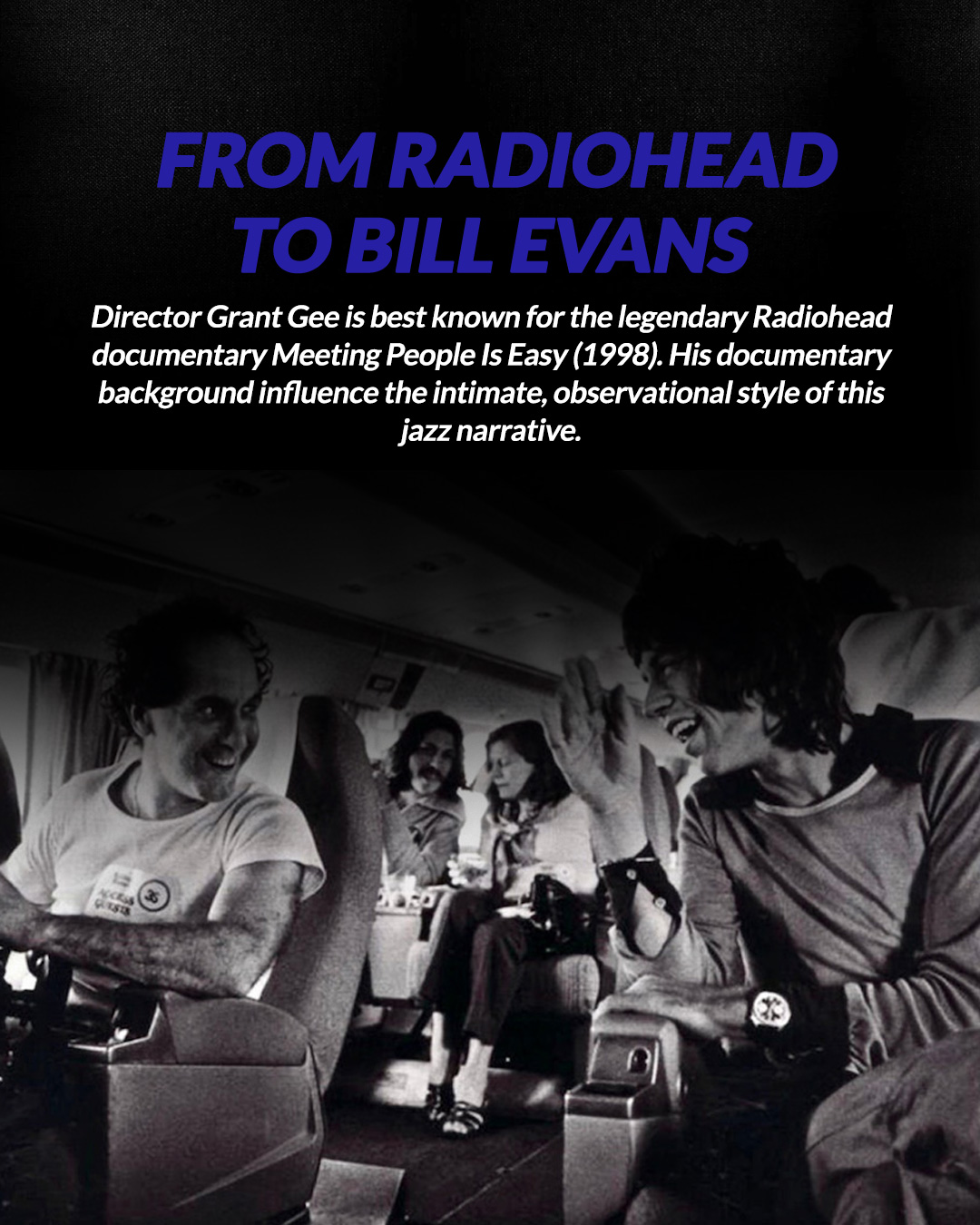
Furthermore, the choice of black and white inherently brings a certain gravitas, a timeless quality that resonates with the melancholic narrative of Bill Evans grappling with loss. It allows the audience to immerse themselves in the emotional landscape of the character, unburdened by the specific geographical markers that might otherwise break the illusion. McGrail's collaboration with Grant Gee, whose documentary background with films like Meeting People Is Easy suggests a director attuned to capturing raw, unvarnished reality, would have pushed for a visual style that felt authentic and lived-in, even within its constructed framework.
Ultimately, Piers McGrail's work on Everybody Digs Bill Evans is a bold statement about the enduring power of cinematography. It's a reminder that the camera, in the hands of a skilled artist, can transcend physical limitations and conjure entire worlds through the deliberate manipulation of light, shadow, and visual grammar. By making Ireland disappear and New York emerge through the monochrome lens, McGrail has not only solved a complex logistical puzzle but has also delivered a profound artistic statement, proving that sometimes, less color means more credibility.