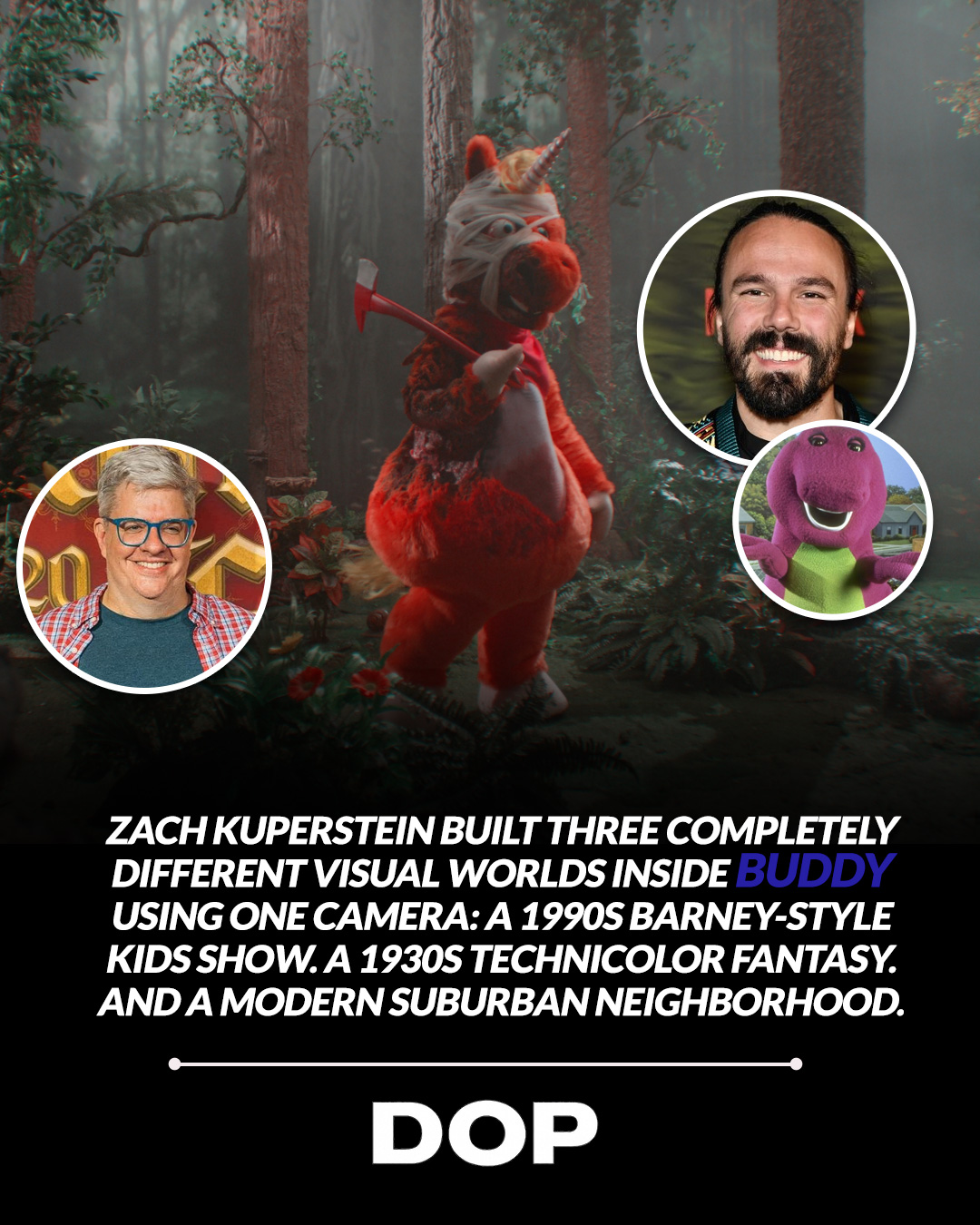
In an industry often seduced by the allure of diverse camera packages for distinct narrative segments, Zach Kuperstein's work on Casper Kelly's Buddy, which premiered in the Midnight section at Sundance 2026, presents a compelling counter-argument. Kuperstein, a DP known for his versatile eye across films like The Eyes of My Mother and The Blazing World, dared to build three utterly disparate visual worlds from a single camera body: the Sony Venice 2. This wasn't merely a pragmatic choice; it was a profound declaration about the power of deliberate photographic intent over hardware variety.
The core challenge presented to Kuperstein was to render a trio of aesthetics: the vibrant, slightly degraded look of a 1990s Barney-style children's show, the opulent, yet stylized palette of a 1930s Technicolor fantasy, and the clean, contemporary realism of a modern suburban neighborhood. All of this, remarkably, was achieved with the same Venice 2. This approach speaks volumes about Kuperstein's deep understanding of image acquisition and post-production, pushing the Venice 2 beyond its perceived capabilities, transforming it into a chameleon of imaging.
The Art of Era Emulation: 1990s Broadcast
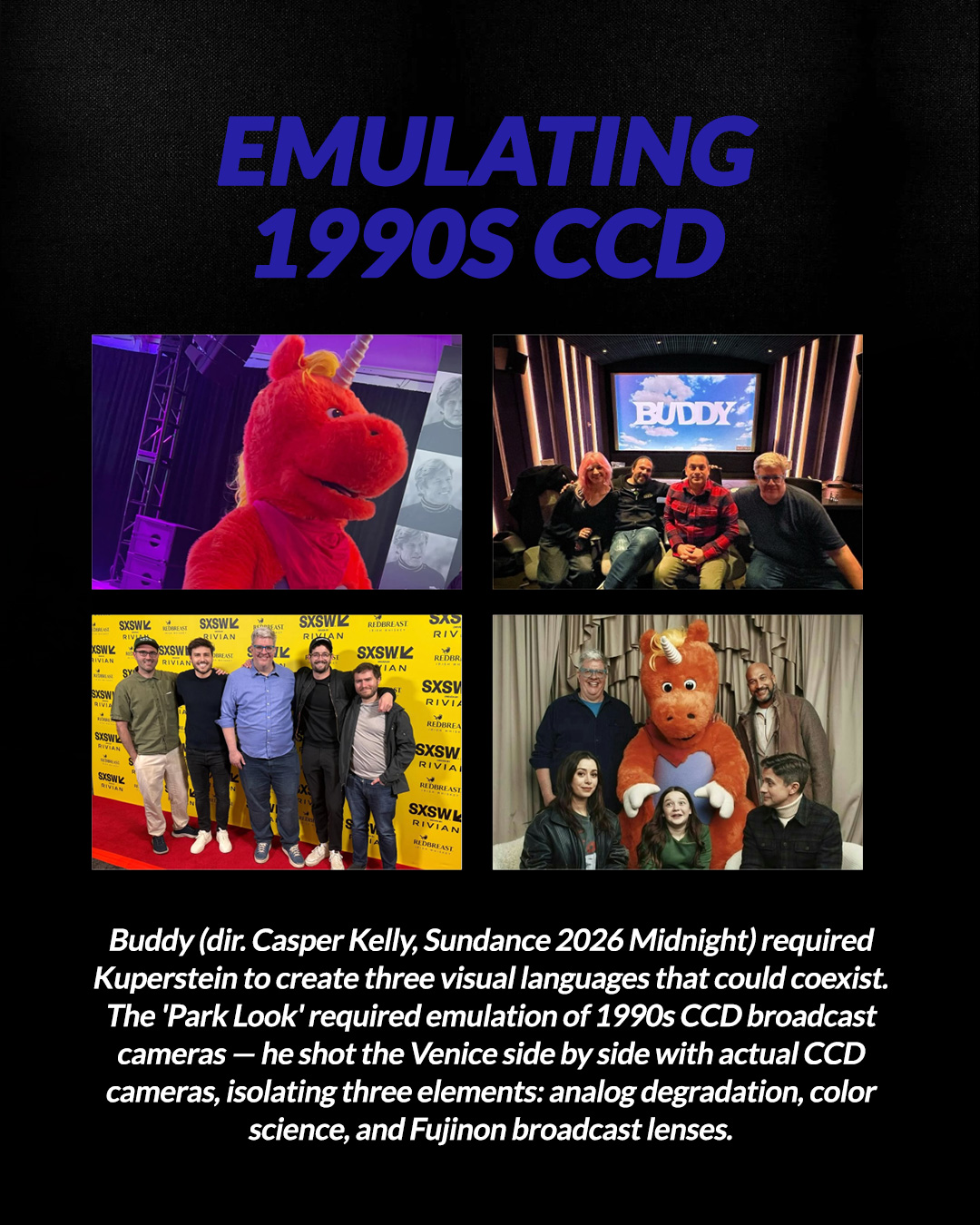
For the 'Park Look' – the 1990s children's show segment – Kuperstein didn't just approximate; he reverse-engineered. He shot the Venice 2 alongside actual CCD broadcast cameras, a meticulous process designed to isolate the precise elements that define that nostalgic, yet technically distinct, era. This wasn't about a superficial filter; it was a scientific deconstruction. He identified three pillars: analog degradation, the specific broadcast color treatment of the period, and the unique character of Fujinon broadcast zooms. The Venice 2's full-frame sensor and excellent color science provided a robust canvas, which was then meticulously sculpted to mimic the lower resolution, inherent noise, and color shifts characteristic of 90s video. This direct comparative shooting allowed him to understand the nuances of CCD sensors – their distinct highlight roll-off, their color reproduction, and their inherent imperfections – and then to emulate them with surgical precision, rather than relying on generic, often unconvincing, post-production approximations.
"Building three distinct visual worlds on one camera body is an argument about coherence over variety. Kuperstein shot the 1990s TV sequences on the Venice side by side with actual CCD cameras to isolate exactly what defines that era: analog degradation, broadcast color treatment, and Fujinon broadcast zooms."
Technicolor Dreams and Modern Reality
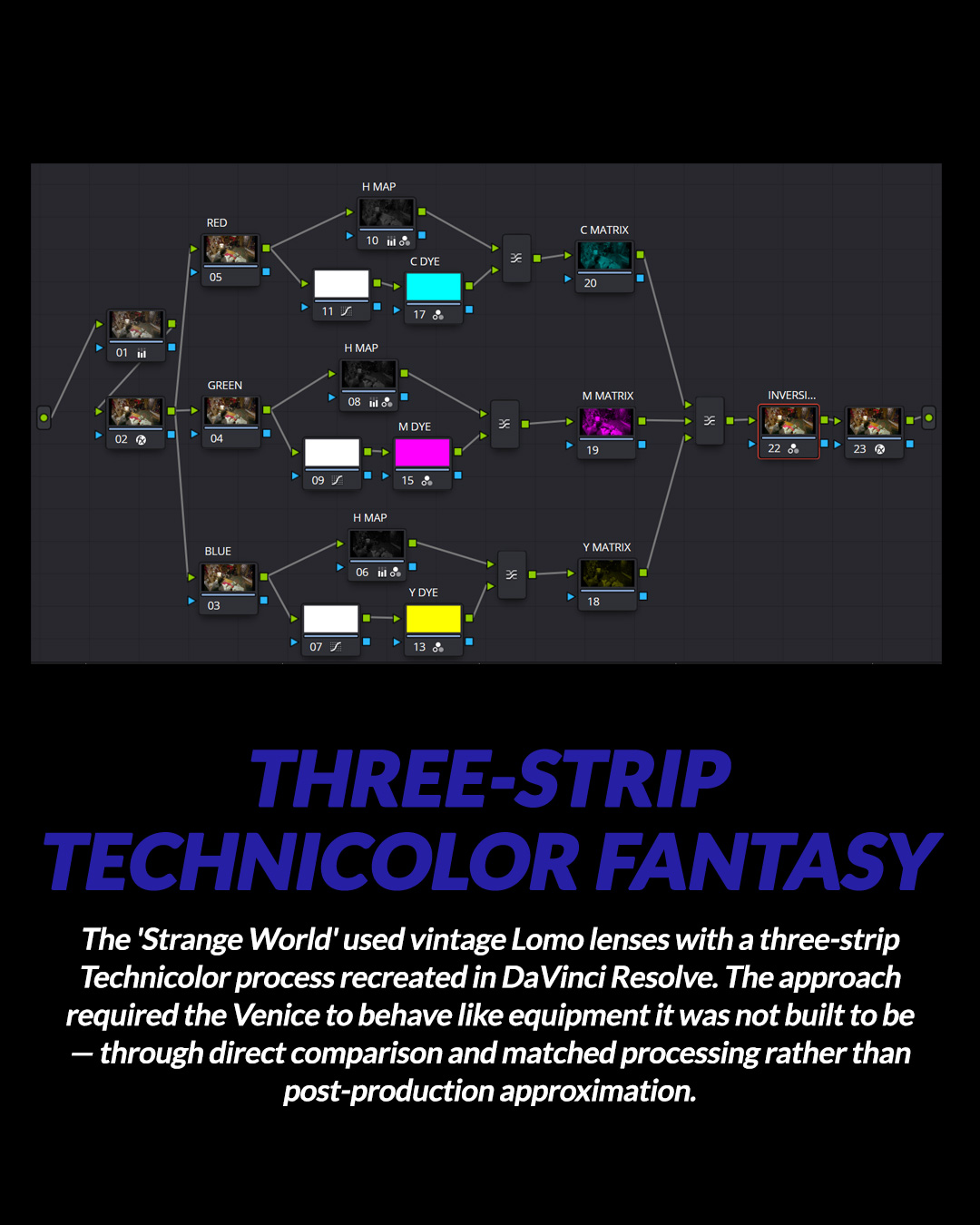
The 'Strange World' sequence plunged viewers into a 1930s Technicolor fantasy, a demanding aesthetic that requires not just vibrant colors but also a specific textural quality. Kuperstein achieved this by pairing the Venice 2 with vintage Lomo anamorphic lenses, known for their unique flares, creamy bokeh, and often softer, characterful rendition. The magic, however, truly unfolded in DaVinci Resolve, where Kuperstein and his colorist implemented a meticulously crafted three-strip Technicolor process. This involved not merely boosting saturation but recreating the distinct color separation and recombination method of early Technicolor, resulting in a rich, almost painterly image that feels both fantastical and historically accurate. The Venice 2's significant dynamic range and faithful color reproduction, particularly its VENICE 2 8K sensor's ability to capture subtle gradients, were crucial in providing the latitude necessary for such an intensive color grade.
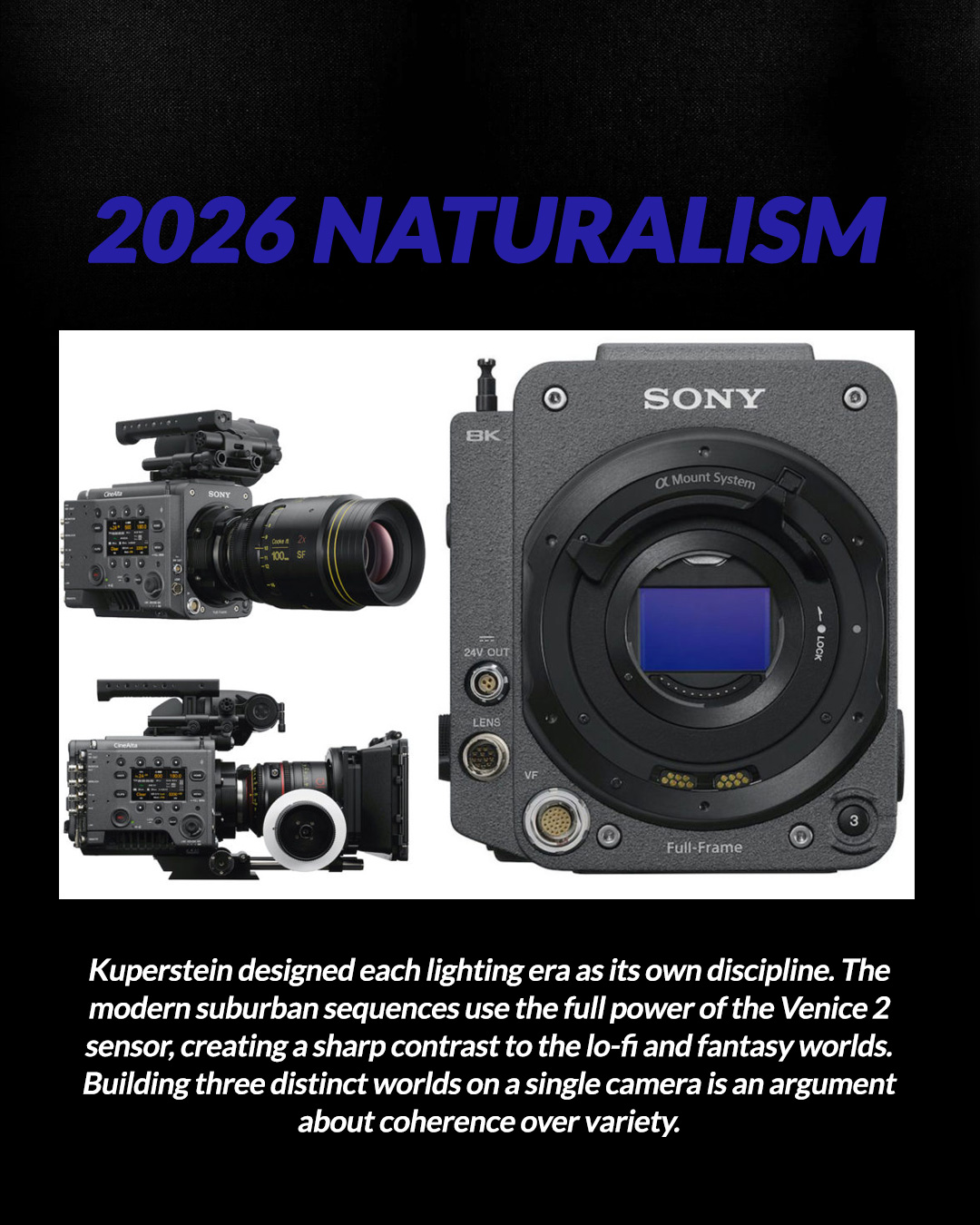
In stark contrast, the 'Real World' sequences demanded a clean, contemporary, and sharp aesthetic. For this, Kuperstein opted for Arri Signature Primes. These lenses, renowned for their pristine optical quality, minimal distortion, and consistent performance across their range, allowed the Venice 2 to showcase its native resolution and clarity. The combination of the Venice 2's high-resolution sensor and the Signature Primes' clinical precision delivered an image that was sharp, detailed, and undistorted, effectively grounding the audience in a recognizable, modern suburban reality. The choice of Signature Primes also speaks to a desire for a neutral, uncolored lens character, allowing the Venice 2's excellent color science to shine through unhindered.
The Venice 2 as a Creative Catalyst
Kuperstein’s achievement with Buddy is a testament to the evolving capabilities of modern cinema cameras and, more importantly, the ingenuity of cinematographers. The Sony Venice 2, with its dual native ISO, full-frame sensor, and robust color science, proved to be an exceptionally flexible tool. Its ability to capture a clean, high-fidelity image provided the perfect foundation upon which to build these diverse aesthetic structures, whether through aggressive de-rating and lens choices for the 90s look, or the meticulous color manipulation for the Technicolor sequences. This project underscores the notion that a camera body is, ultimately, a vessel. The true artistry lies in the choices made regarding lenses, lighting, filtration, and the alchemical process of post-production. Kuperstein didn't just use one camera; he mastered its potential, demonstrating that creative vision, not just varied equipment, defines the distinct visual language of a film.
This article contains affiliate links. We may earn a small commission at no extra cost to you. Learn more.