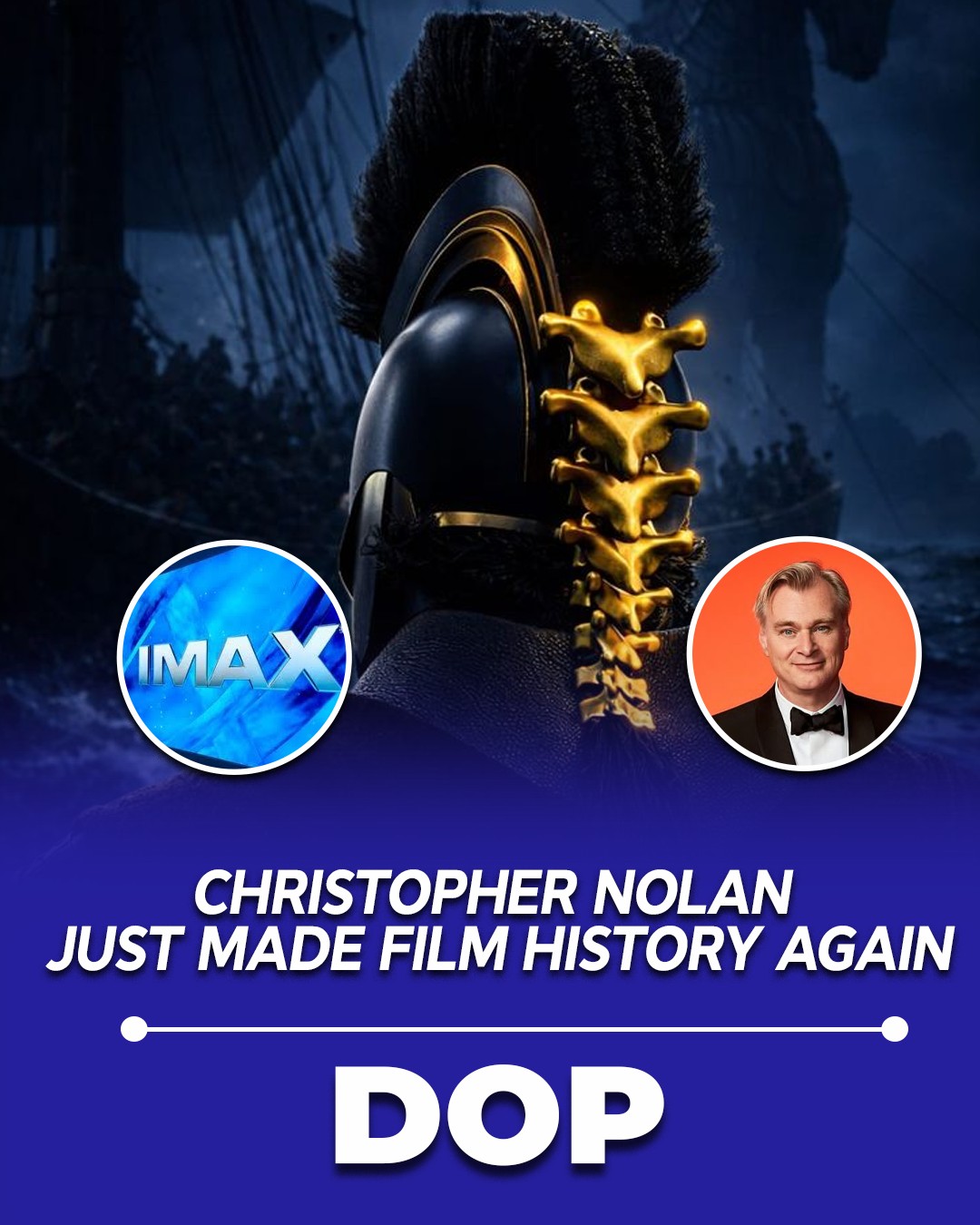
Christopher Nolan and Hoyte van Hoytema are once again pushing the boundaries of cinematic immersion, embarking on a project that promises to redefine the large-format experience. Their latest collaboration, tentatively titled 'The Odyssey,' is making waves not just for its ambitious subject matter, an adaptation of Homer's ancient epic, but for a groundbreaking technical decision: it will be the first narrative feature film to be captured entirely in IMAX 65mm. This isn't just an incremental step; it's a monumental leap in the pursuit of visual grandeur and audience engagement, a testament to their unwavering belief in the power of the format.
For years, Nolan has been a vocal proponent and pioneer of IMAX, weaving its unparalleled resolution and expansive aspect ratio into the fabric of his storytelling. Films like Oppenheimer, Dunkirk, and Interstellar showcased stunning IMAX sequences, often intercut with 65mm or 35mm film to serve specific narrative or logistical needs. While these hybrid approaches delivered breathtaking results, the commitment to an all-IMAX production for 'The Odyssey' signals a profound evolution. It eliminates the visual shifts and format transitions, promising a seamless, uninterrupted journey into Homer's world, a world of gods, monsters, and arduous voyages, now rendered with an unprecedented fidelity and scale.
The Technical Canvas: IMAX 65mm and Hoyte van Hoytema's Vision
The decision to shoot entirely in IMAX 65mm is not merely a flex; it's a deliberate artistic choice that profoundly impacts every aspect of the production. The sheer size of the IMAX film frame, ten times larger than standard 35mm, translates to an extraordinary level of detail, dynamic range, and a perceived three-dimensionality that few other formats can match. For a story as epic and visually rich as 'The Odyssey,' set against the sweeping Mediterranean landscapes, this choice is nothing short of inspired. Van Hoytema, a master of naturalistic light and textural richness, is uniquely positioned to harness the format's capabilities. His work consistently demonstrates a keen understanding of how to use light and shadow to sculpt environments and imbue scenes with palpable atmosphere, a skill that will be magnified by the vast canvas of IMAX.
Consider the logistical challenges and creative opportunities this presents. From intimate dialogue exchanges to sprawling battle sequences and perilous seafaring, every shot will be composed and lit with the IMAX frame in mind. This demands an exceptional level of precision from the camera department, a robust lighting package capable of illuminating vast spaces, and a meticulous approach to production design. The characteristic grain and color science of IMAX film stock will lend a timeless, almost mythic quality to the visuals, perfectly suiting the ancient source material. Van Hoytema's signature use of wide-angle lenses, which often create a sense of expansive depth and draw the viewer into the frame, will be particularly impactful in IMAX, transforming even simple character moments into grand, enveloping experiences.
"The commitment to an all-IMAX production for 'The Odyssey' signals a profound evolution. It eliminates the visual shifts and format transitions, promising a seamless, uninterrupted journey into Homer's world, a world of gods, monsters, and arduous voyages, now rendered with an unprecedented fidelity and scale."
Pushing Immersion: From Oppenheimer to Odyssey
The progression from Nolan's previous IMAX endeavors is clear. While Oppenheimer brilliantly used IMAX to convey the terrifying power of the atomic bomb and the psychological weight on its creator, and Dunkirk immersed audiences in the chaos of war, 'The Odyssey' aims for a sustained, unbroken immersion. The Mediterranean settings, from sun-drenched coastlines to tempestuous seas, will be rendered with an almost tactile realism. Imagine the clarity of the azure waters, the rugged textures of ancient ruins, and the sheer scale of Odysseus's journey, all unfolding without the subtle visual cues that remind us of a format change.
This decision also reflects a deeper philosophical approach to filmmaking. In an era dominated by digital acquisition and post-production manipulation, Nolan and van Hoytema remain steadfast champions of photochemical film and in-camera effects. The commitment to shooting entirely on IMAX film is an act of faith in the medium itself, a belief that the organic qualities of film, combined with the unparalleled resolution of IMAX, offer an emotional and visual experience that digital simply cannot replicate. It's an invitation to the audience to not just watch a story, but to be transported, to feel the salt spray, the heat of the sun, and the weight of Odysseus's trials. As 'The Odyssey' unfolds, it will undoubtedly set a new benchmark for what is possible in large-format cinema, further solidifying Nolan and van Hoytema's legacy as true innovators in the art of visual storytelling.
The anticipation for 'The Odyssey' is not just about the narrative; it's about witnessing the next frontier in cinematic craftsmanship. This all-IMAX endeavor is poised to be a masterclass in visual storytelling, leveraging cutting-edge, yet fundamentally analog, technology to breathe new life into an enduring myth. It’s a bold statement, a challenge to the industry, and a gift to serious film lovers and cinematographers eager to see the medium pushed to its absolute limits.
This article contains affiliate links. We may earn a small commission at no extra cost to you. Learn more.