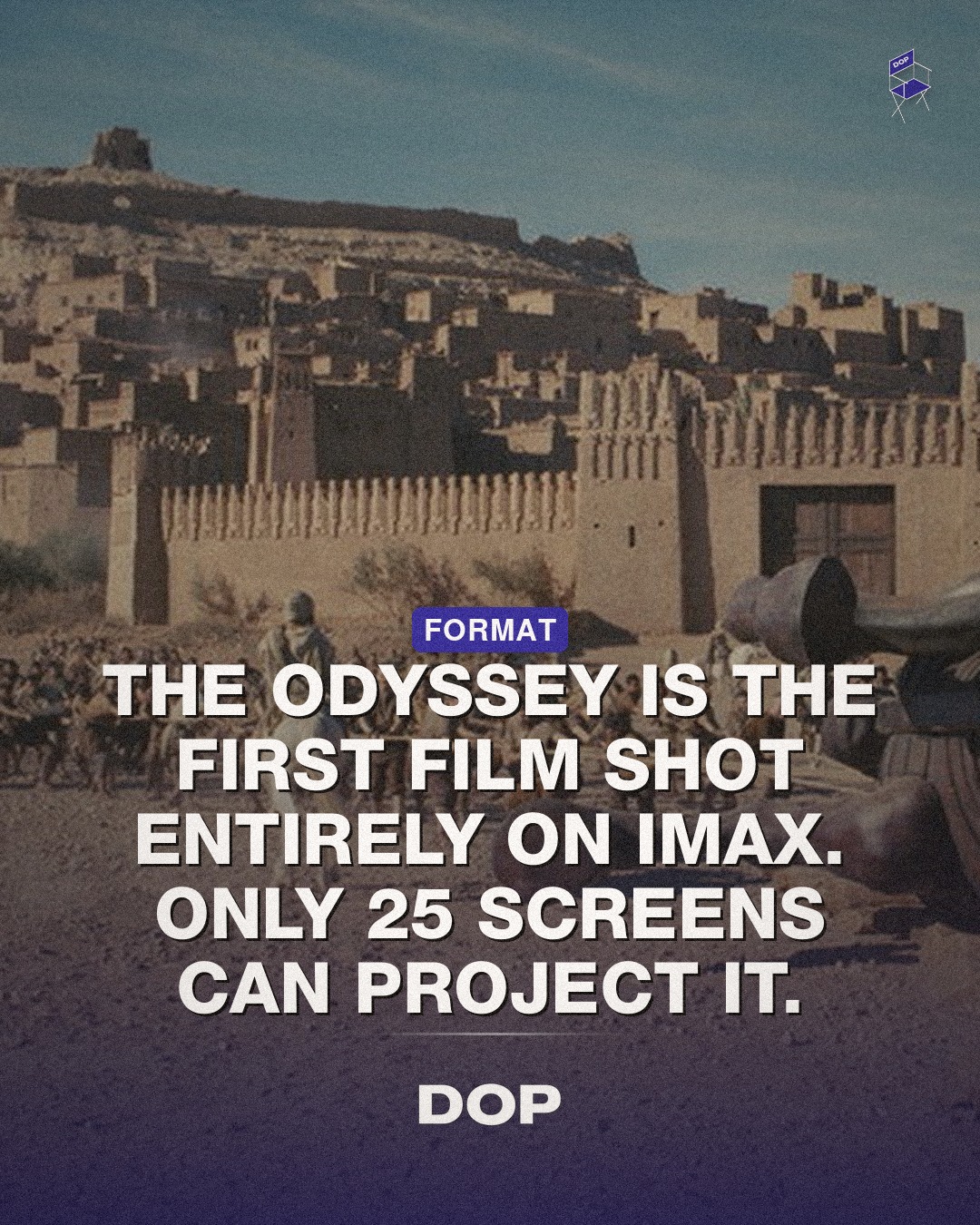
Christopher Nolan's latest epic, 'The Odyssey,' isn't just a film; it's a declaration. A bold, audacious statement in an era increasingly dominated by digital acquisition and post-production wizardry. By committing entirely to IMAX 70mm cameras for principal photography, Nolan has not only pushed the boundaries of cinematic exhibition but has also reaffirmed the unparalleled power and immersive quality of large-format celluloid. This isn't merely a preference; it's a philosophy, a deliberate choice that shapes every frame and elevates the viewing experience to something truly monumental.
The statistics alone speak volumes about the scale of this ambition. 'The Odyssey' marks the first major studio film to be shot entirely on IMAX 70mm, a format so formidable that its true exhibition is limited to a mere fraction of global screens, approximately 25 in the United States and roughly 41 worldwide. This scarcity, far from being a deterrent, has become part of its allure, transforming the act of seeing 'The Odyssey' into an event, a pilgrimage for cinephiles and cinematographers alike. It forces a conversation about the theatrical experience, reminding us that some stories demand to be told on a canvas of this magnitude, where every pixel (or grain, in this case) contributes to a breathtaking sense of presence.
The Unseen Labor of Large Format
Shooting on IMAX 70mm is not for the faint of heart. It’s a logistical and technical beast, demanding meticulous planning, specialized equipment, and a crew intimately familiar with its quirks. The cameras themselves are massive, heavy, and loud, requiring careful consideration for sound recording and camera movement. Lenses for this format are equally specialized, often custom-built to resolve the immense detail captured by the large negative. The depth of field, the resolution, the incredible dynamic range, these aren't just technical specifications; they are artistic tools that Nolan and his cinematographer, Hoyte van Hoytema, wield with surgical precision. The visual language of 'The Odyssey' is inherently tied to this format, allowing for sprawling vistas and intimate close-ups to share the same extraordinary clarity and immersive feel.
"Nolan's commitment to IMAX 70mm isn't just a technical flex; it's a profound artistic statement, a rebellion against the fleeting digital image in favor of cinematic permanence."
Consider the logistical challenges: the sheer volume of film stock required, the specialized processing labs, the delicate handling of each precious roll. This isn't a workflow designed for speed or convenience; it's one built for uncompromising quality. The choice of film stock, the careful selection of lenses to achieve specific characteristics, from the crispness of wide-angle vistas to the subtle fall-off in portraiture, all contribute to the film's distinctive aesthetic. Van Hoytema, known for his masterful work on films like 'Dunkirk' and 'Interstellar,' understands the unique demands and immense potential of large-format cinematography, extracting every ounce of visual grandeur from the medium.
Embracing the Unscripted: A Testament to Authenticity
Perhaps one of the most compelling anecdotes from 'The Odyssey' production highlights Nolan's commitment to authenticity over manufactured perfection. During filming, a pod of wild dolphins unexpectedly approached the production boat. Rather than dismissing it as an unplanned interruption or attempting to recreate the moment with CGI, Nolan embraced it, integrating the real, unprompted encounter into the final cut. This decision speaks volumes about his approach to filmmaking, a willingness to surrender to the serendipitous magic of reality, to capture genuine moments that resonate with an almost documentary-like truth. In a world saturated with digital effects, this reverence for the organic and the unscripted is a refreshing and powerful artistic choice, one that the IMAX 70mm format is uniquely suited to preserve with stunning fidelity.
This philosophy extends beyond just a single scene. The inherent grain structure of 70mm film, the subtle imperfections, the way light interacts with emulsion, these elements contribute to a tactile, almost palpable quality that digital often struggles to replicate. It's a look that feels lived-in, authentic, and utterly transportive. Nolan's filmography consistently demonstrates a preference for practical effects and in-camera solutions, and 'The Odyssey' takes this to its ultimate conclusion, leveraging the maximum resolution and dynamic range of IMAX to capture the world as it truly is, or at least, as close to it as cinema can get.
The record-breaking $52 million worldwide opening weekend for 'The Odyssey' in IMAX theaters, representing approximately 20% of its global debut and the format's biggest opening ever, is not just a commercial success; it's a resounding validation of Nolan's vision. It proves that audiences, given the opportunity, will seek out and pay for a premium, immersive cinematic experience. It's a powerful message to studios and filmmakers: investing in the craft, pushing technical boundaries, and prioritizing the theatrical spectacle can yield extraordinary results. 'The Odyssey' isn't just a film to be watched; it's an experience to be savored, a testament to the enduring power of celluloid and the unwavering vision of a director dedicated to the art of cinematic storytelling on the grandest possible scale.
This article contains affiliate links. We may earn a small commission at no extra cost to you. Learn more.