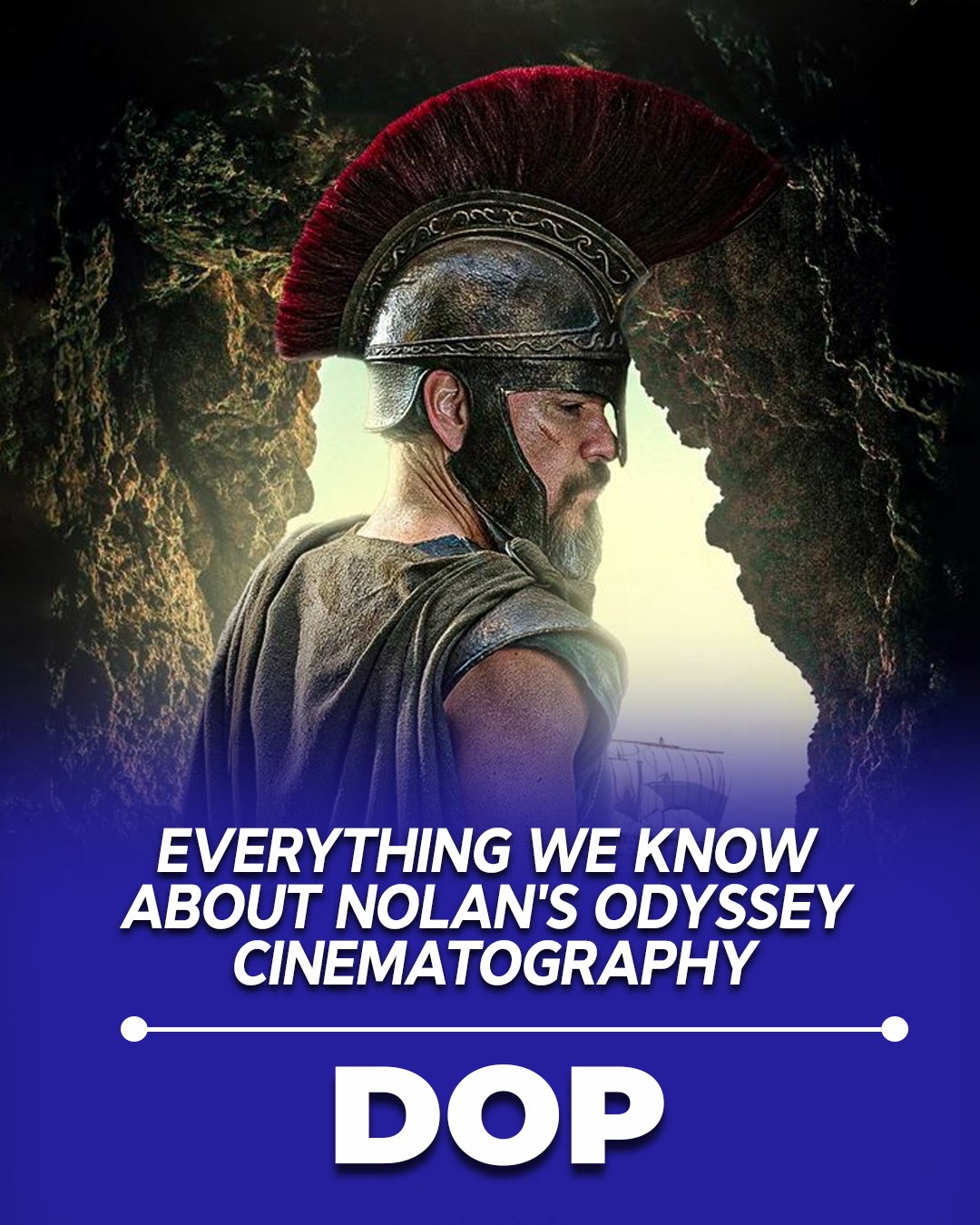
Christopher Nolan’s upcoming adaptation of Homer’s epic, The Odyssey, slated for a July 2026 theatrical release, is poised to be more than just another summer blockbuster. It represents a monumental technical undertaking, a bold declaration of faith in the immersive power of large-format cinema. Shot entirely in IMAX 65mm across the sun-drenched, rugged landscapes of the Mediterranean, this film isn't merely filmed for IMAX; it is conceived, crafted, and destined for the most expansive canvas available to contemporary filmmakers. For cinematographers, DPs, and serious film enthusiasts, this isn't just a movie – it's a masterclass in visual ambition.
The choice to shoot The Odyssey exclusively on IMAX 65mm film stock, rather than integrating it with digital formats or limiting its use to select sequences, speaks volumes about Nolan's unwavering commitment to the medium. This isn't a director dabbling in large format; this is a director pushing its boundaries to their absolute limit. The inherent resolution, dynamic range, and organic grain structure of IMAX film are unparalleled, promising an image quality that transcends mere clarity to become a visceral, almost tactile experience. Imagine the shimmering Aegean Sea, the weathered stone of ancient ruins, the intensity of battle – all rendered with a fidelity that will make audiences feel as though they are standing alongside Odysseus himself.
The Hoyte van Hoytema Factor: A Master's Vision
Central to this visual spectacle is the inimitable talent of cinematographer Hoyte van Hoytema, ASC, FSF, NSC. His collaborations with Nolan have consistently redefined what is possible in large-format filmmaking, from the dizzying, non-linear narrative of Interstellar to the stark, haunting beauty of Dunkirk, and the complex, cerebral grandeur of Oppenheimer. Van Hoytema’s signature style – characterized by a profound understanding of natural light, a preference for practical effects, and a masterful command of scale – makes him the ideal partner for such an ambitious project. His ability to capture both the epic sweep and the intimate human drama within the same frame, often utilizing the unique aspect ratio of IMAX to its fullest potential, is legendary.
“Van Hoytema’s cinematography isn't just about capturing images; it’s about crafting an emotional landscape, a visual language that speaks volumes beyond dialogue.”
For The Odyssey, we can anticipate van Hoytema leveraging the unique characteristics of IMAX cameras – likely a combination of the venerable MS-01 and the more recent 65mm hybrid cameras – to achieve a visual tapestry that is both historically resonant and breathtakingly contemporary. He is known for his minimalist approach to lighting, often relying on available light and subtle enhancements to maintain a sense of authenticity. This philosophy, combined with the immense light-gathering capabilities of 65mm film, will undoubtedly lend a profound depth and naturalism to the Mediterranean settings. We can expect wide, sweeping vistas contrasted with intensely focused close-ups, all rendered with the distinctive optical quality of IMAX lenses – known for their sharpness and minimal distortion, even at extreme wide angles.
Technical Underpinnings of an Epic
The decision to shoot entirely in IMAX 65mm presents significant logistical and technical challenges, yet for Nolan and van Hoytema, these are often seen as opportunities for innovation. The cameras themselves are notoriously heavy and loud, requiring meticulous planning for every shot. The film stock, with its limited per-magazine run time, demands precise timing and choreography on set. However, the payoff is immense: an image that, when projected in a true IMAX venue, fills the peripheral vision, creating an unparalleled sense of immersion. The 1.43:1 aspect ratio, unique to full-frame IMAX, transforms the cinematic experience from observation to participation.
Beyond the camera and film stock, the post-production workflow for an all-IMAX feature is equally specialized. The immense data volume, the painstaking process of scanning and color grading 65mm negatives, and the precise calibration required for IMAX presentations all contribute to the film’s exceptional quality. The color science, in van Hoytema's hands, is likely to be rich and naturalistic, avoiding overly stylized palettes in favor of a timeless, earthy authenticity that grounds the fantastical elements of Homer’s narrative. The Mediterranean light, with its unique quality, will be a character in itself, shaping the mood and atmosphere of Odysseus’s arduous journey.
The July 2026 release timing positions The Odyssey as a major summer event, with IMAX-equipped theaters expected to feature extended showtimes, a testament to the anticipated demand for this cinematic spectacle. For the craft of cinematography, Nolan and van Hoytema’s latest collaboration is more than just a film; it’s a reaffirmation of the power of celluloid, a celebration of large-format immersion, and a bold statement that true visual storytelling transcends fleeting trends. As DPs and film enthusiasts, we eagerly await the opportunity to witness Odysseus’s epic journey unfold at maximum resolution, in its purest, most breathtaking form – a true odyssey for the senses.