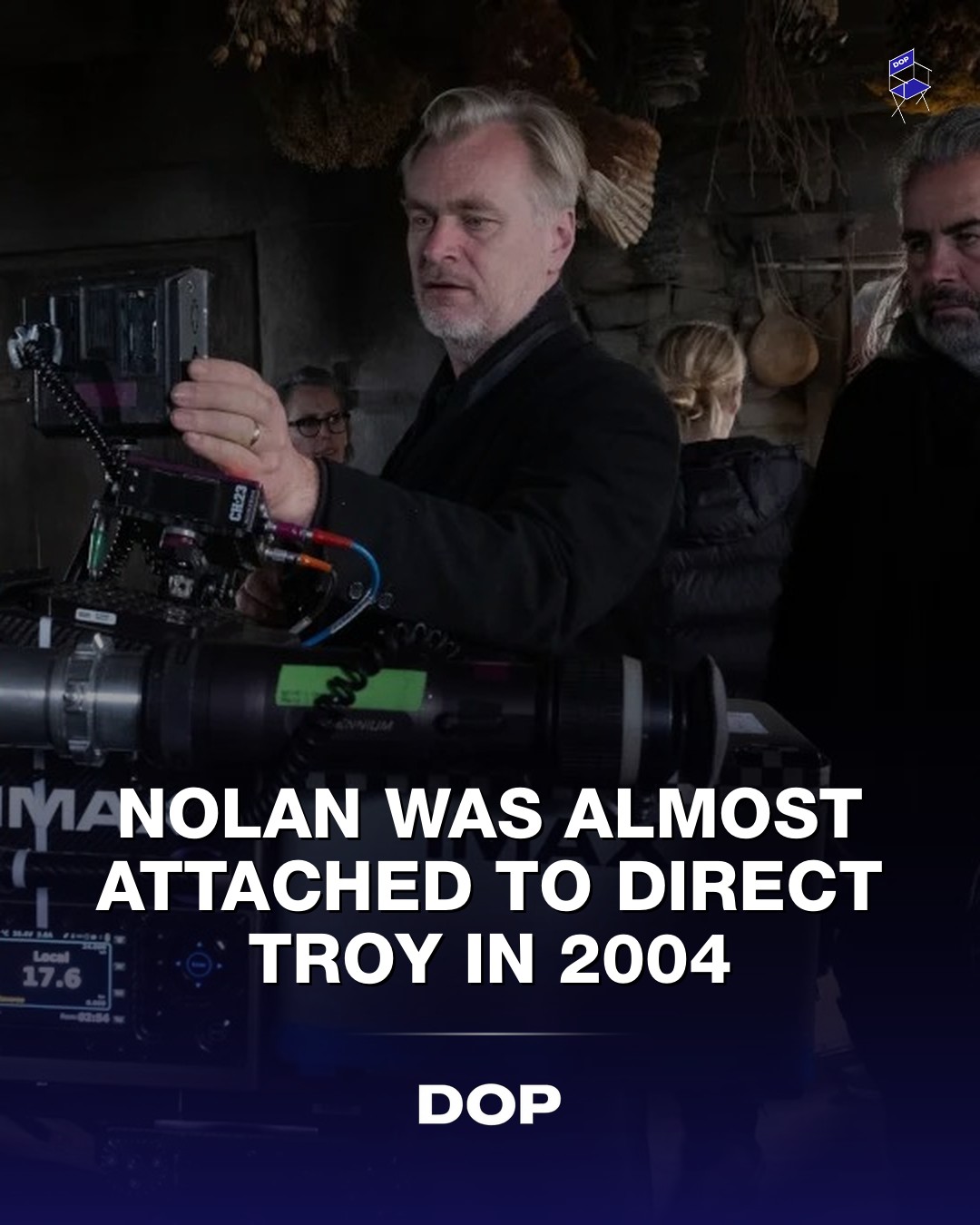
Christopher Nolan. The name alone evokes a sense of cinematic grandeur, a filmmaker whose ambition frequently pushes the boundaries of what's possible on screen. While his recent triumph, Oppenheimer, redefined the historical biopic, and films like Tenet twisted time and space, Nolan's journey to his latest monumental achievement, The Odyssey, has been a long and winding one, punctuated by a particular visual obsession that simmered for decades. It's a testament to his meticulous craft and the power of a deeply held cinematic vision.
The genesis of a specific, haunting image within The Odyssey traces back to an almost-collaboration that never was: Nolan's brief attachment to direct Warner Bros.' 2004 epic, Troy. Though Wolfgang Petersen ultimately helmed that project, the historical narrative, particularly the iconic tale of the Trojan Horse, clearly left an indelible mark on Nolan's imagination. He harbored a specific shot, a powerful tableau, for years: a soldier decapitating a statue, juxtaposed against the partially constructed, partially destroyed Trojan Horse. This wasn't merely a fleeting thought; it was a visual anchor, a scene that encapsulated the raw brutality and cunning of ancient warfare, waiting for the right canvas and the right collaborators.
Enter Hoyte van Hoytema, ASC, FSF, NSC, the visionary cinematographer behind Nolan's recent masterpieces, including Interstellar, Dunkirk, Tenet, and the Oscar-winning Oppenheimer. Van Hoytema is not just a master of light and composition; he's a technical innovator, an artist who fearlessly embraces the most demanding formats to achieve unparalleled immersion. It's no surprise that Nolan credits van Hoytema with helping him realize this long-cherished image on the set of The Odyssey. Their collaboration isn't just about executing a director's vision; it's a symbiotic relationship where technical prowess meets narrative ambition, pushing each other to new heights.
The IMAX Imperative: A New Frontier
The decision to shoot The Odyssey entirely on IMAX film is a declaration of intent, a bold statement about the film's scope and immersive aspirations. While Nolan has been a staunch advocate for IMAX throughout his career, often integrating sequences shot on the format, The Odyssey marks a historic first: the inaugural narrative feature film to be captured entirely on IMAX cameras. This commitment to the largest theatrical format available speaks volumes about the visual scale Nolan and van Hoytema aimed to achieve. The sheer resolution and expansive aspect ratio of IMAX film stock, often 65mm 15-perf, renders an unparalleled level of detail and presence, making the audience feel less like observers and more like participants in the epic unfolding before them.
“The commitment to IMAX isn't just a technical choice; it's a philosophical one, a dedication to enveloping the audience in a world of unparalleled scale and intimacy.”
For a story as grand and mythic as The Odyssey, the choice of IMAX is not merely about spectacle; it's about intimacy. The vastness of the image allows for both breathtaking wide shots of ancient landscapes and incredibly detailed close-ups that reveal the nuanced emotions of the characters. Van Hoytema's expertise with these colossal cameras is critical. His approach often involves a blend of naturalistic lighting and meticulously sculpted artificial sources, creating a sense of heightened reality. We can anticipate deeply textured scenes, where the interplay of light and shadow on ancient architecture and the faces of warriors will be rendered with astonishing clarity, bringing a tactile quality to the historical epic.
Crafting the Unseen: Technical & Artistic Synergy
To realize a shot imagined decades ago, especially one as symbolically charged as the decapitation of a statue against the backdrop of the Trojan Horse, requires an extraordinary synergy between director and cinematographer. Van Hoytema's lighting philosophy often leans towards practical sources and motivated light, enhancing realism while still crafting a visually arresting frame. For this specific sequence, one can imagine the interplay of torchlight or moonlight against the rough-hewn wood of the Horse, casting dramatic shadows that accentuate the brutality of the act. The choice of lenses would be crucial here; perhaps wider, slightly distorted optics to emphasize the imposing scale of the Horse and the desperate actions of the soldier, or a more classic set of anamorphic lenses to provide that epic widescreen feel Nolan often favors, even within the IMAX frame.
The color science in their collaborations tends to be naturalistic but with a distinct, often desaturated or subtly enhanced palette that serves the narrative. For The Odyssey, we might expect earthy tones, the muted golds of ancient Mediterranean light, and the deep, somber blues of the sea and night. The film stock itself, often Kodak Vision3 for IMAX productions, provides a rich, organic texture that digital simply cannot replicate, imbuing the images with a timeless quality. This isn't just about capturing an image; it's about crafting an experience, a visceral journey into history and myth, anchored by a director's long-held vision and a cinematographer's masterful execution. The fact that The Odyssey opened on July 17, 2026, as the first entirely IMAX-shot narrative feature, solidifies its place not just as a cinematic event, but as a landmark achievement in the ongoing evolution of visual storytelling.
This article contains affiliate links. We may earn a small commission at no extra cost to you. Learn more.