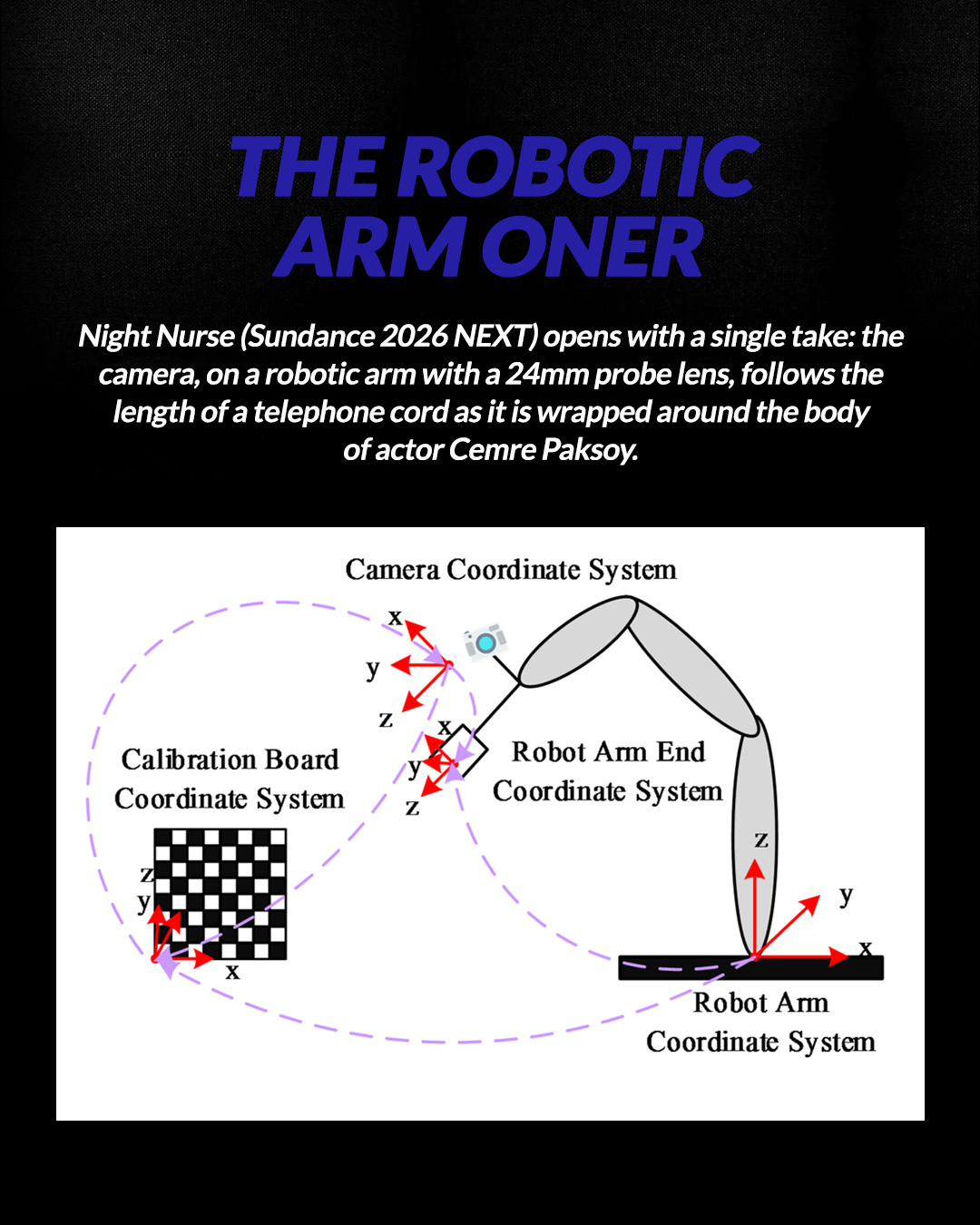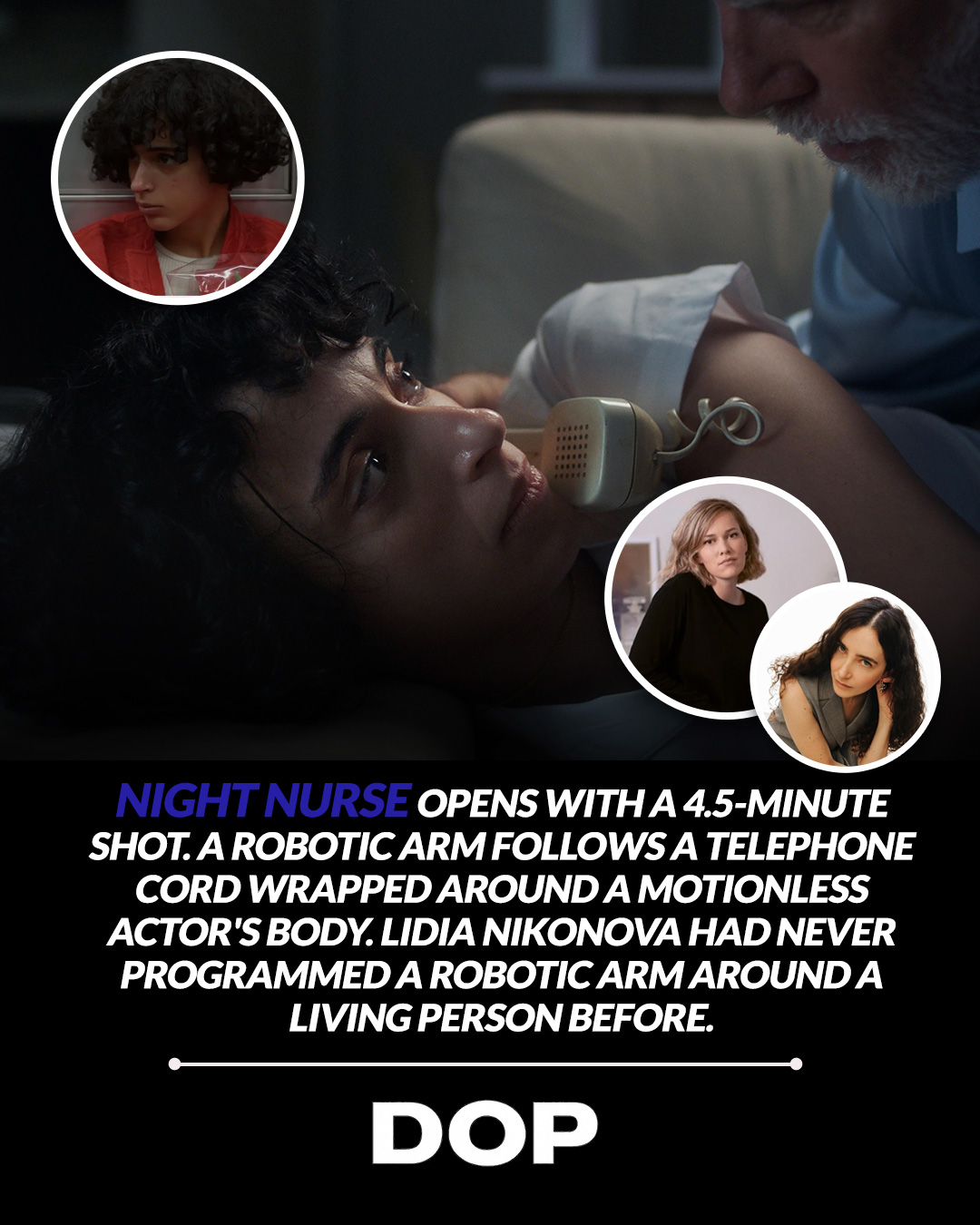
In an industry often lauded for its embrace of innovation, yet sometimes cautious in its application, Lidia Nikonova’s work on Georgia Bernstein’s debut feature, NIGHT NURSE, stands as a bold declaration. Premiering in the NEXT section at Sundance 2026, the film’s opening sequence isn't just a technical marvel; it's a meticulously crafted overture that immediately establishes its chilling, intimate visual language. A 4.5-minute, unbroken shot, executed with a robotic arm and a 24mm probe lens, traces the full length of a telephone cord wrapped around a motionless actor. It’s a breathtaking commitment to a single, sustained vision, and a testament to Nikonova's daring spirit.
The technical audacity of this opening shot cannot be overstated. Robotic arms, while increasingly common in high-end production, are typically deployed for precise, repeatable camera moves in controlled environments, often for VFX plates or product shots. Their application around a living, breathing human being, especially in such an intimate, macro capacity, is a different beast entirely. Nikonova herself acknowledged the unprecedented nature of the challenge, telling Rough Draft Atlanta, “Most of the time, robot arms are used for shots that are either not with live people or are not macro.” This statement underscores the tightrope walk of precision and trust involved. The actor, Cemre Paksoy, had to maintain absolute stillness for the entire duration, a feat of endurance mirroring the robotic arm's unwavering path.
The Geometry of Suspense: Engineering Emotion
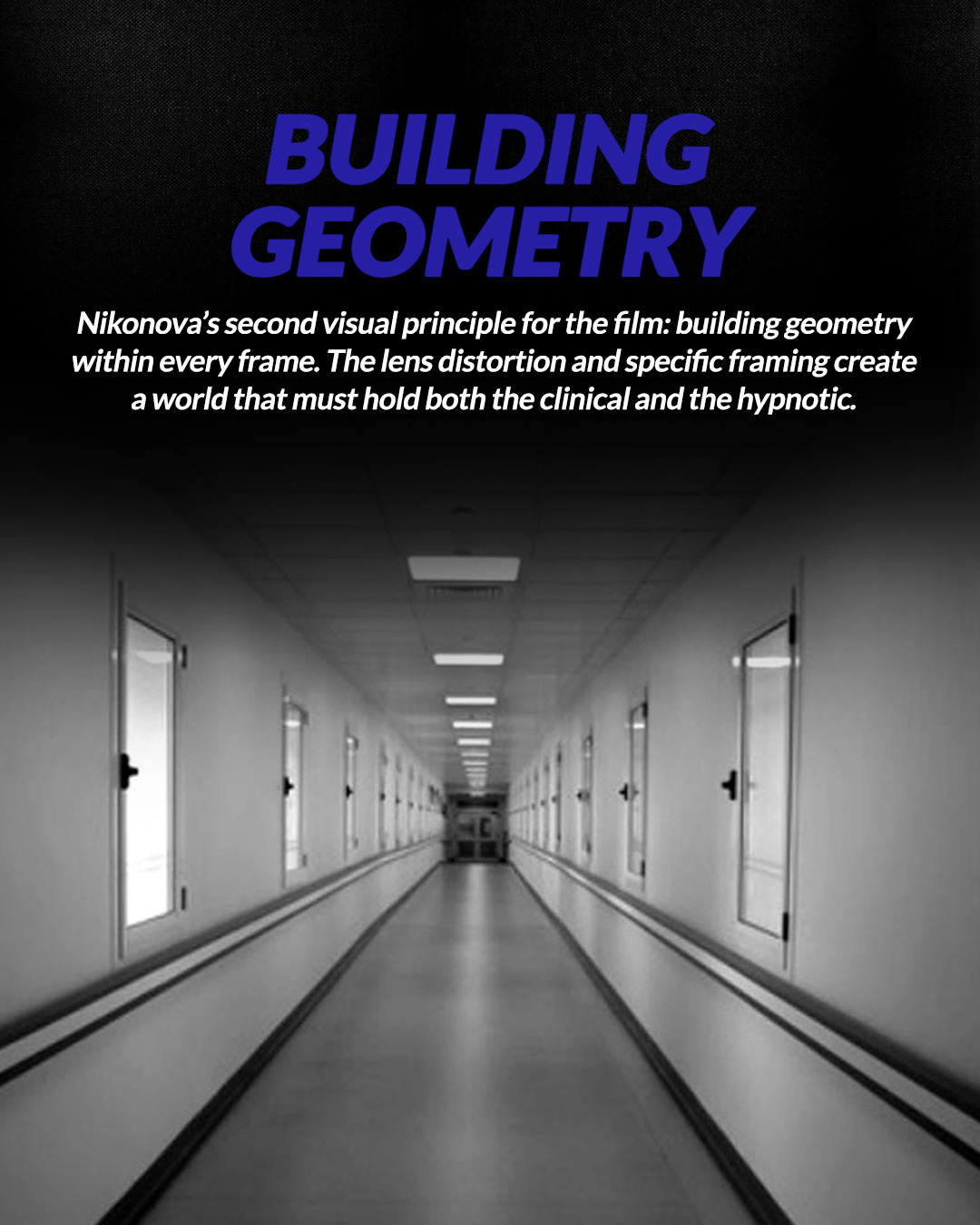
The technical choreography behind this shot was nothing short of an engineering marvel. Nikonova described building geometry within every frame, the robotic arm interpolating programmed 3D keyframe positions to create the path. This isn't merely programming a trajectory; it’s sculpting a visual narrative in three dimensions. The choice of a 24mm probe lens was critical here, offering an extreme depth of field and an uncomfortably close perspective that plunges the audience into the tactile world of the cord and the actor's skin. This lens choice, combined with the robotic precision, creates a hyper-real, almost forensic examination of the scene, transforming a simple object into a menacing tether.
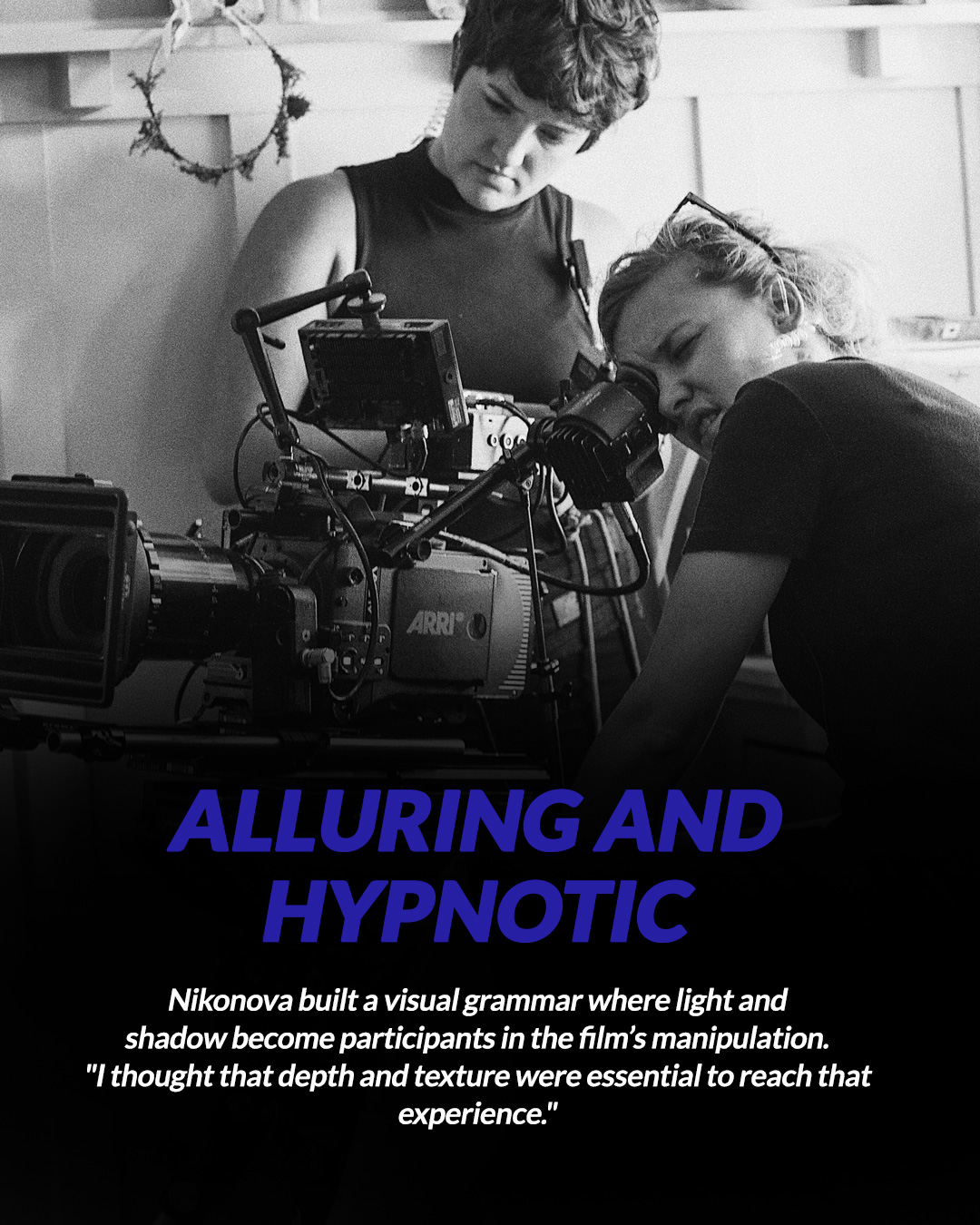
“I thought that depth and texture were essential to reach that experience.”
This commitment to depth and texture is the cornerstone of the shot’s success. It’s not just about showing; it’s about feeling. The probe lens exaggerates the subtle weaves of the cord, the minute imperfections of the skin, turning the mundane into the profoundly unsettling. It transforms the telephone cord from a simple prop into a symbol of entanglement, manipulation, and burgeoning dread. Such a sustained, intimate gaze forces the viewer to confront the vulnerability of the subject, creating an immediate, visceral connection to the film’s central themes.
Chiaroscuro and the Erotic Thriller Palette
Beyond the technological wizardry, Nikonova's mastery of light is what truly elevates this sequence. Her use of chiaroscuro lighting is not merely aesthetic; it's an intrinsic part of the film's narrative strategy. In the context of an erotic thriller, light and shadow become active participants in the manipulation and psychological tension. The stark contrast between illuminated forms and deep, encroaching shadows doesn't just define space; it hides, reveals, and distorts, mirroring the film's thematic exploration of secrets, power dynamics, and perception.
One can imagine the precise placement of practicals and controlled artificial sources, perhaps small LED panels or specialized light pipes, meticulously positioned to skim the textures of the cord and the contours of Paksoy's body. The character of the light would likely be hard and directional, emphasizing sharp edges and deep fall-off, enhancing the sense of entrapment and vulnerability. This isn't soft, flattering light; it's revealing, almost confrontational, light. The interplay of light and shadow creates a visual grammar where what is obscured is often more potent than what is shown, building suspense and hinting at unseen forces at play.
Nikonova's approach to color science in such a scene would also be crucial. A desaturated or subtly monochromatic palette, perhaps with selective color accents, could further enhance the film’s psychological tension. The absence of vibrant hues would underscore the starkness of the situation, allowing the play of light and shadow to dominate and convey emotion.
Beyond the Gimmick: A New Language of Intimacy
What Nikonova has achieved in NIGHT NURSE is far more than a technical flex. It's a redefinition of how cinematic intimacy and suspense can be engineered at a macro level. By pushing the boundaries of robotic cinematography and blending it with a profound understanding of lighting and composition, she has crafted an opening that is both intellectually stimulating and viscerally impactful. This isn't just a shot; it's a statement about the power of controlled chaos, the beauty of extreme precision, and the unsettling allure of the unseen. It sets a formidable bar for Bernstein’s debut and firmly establishes Nikonova as a DP unafraid to innovate, to challenge conventions, and to use every tool at her disposal to tell a story with unparalleled depth and texture.