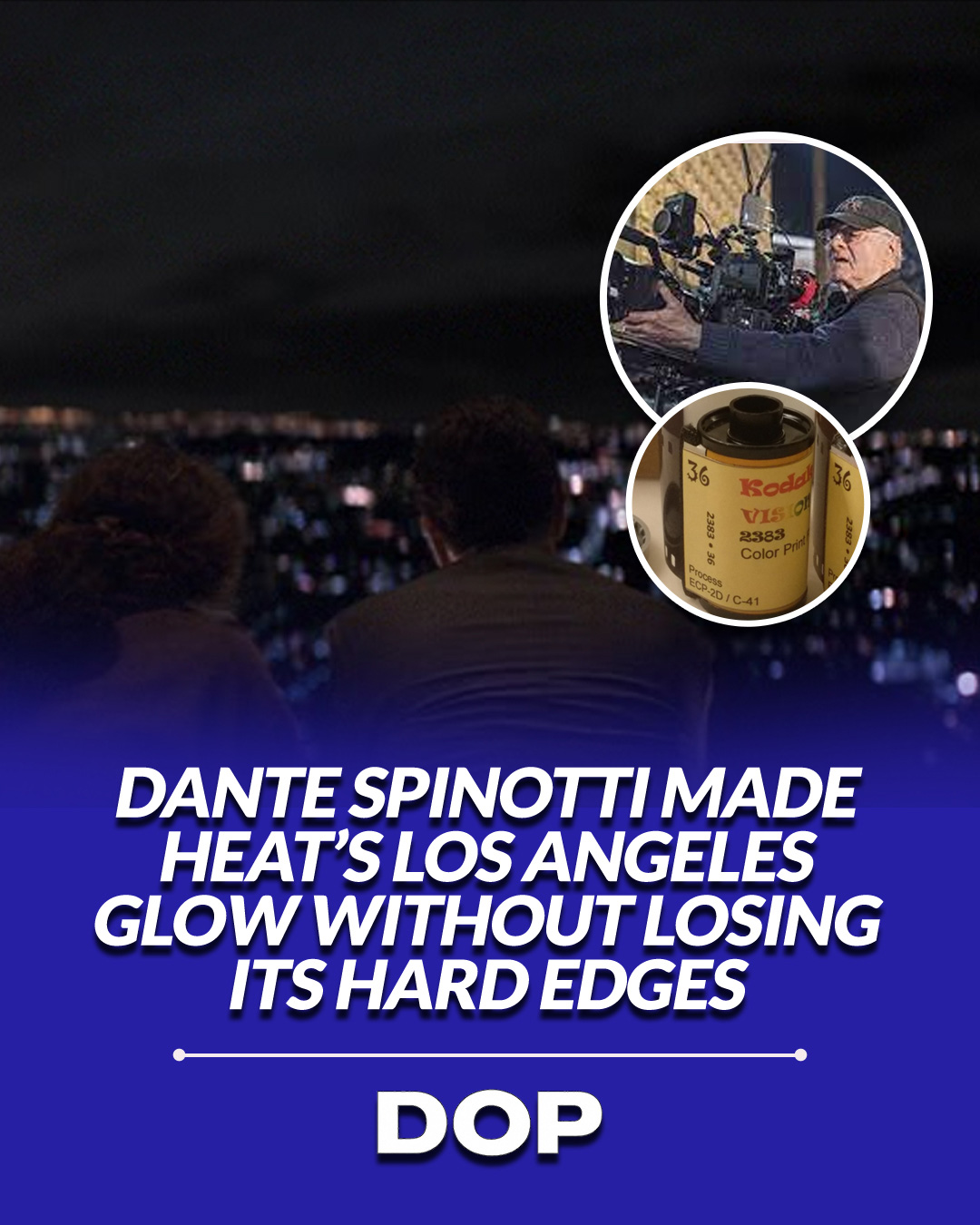
In the canon of modern cinema, few films have defined the visual grammar of a cityscape as definitively as Michael Mann’s 1995 masterpiece, Heat. Director of Photography Dante Spinotti, ASC, AIC, turned Los Angeles into a sprawling, nocturnal canvas, a world of gleaming steel, endless glass, and suffocating isolation. Before digital sensors democratized low-light shooting, Spinotti achieved what many considered impossible: capturing the vast, luminous expanse of LA at night on 35mm film without sacrificing image sharpness or dramatic contrast.
Spinotti’s work on Heat bypassed traditional film noir tropes. Rather than drowning the frame in pitch-black shadows punctuated by single key lights, he illuminated the environment from within. The result is an environment where characters inhabit a hyper-realist landscape, one that feels immense and romantic, yet retains a sharp, dangerous edge that mirrors the uncompromising lives of Neil McCauley and Vincent Hanna.
Mixing Color Temperatures: Cyan, Sodium Vapor, and Tungsten
To achieve this visual complexity, Spinotti utilized Panavision Panaflex cameras paired with Panavision Primo spherical prime lenses. Pushing Kodak’s EXR 500T 5298 film stock to its limits, and often push-processing it in the lab, gave Spinotti the exposure latitude required to capture low-level ambient light from miles of city infrastructure. The decision to shoot spherical rather than anamorphic allowed for faster lens apertures, often wide open at T1.9, drawing in every available photon from the urban sprawl.
Spinotti masterfully harmonized clashing color temperatures across the frame. Cool cyan city glows, sickly green fluorescent parking structures, and amber sodium vapor streetlights were contrasted sharply against pools of warm, tungsten interiors. Instead of correcting these industrial light sources with heavy gel packs, Spinotti allowed their distinct Kelvin profiles to coexist. This color palette created a rich visual separation, layering the background and foreground without feeling artificial.
Spinotti’s approach transformed Los Angeles into a living organism of light, balancing industrial coolness with intimate warmth while keeping every edge sharp enough to cut.
Precision Highlight Control and Spatial Clarity
A central challenge of night cinematography is managing extreme dynamic range. In wide urban landscapes, practical lights like specular car reflections, lit office windows, and street lamps threaten to clip into harsh, blown-out highlights. Spinotti exercised meticulous highlight control. Using precise lighting placement, flags, and light scrimming, specular reflections off wet asphalt and car hoods were held right at the shoulder of the film stock's exposure curve, preserving textural detail in metal and glass.
Furthermore, Spinotti ensured that characters remained legible in wide, expansive frames. Even in distant wide shots of the downtown skyline, face light was subtly elevated using soft, directional units, often small bounced tungsten fixtures or chimera softboxes, giving actors readable catchlights and subtle edge definition without revealing the light source. This discipline preserved deep blacks while preventing dark wardrobe from dissolving into muddy shadows.
The Legacy of Spinotti’s Painterly Hard Edges
Spinotti’s collaboration with Mann on Heat stands alongside their work on The Last of the Mohicans and The Insider, establishing a visual signature characterized by painterly compositions driven by rigorous technical execution. In Heat, the lighting never softens the violence of the narrative. The hard-edged lighting philosophy reinforces the story's themes: two unstoppable forces operating in a sterile, modern metropolis where connection is fleeting and exposure is deadly.
For modern cinematographers working in an era dominated by high-sensitivity digital sensors and LED fixtures, Heat remains the ultimate reference text for urban night photography. It serves as a masterclass in how to embrace the natural light of a city, treat color temperature as a narrative tool, and build visual texture through controlled contrast rather than flat, digital brightness.
This article contains affiliate links. We may earn a small commission at no extra cost to you. Learn more.