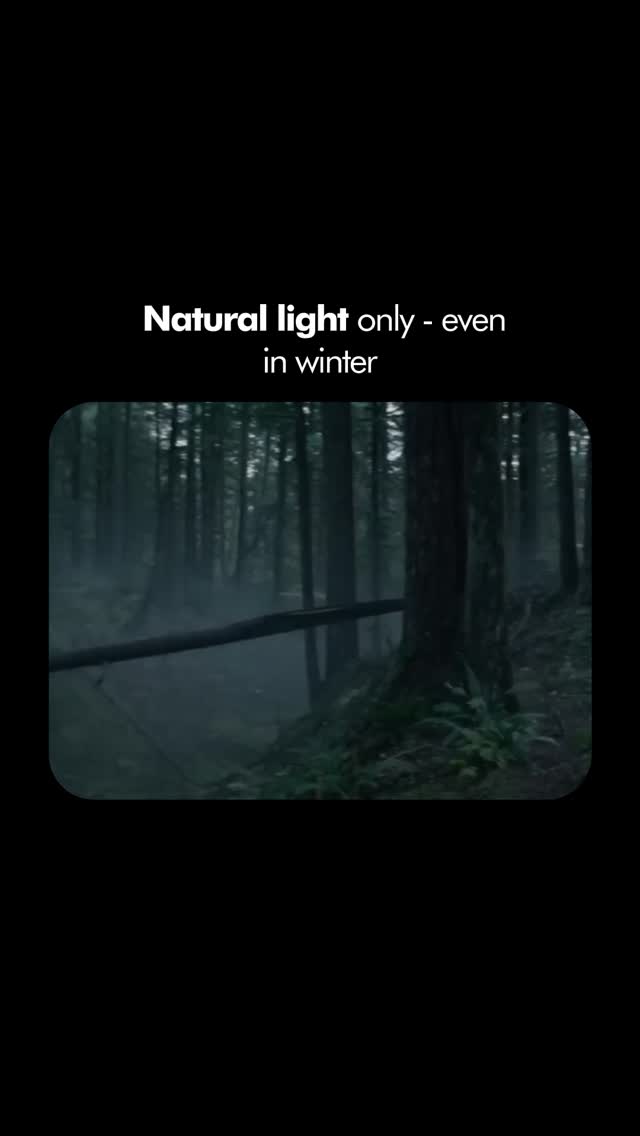
In the winter of 2014, deep within the remote wilderness of Alberta, Canada, director Alejandro González Iñárritu and cinematographer Emmanuel "Chivo" Lubezki, ASC, AMC set out to make a film that eschewed the comfort of modern cinematic safety nets. The Revenant was conceived not merely as a survival narrative, but as an exercise in radical naturalism. To achieve this, Lubezki instituted a strict technical visual dogma: no electric film lighting whatsoever. Every frame would be illuminated entirely by natural elements, sunlight, twilight, and open fire.
The Sacred Ninety Minutes: Harnessing Magic Hour
Restricting a multi-million-dollar studio production to natural illumination in extreme sub-zero conditions presented immense logistical hurdles. During Canadian winter days, the sun sat low on the horizon, yielding a brief operational window. Lubezki and Iñárritu frequently had as little as ninety minutes of usable light per day to execute intricate, highly choreographed long takes. The crew spent hours rehearsing endlessly during daylight, waiting for twilight or magic hour to roll the camera. When the light vanished into darkness, production halted immediately.
To make this philosophy viable without introducing unacceptable image noise in low light, Lubezki turned to the then-prototype ARRI Alexa 65 digital camera system alongside Alexa XT models. The large-format 65mm sensor provided unprecedented dynamic range, low-light performance, and clean signal-to-noise ratios, allowing him to capture subtle tonal gradations in deep shade and twilight. Paired with customized ultra-wide Leica Summilux-C and Master Prime lenses, ranging from 12mm to 18mm, the setup allowed the camera to sit mere inches from the actors while retaining vast environmental context.
Intimacy Through Wide Lenses and Continuous Motion
Lubezki’s signature visual style, honed through prior collaborations on Children of Men, The Tree of Life, and Birdman, reached a raw, visceral peak in The Revenant. Rather than relying on traditional cutaways or telephoto compression, Lubezki brought wide lenses extraordinarily close to Leonardo DiCaprio’s character, Hugh Glass. The result is a hyper-real perspective where the extreme wide-angle perspective places the audience inside the frost, blood, and mud alongside the protagonist.
"We wanted to make a movie that was immersive and visceral, where the camera didn't feel like a detached observer, but like a participant living in the environment alongside Glass.", Emmanuel Lubezki, ASC, AMC
Nowhere is this technical synergy more evident than in the film's harrowing, single-take bear attack. Operating on a Steadicam and custom hand-held rigs, the camera moves fluidly around Glass as he is savaged. Because the lens is placed at chest level, DiCaprio's warm breath directly fogs the front element. Rather than wiping the lens clear or painting out the condensation in post-production, Lubezki embraced the artifact as an authentic, tactile element of cinematic realism that demolished the traditional boundary between viewer and subject.
The Legacy of Extreme Naturalism
The physical toll on the production was legendary. As temperatures plummeted and local snow melted due to Chinook winds, the entire production migrated to Tierra del Fuego, Argentina, extending the shoot to nine brutal months. The unrelenting commitment to physical reality, actor performance, genuine frostbite conditions, and unyielding lighting continuity, demanded perfection from every department.
Lubezki’s work on The Revenant earned him his third consecutive Academy Award for Best Cinematography, an unprecedented feat following his victories for Gravity and Birdman. Beyond awards, the film stands as a defining milestone in contemporary camera craft. It pushed digital sensor technology to its absolute physical boundary, proving that high-end digital systems could be deployed not just for clean studio work, but to capture the sublime, unforgiving chaos of nature in its purest form.