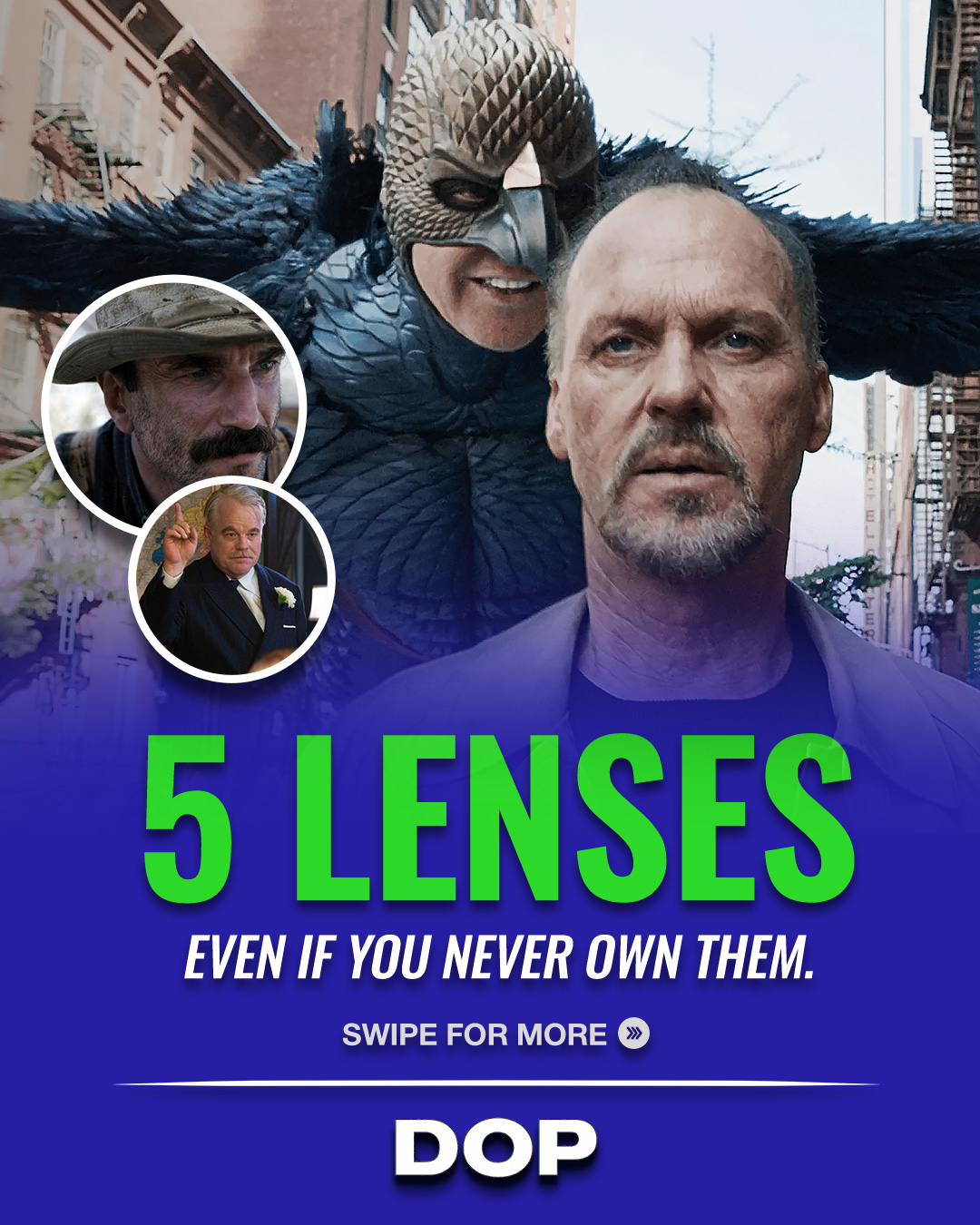
In the vast arsenal of a cinematographer, few tools are as fundamental yet as nuanced as the lens. More than just a piece of glass that gathers light, the chosen focal length acts as a direct conduit to the viewer's subconscious, shaping perception, dictating emotional response, and ultimately, telling the story. While modern zoom lenses offer unparalleled convenience, a deep appreciation for the distinct character and psychological impact of prime focal lengths remains a hallmark of master cinematographers. This isn't merely about technical specifications; it's about understanding the inherent language each lens speaks.
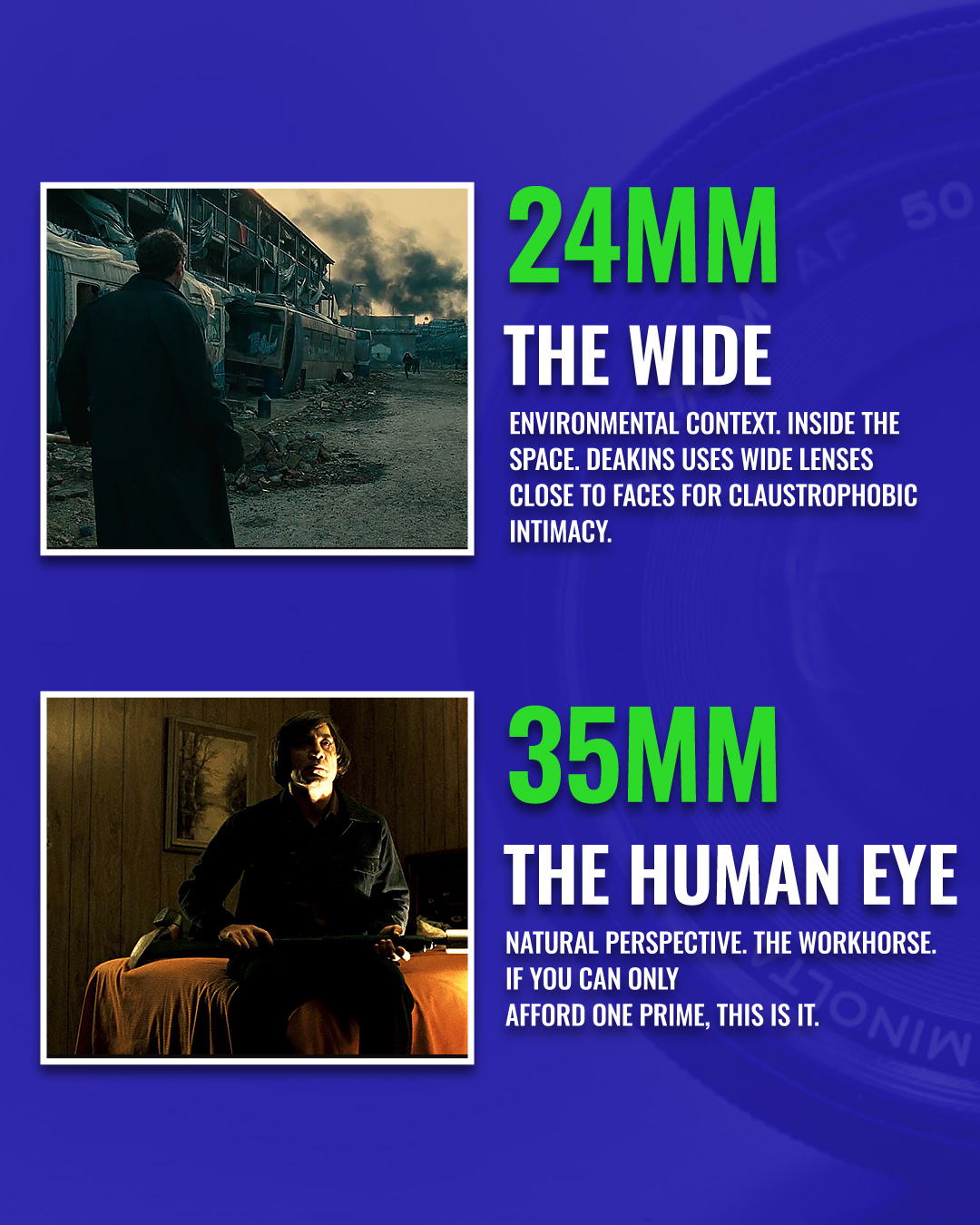
Consider the expansive embrace of the 24mm lens. It's a focal length that doesn't just capture a scene; it engulfs the viewer within it. The wider field of view inherently provides environmental context, grounding characters within their surroundings. Yet, in the hands of a craftsman like Roger Deakins, ASC, BSC, this very distortion, often seen as a liability, becomes a powerful expressive tool. Think of the claustrophobic intimacy achieved when a 24mm is brought uncomfortably close to a face – the slight bulge, the distorted features, the feeling of being trapped within the frame. It's not a 'pretty' image in the conventional sense, but it is undeniably effective, fostering a visceral connection or a sense of unease. For DPs working on projects demanding immersive realism or a heightened sense of anxiety, the 24mm is an invaluable ally, often paired with cameras boasting larger sensors to mitigate the extreme edge distortion while retaining its immersive qualities.
The Human Eye & Narrative Workhorses
Moving inward, the 35mm lens often earns the moniker 'the human eye's perspective.' It's the focal length that most closely approximates our natural field of vision, rendering scenes with a balanced perspective that feels inherently 'right' to the viewer. This makes it an indispensable workhorse for narrative cinema, offering a subtle sense of presence without overt distortion or compression. For cinematographers building their foundational kit, a high-quality 35mm prime is often the first recommendation, providing versatility across a wide range of scenarios, from medium shots to wider establishing frames. Its neutral character allows the story and performance to take center stage, making it a favorite for directors who prioritize unobtrusive visual storytelling. Paired with a camera like the ARRI Alexa Mini LF, a 35mm lens can deliver stunning, naturalistic images with beautiful fall-off and organic skin tones.
“The lens choice isn't just about what you see, but how you feel about what you see.”
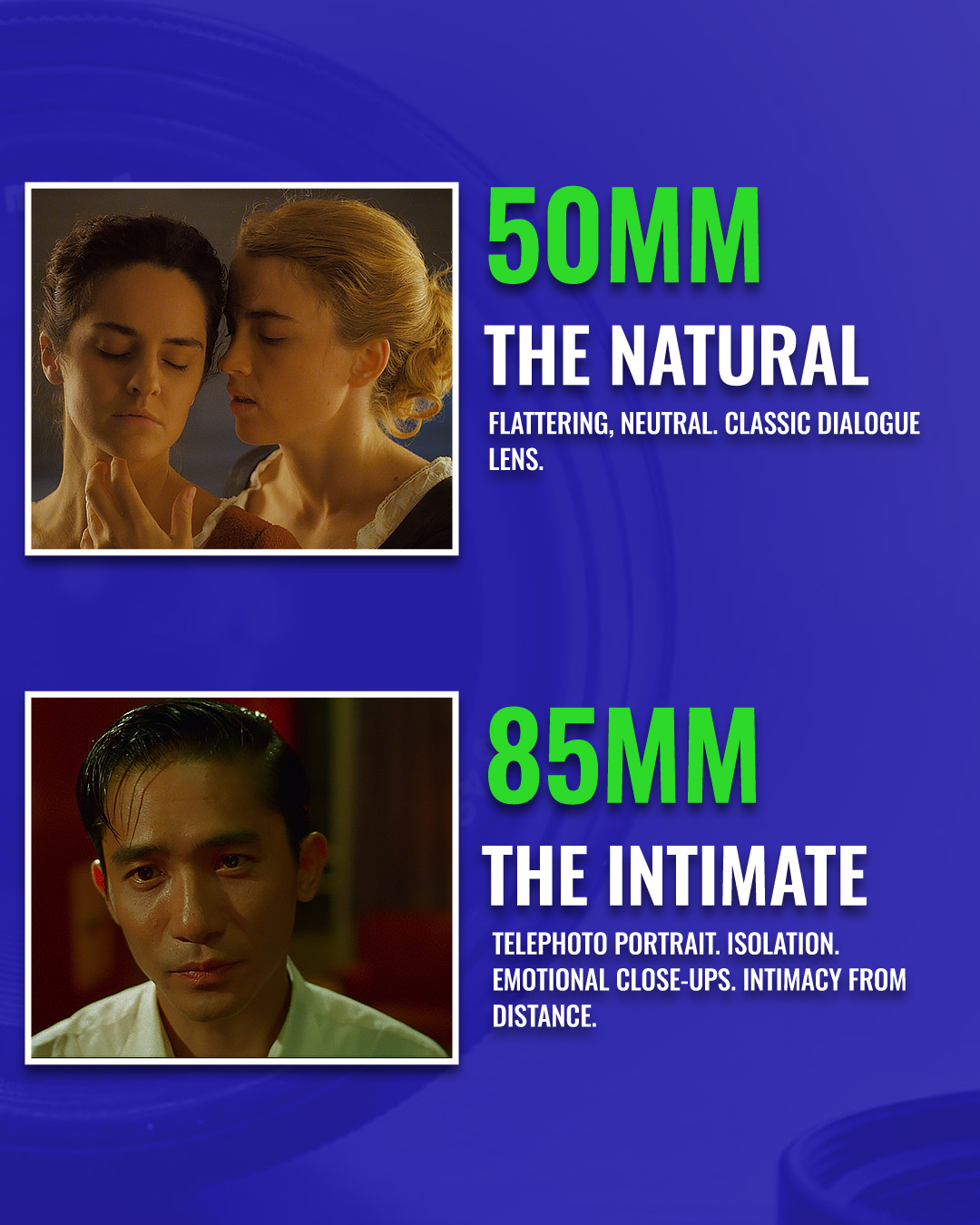
The 50mm lens, in turn, offers a distinct step towards a more focused perspective. Its neutral compression and lack of noticeable distortion make it the default choice for dialogue scenes, interviews, and any situation demanding a natural, flattering rendering of the subject. It’s the lens that allows for a comfortable distance between camera and actor while still maintaining a strong sense of connection. Many cinematographers, from Emmanuel Lubezki, ASC, AMC, to Rachel Morrison, ASC, have demonstrated the expressive power of the 50mm, using its inherent balance to create images that are both intimate and aesthetically pleasing. It's a focal length that excels in portraiture, isolating the subject gently from the background without the extreme compression of longer lenses, making it a staple across genres.
Isolation, Longing, and the Telephoto Gaze
As we venture into the telephoto realm, the psychological impact shifts dramatically. The 85mm lens begins to introduce significant depth compression, effectively 'stacking' elements within the frame and separating the subject from the background with a beautifully shallow depth of field. This quality makes it ideal for emotional close-ups and intimate portraiture, drawing the viewer's focus directly to the character's expression and inner world. Think of the poignant close-ups in films shot by Robert Richardson, ASC, where the 85mm often plays a crucial role in creating a sense of isolation and intense focus on a character's emotional state. The smooth, creamy bokeh produced by an 85mm at a wide aperture is highly sought after, especially when paired with vintage glass like Cooke S4s or Leica Summilux-Cs, which add unique character to the out-of-focus areas.
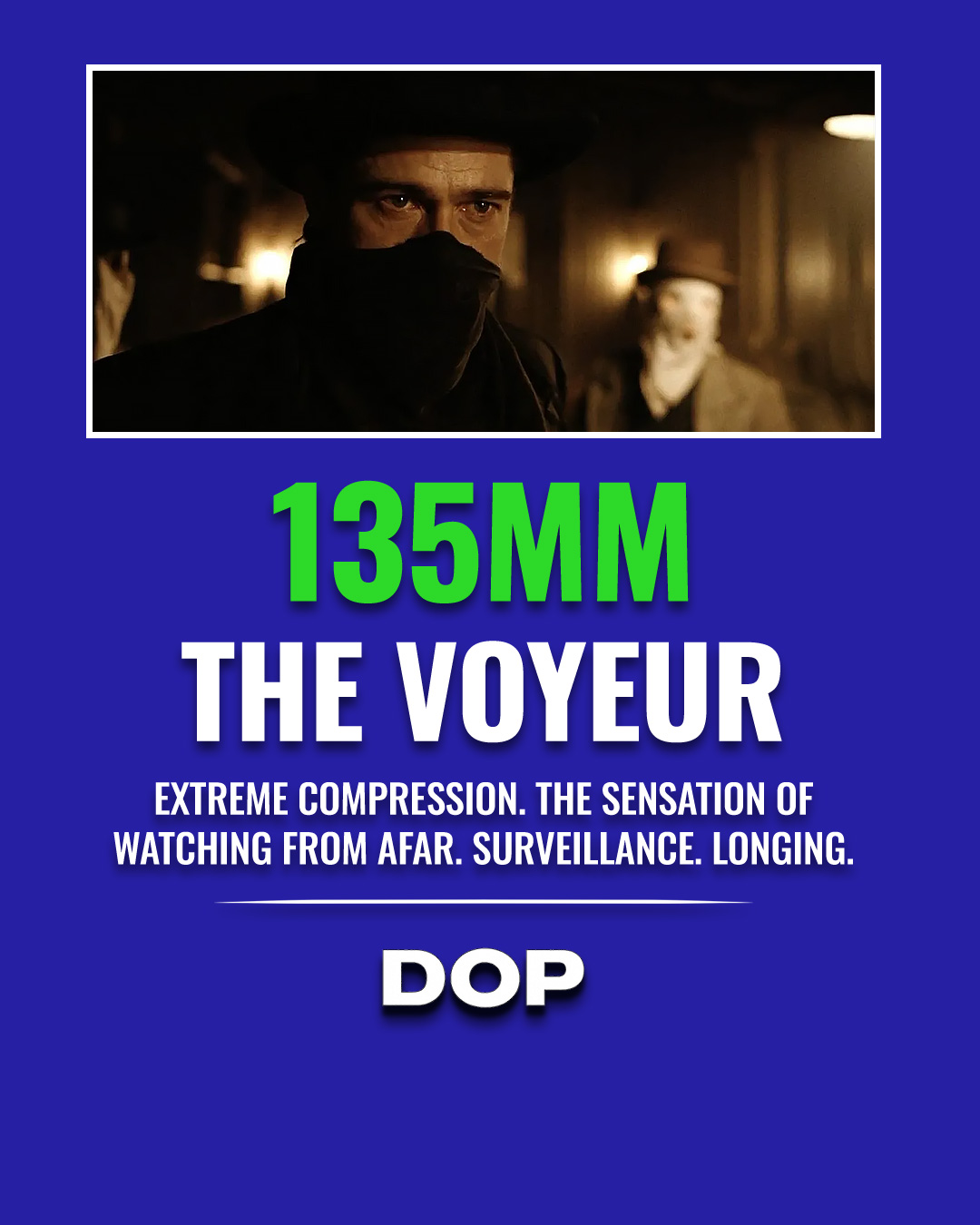
Finally, the 135mm lens pushes this compression and subject isolation to an extreme. The very shallow depth of field and pronounced background compression create a sense of observing from a distance, often without the subject's awareness. This makes it a powerful tool for sequences depicting surveillance, longing, or profound separation. The sensation it evokes is one of detachment, a voyeuristic gaze that can be both unsettling and deeply moving. When a character is framed with a 135mm, the viewer feels an almost physical barrier, emphasizing their isolation or the emotional chasm between them and their surroundings. Cinematographers like Bradford Young, ASC, have masterfully employed longer focal lengths to evoke a sense of quiet observation and emotional distance, making the 135mm a specialized but incredibly impactful choice when the narrative calls for it.
Ultimately, the choice of focal length is never arbitrary; it is a profound act of visual storytelling. By understanding the inherent emotional and psychological associations of each lens, cinematographers can transcend mere technical proficiency. They can make conscious, deliberate choices that amplify the narrative, deepen character, and manipulate the audience's perception, transforming a simple scene into a powerful emotional experience. It's about wielding the language of lenses to speak directly to the heart of the story.
This article contains affiliate links. We may earn a small commission at no extra cost to you. Learn more.