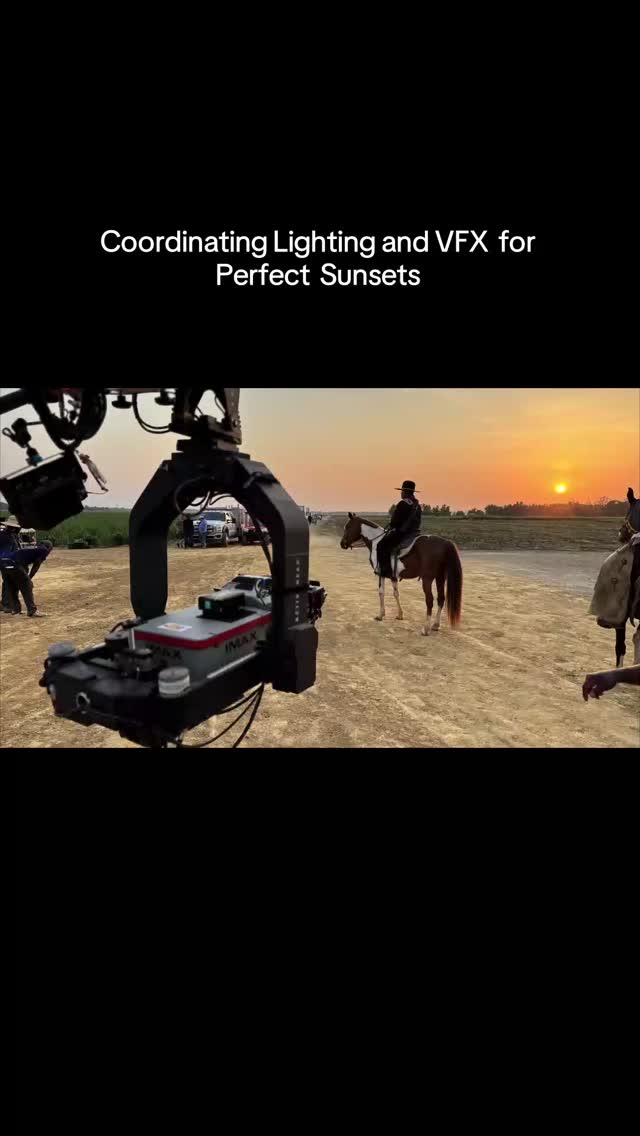
In the world of cinematic illusion, few moments are as universally beloved and simultaneously challenging to capture as the golden hour. That fleeting period of warm, soft light just before sunset or after sunrise, often imbued with a sense of magic and emotional resonance. While cinematographers are masters of manipulating light on set, the increasing reliance on visual effects, particularly for background replacement, has added a critical layer of pre-production planning and post-production communication that can make or break the illusion. The traditional wisdom of 'fix it in post' is a dangerous myth; the modern DP understands that 'plan it for post' is the true secret sauce.
The Illusion of Continuity: Pre-Visualization is Key
The seamless integration of a digitally inserted sunset or sunrise background isn't merely about the VFX artists' skill; it begins with the Director of Photography's meticulous foresight. Before a single frame is shot, the DP, often in collaboration with the director and production designer, must precisely map out the sun's trajectory and position relative to the set and actors. This isn't just about general direction; it's about specific angles of incidence, the quality of light, and the anticipated color temperature. Tools like sun path calculators, LIDAR scans of locations, and detailed storyboards become invaluable in this phase, allowing for a precise understanding of how natural light would behave in that environment at that specific time.
Consider the work of Roger Deakins, ASC, BSC, in films like *Blade Runner 2049*. While much of that film's aesthetic is built on practical sets and cutting-edge lighting, even in environments with extensive digital extensions, the foundational principles remain: light sources must be consistent. If a scene is shot on a soundstage with green screen windows, the on-set lighting must meticulously mimic the light that would emanate from the digitally inserted sunset. This includes not just the direction, but also the softness, the color temperature, and the intensity. A hard-edged, cool-toned light hitting an actor's face will immediately betray a soft, warm, digitally rendered golden hour background.
“The modern DP understands that 'plan it for post' is the true secret sauce.”
Technical Cohesion: Bridging On-Set and VFX
The communication doesn't end with pre-visualization; it extends into the technical execution on set. The DP must provide the VFX team with comprehensive data. This includes detailed camera metadata, lens choice, aperture, focal length, sensor information, and even camera tilt and roll. Crucially, precise measurements of the practical lighting setup used on set are essential. This could involve documenting the exact placement of large-format HMIs or LEDs, their diffusion choices, and their color gels. For instance, if a DP uses a 20K Tungsten Fresnel gelled with 1/2 CTO to simulate a warm sunset glow from a specific angle, that information is gold for the VFX team trying to match ambient light and reflections.
Furthermore, reference photography and video from the set are indispensable. Chrome balls and grey balls, standard tools for VFX, capture environmental reflections and light values, providing crucial data for matching the digital background to the live-action foreground. Even simple camera position markers and lens grids can help VFX artists precisely track the camera's movement and perspective, ensuring the digital sun aligns perfectly with the practical light on the actors.
The Art of Seamless Integration: Beyond the Technical
Beyond the technical minutiae, there's an artistic sensibility at play. The DP's vision for the sunset isn't just a matter of light direction; it's about mood, narrative, and emotional impact. Is it a melancholic dusk, a fiery, dramatic end to the day, or a serene, romantic twilight? These artistic choices must be communicated clearly and consistently to the VFX supervisor. The color science employed on set, the camera's native color rendition, the LUTs applied during monitoring, and the intended final grade, forms the bedrock upon which the VFX team builds the digital environment. Mismatched color temperatures or disparate contrast ratios between the live action and the digital background are immediate red flags for the discerning viewer.
This level of integration is particularly evident in films that push the boundaries of digital environments, such as Denis Villeneuve's *Dune*, where Greig Fraser, ASC, ACS, meticulously crafted an aesthetic that blended practical and digital elements into a cohesive, believable world. The sun, whether real or digital, always felt intrinsically part of Arrakis. The success of such ambitious projects underscores a fundamental truth in modern cinematography: the DP's role has expanded beyond merely lighting the set. It now encompasses a holistic understanding of the entire visual pipeline, from pre-production concept to final pixel. The 'secret sauce' isn't just about the on-set execution; it's about the continuous, informed dialogue that ensures every element, whether captured by the lens or rendered by a computer, contributes to a single, unified, and utterly believable cinematic reality.
The Evolution of the DP's Role
The evolution of digital filmmaking and visual effects has profoundly reshaped the role of the Director of Photography. No longer can a DP operate in a silo, solely focused on the immediate concerns of the set. They must now be fluent in the language of post-production, understanding the capabilities and limitations of VFX, and actively participating in the planning and execution that bridges the gap between the physical and the digital. This requires a new level of technical literacy, an enhanced capacity for collaboration, and a deepened understanding of the entire image-making process.
The masterful creation of a believable on-screen sunset, or any complex visual effect for that matter, stands as a testament to this collaborative synergy. It highlights that the magic of cinema isn't just found in the grand gestures or the groundbreaking technology, but in the meticulous planning, the precise communication, and the shared vision that transforms individual craft into a seamless, immersive experience for the audience. The DP's eye for light, combined with their strategic foresight for post-production, ensures that the golden hour, whether real or digitally crafted, always feels authentically cinematic.
This article contains affiliate links. We may earn a small commission at no extra cost to you. Learn more.