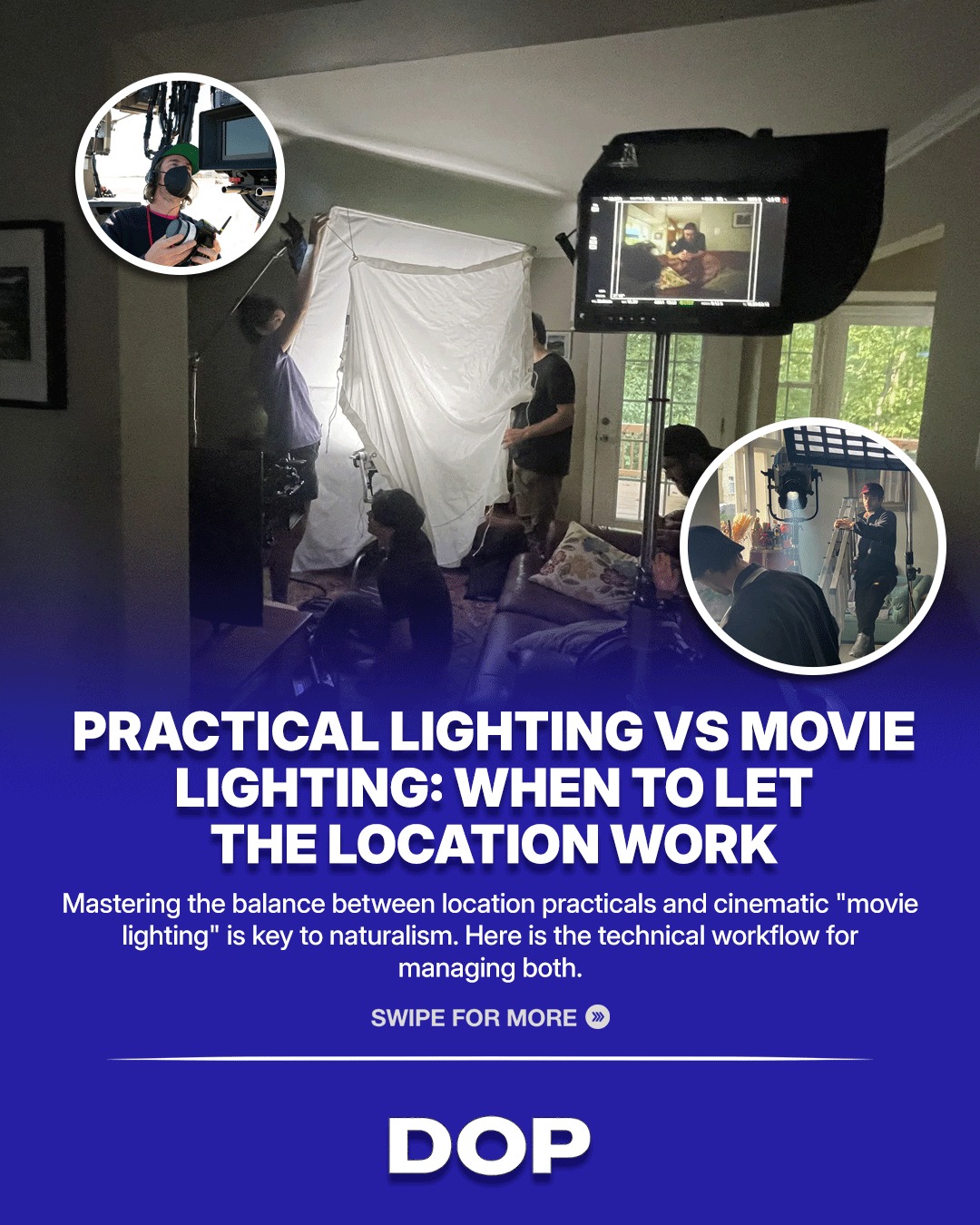
In the intricate dance between light and shadow, the cinematographer often finds their most potent ally not in an array of expensive fixtures, but in the inherent character of the location itself. The notion that a space imbued with strong directional light or compelling, motivated practicals can perform the lion's share of a DP's work is not merely a philosophical musing; it's a foundational principle embraced by masters of the craft. It speaks to a profound understanding of visual storytelling, where authenticity often trumps artificiality, and the environment becomes an active participant in shaping the narrative.
Consider, for instance, the profound impact of natural light pouring through a window, casting long, raking shadows that carve out form and texture. Or the warm, inviting glow emanating from a table lamp, its light source evident and justified within the scene. These are not merely sources of illumination; they are narrative elements, informing the audience about time, place, and mood. When a location inherently offers these visual cues, the cinematographer's role shifts from creating light from scratch to sculpting, refining, and sometimes, simply preserving what is already there.
The Deakins Doctrine: Less is Often More
No discussion of motivated and available light would be complete without invoking the name of Roger Deakins, ASC, BSC. His work on films like *No Country for Old Men* stands as a masterclass in this very philosophy. Deakins famously held long sequences in available light, particularly during the desert and motel scenes, allowing the stark realities of the environment to dictate the visual texture. His approach is not one of neglect, but of profound respect for the existing light. He understands that augmenting light should be a considered choice, a response to a failing in the scene's inherent illumination, rather than a default action.
“My job is not to light a scene; it’s to light the story.”, Roger Deakins
This isn't to say Deakins eschews artificial light entirely. Rather, his genius lies in making any augmentation invisible, seamlessly blending it with the natural or practical sources. When he does introduce light, it's often to enhance a shadow, to deepen a mood, or to subtly guide the viewer's eye, always with an eye toward maintaining the integrity of the scene's inherent realism. On *No Country for Old Men*, for example, while much was shot with natural light, careful consideration was given to how the sun would track, and how minimal fill or negative fill might be used to shape faces or control contrast, ensuring the brutal beauty of the landscape was never compromised by an overly lit subject.
Technical Nuances: Sensor Choice and Lens Character
The ability to work effectively with minimal or available light is also deeply intertwined with the technological advancements in cinematography. High-sensitivity camera sensors, such as those found in the ARRI Alexa or Sony VENICE, have empowered DPs to capture clean images in incredibly low-light conditions, further reducing the need for extensive artificial illumination. This allows for greater freedom in choosing locations that might have been deemed too dark in previous eras. Coupled with fast lenses, like a set of ARRI Signature Primes or Cooke S7/i, which offer wider apertures and beautiful fall-off, the natural character of a scene can be preserved and even elevated.
Deakins, known for his preference for the ARRI Alexa and anamorphic lenses on certain projects, understands how these tools can capture the nuances of existing light. The dynamic range of modern sensors allows for the preservation of highlight detail in bright windows while still holding information in the shadows, mimicking the way the human eye perceives light. The character of the lens, its flare, its bokeh, its rendition of skin tones, also plays a crucial role in how motivated light is translated to the screen, adding another layer of authenticity to the visual narrative.
Ultimately, the lesson from Deakins and the philosophy of motivated light is one of restraint and observation. The cinematographer who can identify and harness the inherent qualities of a location's light sources, whether it be the harsh midday sun, the soft glow of an overcast sky, or the intimate warmth of a practical lamp, is one who understands the profound power of authenticity. Augment when the location fails the scene, yes, but not before. This approach not only lends a tangible realism to the images but also allows the story to breathe, unencumbered by artificiality, inviting the audience deeper into its world.
This article contains affiliate links. We may earn a small commission at no extra cost to you. Learn more.