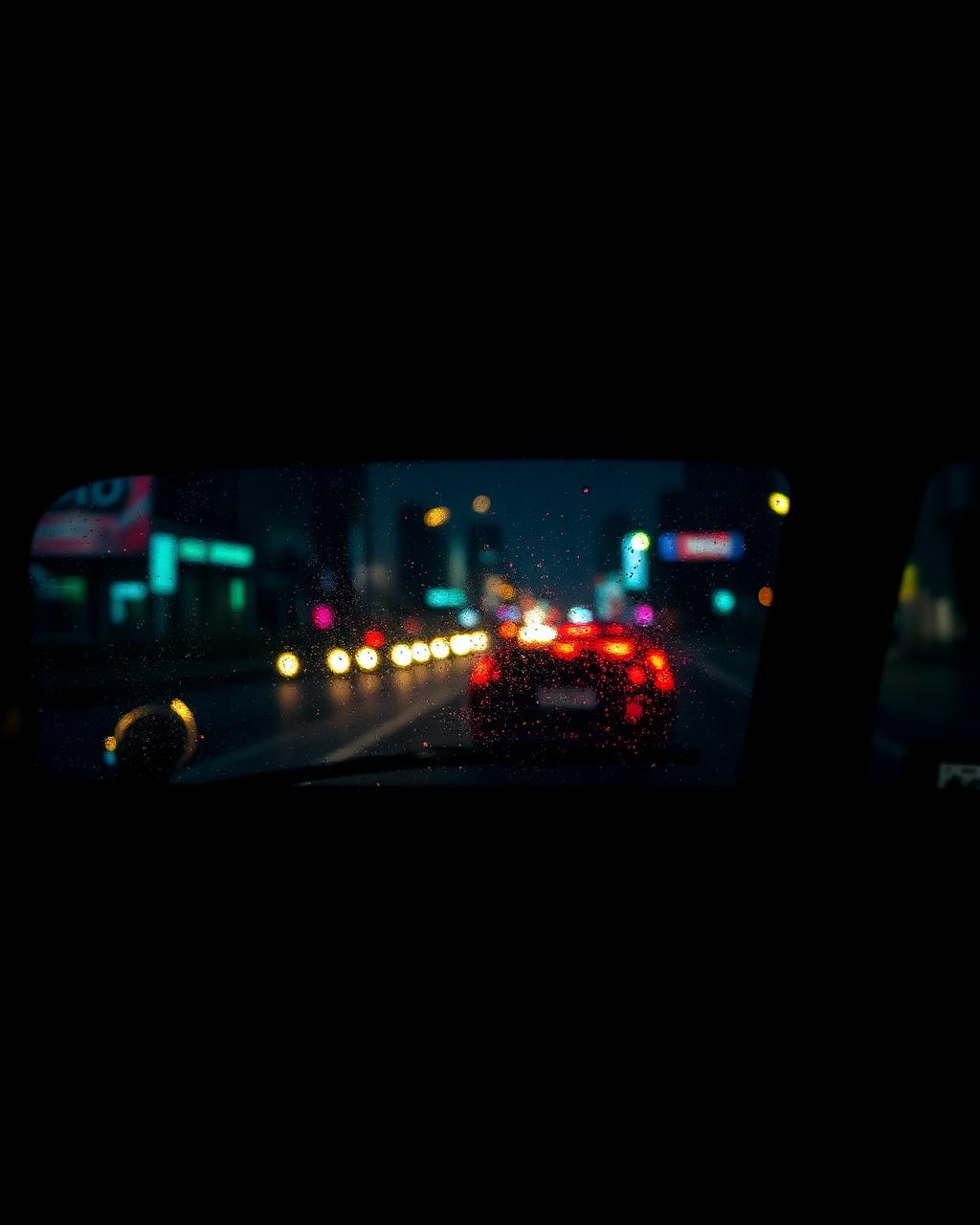
Maria Sarasvati Herrera faced one of the most specific craft challenges at Sundance 2026: maintaining visual immersion in a character's mental deterioration while the camera is mounted inside a real, active bus moving through Ciudad Juarez, Mexico. The Huntress, featured in the ASC's Sundance 2026 cinematography roundup, required Herrera to build a visual logic of psychological unraveling while navigating the practical constraints of shooting in an uncontrolled public environment.
The challenge is not just technical but narrative. The character's mental state must be communicated through cinematography—through camera position, focal length, framing choices—not through editing or performance alone. As the mind breaks down, the image should register that breakdown. But the character is on a real bus, with real people around her, moving through real streets. Herrera had to maintain that internal perspective while adapting to actual bus movement, natural light changes, unpredictable bystanders, and the logistics of keeping a camera rolling in a moving vehicle.
The ASC coverage describes the cinematography as immersing the viewer in 'the main character's mental deterioration.' This is precise language. It doesn't say the cinematography documents the deterioration. It immerses the viewer in it. This requires a particular kind of visual discipline: the camera must be close enough to the character that we register her subjective state, but positioned in a way that makes physical sense on an actual bus. The focal lengths must feel claustrophobic. The compositions must suggest instability without becoming incomprehensible.
One approach would be to use the bus as an excuse for handheld, shaky cinematography—letting the movement and instability become the visual register of the character's state. But that's a surface technique. Herrera's work requires deeper visual logic. The question is: how does a deteriorating mind perceive the world? What does that perception look like through a camera? How do you photograph that while sitting in a moving vehicle in a real city?
The answer lies in focal length, framing, and positioning. Longer focal lengths compress space, creating the feeling of psychological claustrophobia even in an open environment. Tighter framing eliminates peripheral information, creating tunnel vision. Camera positioning that is close and awkward (rather than composed) suggests discomfort. These are cinematographic choices that require advance planning, but they must also be flexible enough to adapt to the realities of location shooting.
For cinematographers interested in how to work in uncontrolled environments while maintaining visual storytelling coherence, Herrera's work on The Huntress offers a model. The solution was not to fight the bus, the city, or the uncontrollable environment. It was to use those constraints as the cinematography's language.
A character's mind breaks down on a real bus moving through a real city. Herrera held the visual logic of that breakdown. That is craft under pressure.
Gear Recommendations
- Aputure 600d Pro LED | Adorama – B&H Photo
- Nanlite Forza 300B | Adorama – B&H Photo
- DJI RS 4 Pro Gimbal – Amazon
- Easyrig Vario 5 | Adorama – B&H Photo
- Blackmagic Pocket Cinema Camera 6K Pro | Adorama – B&H Photo
Note: Links above are affiliate links. Occupy Cinematography may earn a commission on qualifying purchases at no additional cost to you.