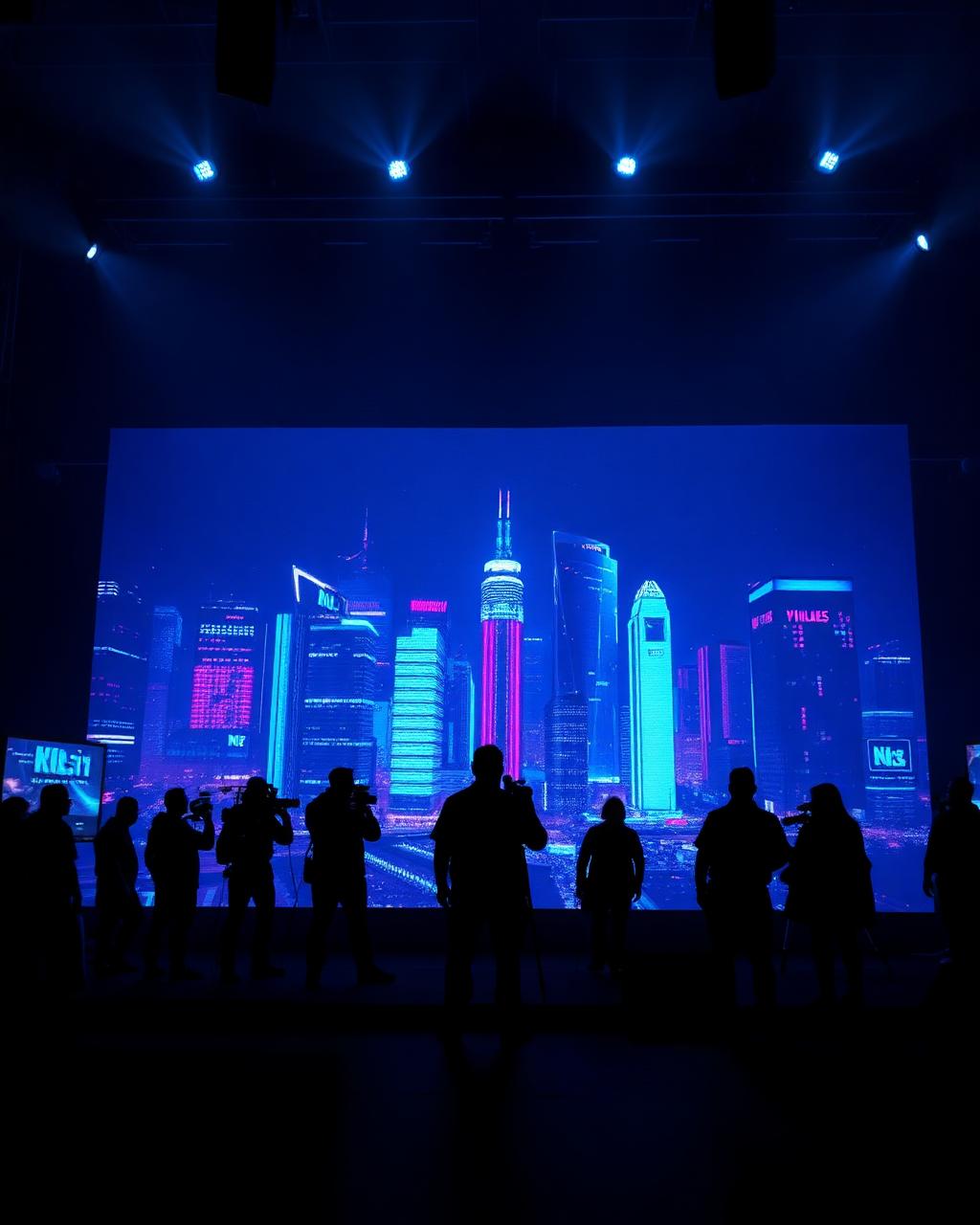
A film that takes place almost entirely inside a taxi at night in Berlin, following two men from different cultures through nocturnal rides, presents a cinematographic problem that location shooting cannot solve: you need the illusion of movement through a city while maintaining absolute control over light sources, reflections, and color temperature. Director Assaf Machnes and cinematographer Maayane Bouhnik solved it with an LED stage. The film, Where To?, premiered at Berlinale 2026 in the Perspectives section, and Bouhnik maintained visual fluidity despite the most restricted space imaginable.
On location, shooting a nighttime taxi film means mounting cameras to an actual moving car, dealing with unpredictable street lighting, losing control of reflections in windows, and accepting that you will never see the city clearly. On an LED stage, the filmmakers recreated moving Berlin exterior on a custom LED wall. The taxi interior remained static. The exterior changed around it. This allowed Bouhnik precise control: she could adjust the color temperature as the taxi moved through different neighborhoods; she could create window reflections that told the story rather than documenting reality; she could maintain visual continuity across multiple shooting days when light conditions would have been impossible to match on location.
Screen Anarchy's review noted: 'Bouhnik maintains visual fluidity despite the restricted space of the car interior, working with alternating perspectives from the front and back seats.' This alternation between front and back seat angles creates a visual rhythm that suggests movement without showing it. The camera shifts based on which character is dominant in the moment. But because the exterior is controlled via LED, those shifts never break continuity. The city outside remains consistent even as the interior perspective changes.
The LED stage approach is not new—it's been used in countless big-budget productions—but applying it to a two-character dialogue film at a festival premiere represents a different kind of commitment. The technology is expensive and requires careful planning, but for a film entirely dependent on the illusion of continuous movement, it solved problems that location shooting could never address. You cannot light a moving car on a city street. You can light a car on a stage with an LED exterior.
For cinematographers interested in how to solve production problems at the design level rather than on set, Bouhnik's approach is instructive. The solution was not found during the shoot. It was found during pre-production, when Machnes and Bouhnik recognized that location shooting would compromise the visual storytelling. They made the difficult decision—building an LED stage for a taxi—and the cinematography benefited from that discipline.
A taxi film shot on an LED stage. The illusion of movement through a city that the camera never left. That is a production problem solved at the design level, not on set.
Gear Recommendations
- DaVinci Resolve Studio | Adorama – B&H Photo
- Tangent Element Panels | Adorama – B&H Photo
- Blackmagic Pocket Cinema Camera 6K Pro | Adorama – B&H Photo
- Sigma 18-35mm f/1.8 Art | Adorama – B&H Photo
- Tiffen Black Pro-Mist 1/4 Filter | Adorama – B&H Photo
Note: Links above are affiliate links. Occupy Cinematography may earn a commission on qualifying purchases at no additional cost to you.