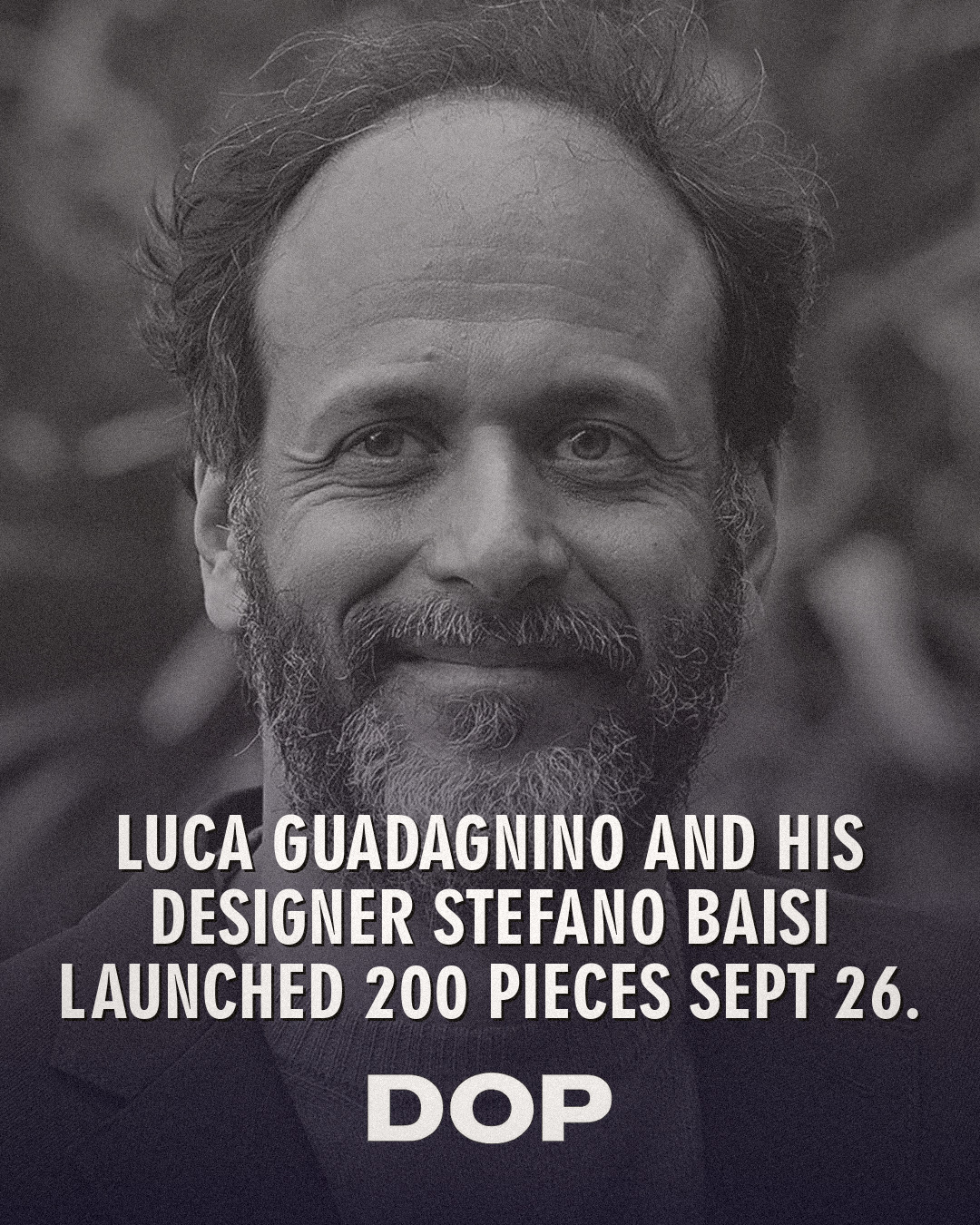
Few contemporary filmmakers possess an eye for interior spaces as sensual, tactile, and narratively loaded as Luca Guadagnino. From the sun-bleached villa in Call Me by Your Name to the mid-century academic confines of Suspiria and the sweat-soaked hotel rooms of Challengers, Guadagnino treats production design not as passive set dressing, but as an emotional participant in the scene. With his latest endeavor, Guadagnino joins forces once again with production designer Stefano Baisi to launch a massive, 200-plus piece worldwide collection for Zara Home, titled an “atlas of desire.”
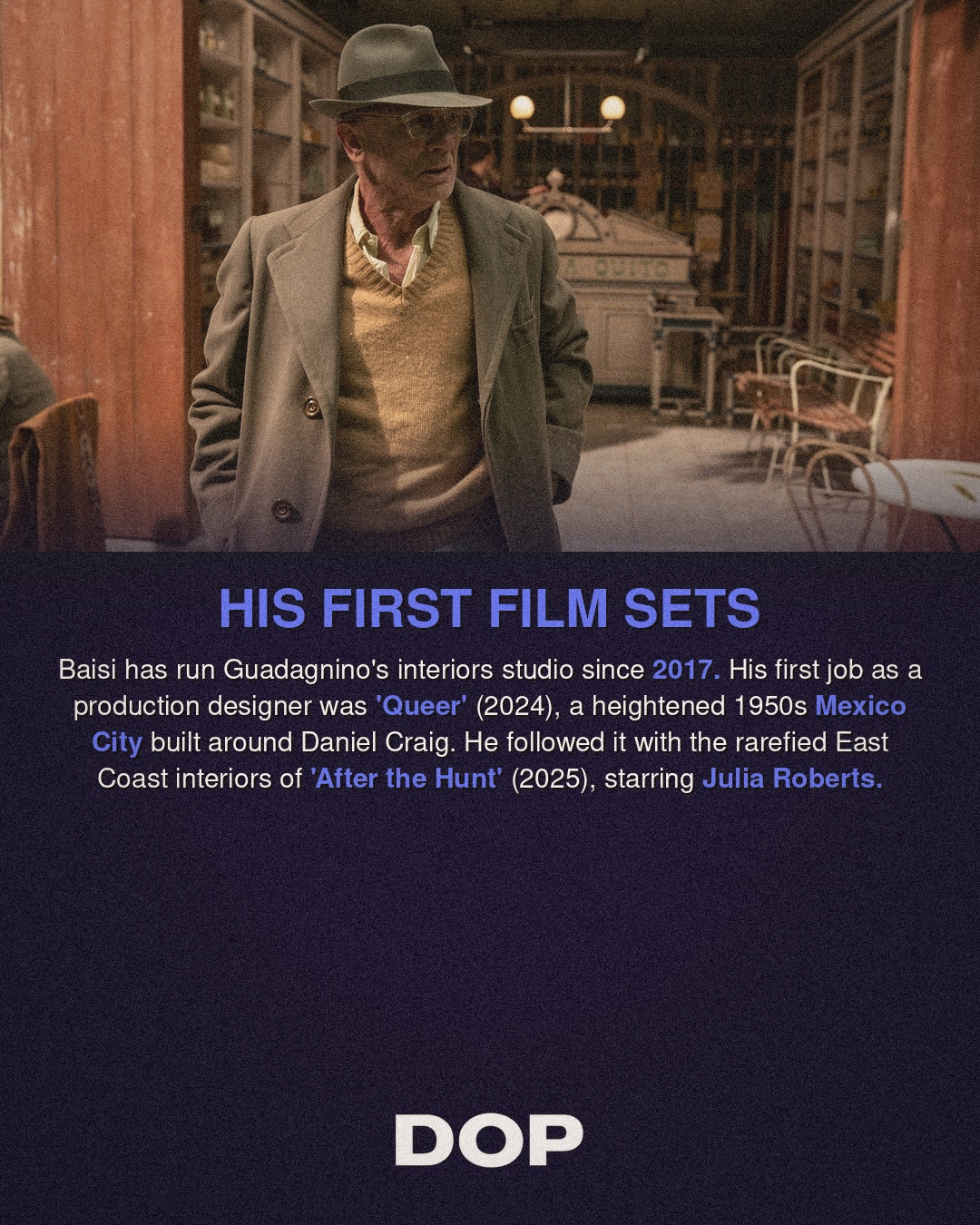
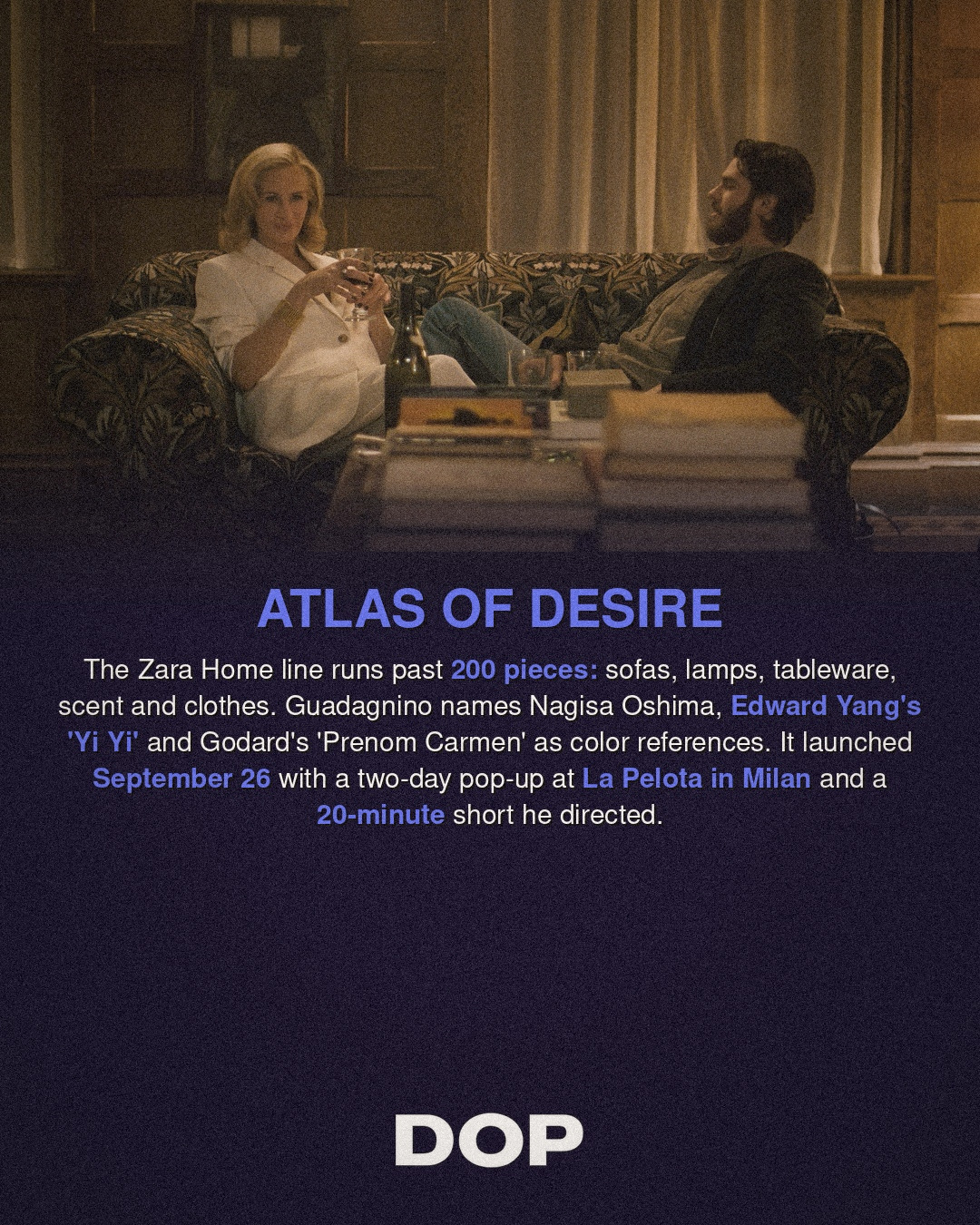
Baisi, whose recent collaborations with Guadagnino include the upcoming feature adaptations Queer and After the Hunt, approaches physical environments with an architect’s discipline and a painter’s affection for natural texture. The collection traverses Viennese Secessionism, French Art Deco, and Brazilian Modernism, manifesting in everything from low-slung timber sofas and hammered brass tableware to bespoke textiles and architectural lamps. To accompany the worldwide rollout, Guadagnino directed a 20-minute narrative short written by Scott Z. Burns, starring Jamie Bell, Patricia Arquette, Michael Stuhlbarg, and Chase Sui Wonders, set within environments designed by Baisi.
Spatial Storytelling: Designing for the Lens
For cinematographers, working with a director-designer pairing of this caliber transforms how lighting and blocking operate on set. In Guadagnino’s visual lexicon, frequently realized in partnership with DPs like Sayombhu Mukdeeprom and Arseni Khachaturan, every interior must breathe under natural and motivated light. Baisi designs spaces with depth planes explicitly tailored to wide focal lengths, creating layered compositions where characters can drift from soft foreground silhouettes into luminous background tapestries.
The collection’s deliberate emphasis on practical illumination is particularly revelatory. When designing for the camera, domestic lamps are not merely decorative; they serve as critical key and accent sources that anchor the exposure map of a sequence. The geometric fixtures in this collection provide warm, low-intensity specular highlights, giving digital sensors the subtle organic falloff typically associated with shooting tungsten stock on 35mm.
“Great production design doesn’t merely stage a room; it sculpts the trajectory of light, dictating how a camera moves and where the shadows must linger.”
In the accompanying 20-minute short film, that interplay between character blocking and physical decor takes center stage. Written with the sharp structural rhythm characteristic of Scott Z. Burns, the piece leans into domestic choreography. Bell, Arquette, Stuhlbarg, and Wonders navigate rooms where the tactile presence of materials, open-pore walnut, glazed ceramics, heavy woven linens, absorbs and scatters light, allowing the camera to move effortlessly through wide establishing frames into intimate, macro-detail cutaways.
The Mechanics of Domestic Atmosphere
Achieving this level of interior presence on modern digital sensors requires an uncompromising technical balance. When capturing materials influenced by Secessionist geometry and Brazilian Modernism, lens choice becomes paramount. Cinematographers shooting Guadagnino’s interiors often gravitate toward vintage glass or detuned modern optics, such as Cooke Speed Panchros or Arri Rental DNA primes, which soften modern high-resolution sensors and introduce gentle roll-off at the edges of the frame.
Pairing these optics with the wide dynamic range of cinema cameras like the ARRI Alexa 35 allows DPs to embrace extreme contrast ratios. Deep shadows under a low-profile sofa can retain subtle shadow detail, while soft natural daylight pouring through sheer drapes maintains soft, non-clipping highlight transitions. Stefano Baisi’s palette of earth tones, deep ochres, and muted forest greens acts as a built-in look-up table (LUT), giving colorists a rich foundation for rich skin tones and authentic saturation.
By debuting the collection alongside an ambitious narrative short and a two-day physical pop-up installation in Milan, Guadagnino and Baisi bridge the gap between cinema, design, and lived experience. For filmmakers and visual storytellers, the collaboration serves as a potent reminder: the camera can only capture what is placed before it, and when the physical world is crafted with intention, every frame commands attention.
This article contains affiliate links. We may earn a small commission at no extra cost to you. Learn more.