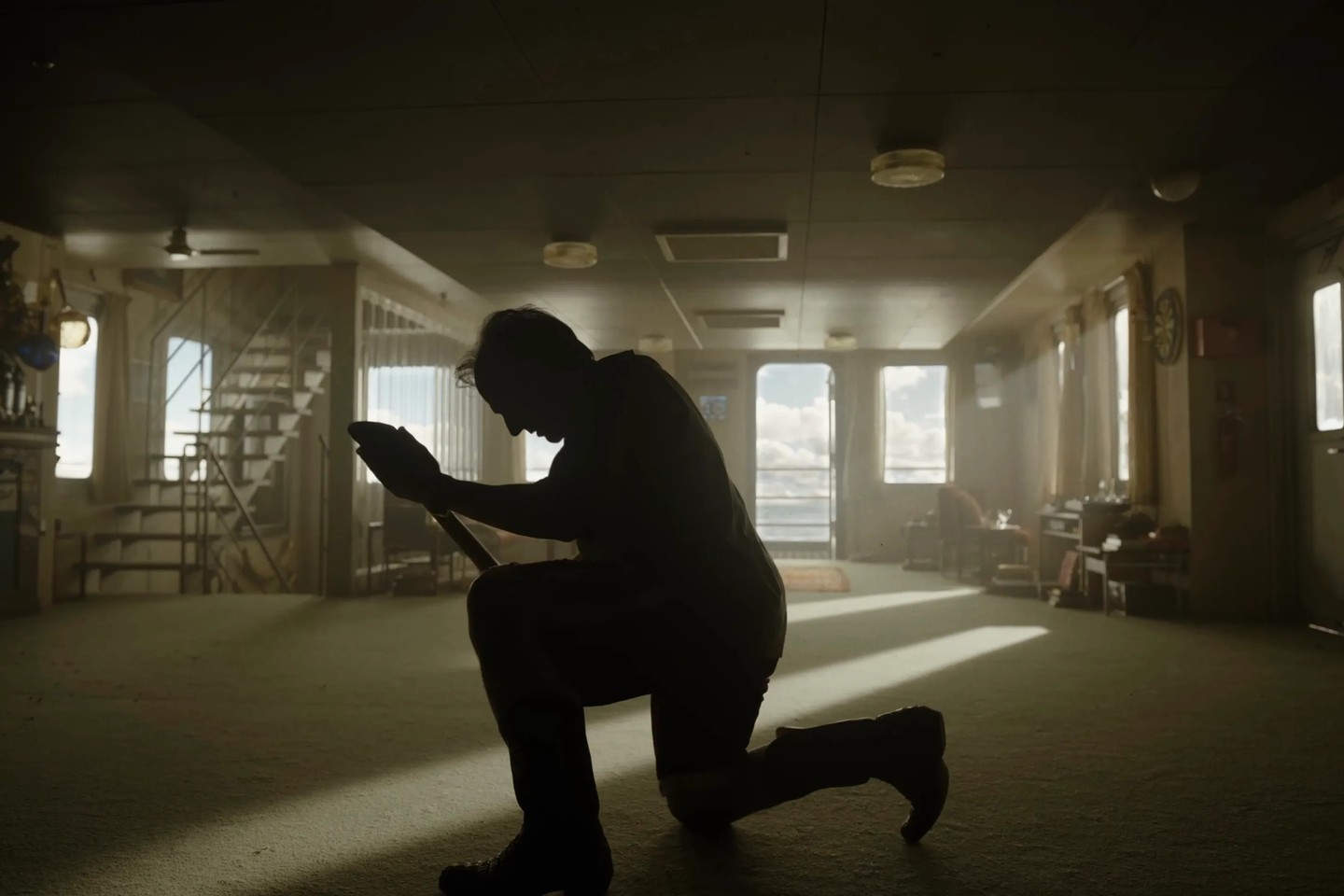
The cinematic landscape has long been shaped by iconic pairings: Scorsese and Ballhaus, Nolan and Van Hoytema, and, perhaps most profoundly in recent memory, Iñárritu and Lubezki. The announcement of their fifth collaboration, Digger, sends a jolt of excitement through the cinematography community, not just for the reunion of these titans, but for the tantalizing technical details emerging from Pinewood Studios. After a hiatus from major studio features since 2022's Amsterdam, and a strong return with the limited series Disclaimer, Lubezki's lens is once again poised to redefine visual storytelling.
Their prior collaborations are the stuff of legend. Birdman (2014) was a masterclass in seamless, unbroken takes, a ballet of camera movement that plunged audiences into the protagonist's unraveling psyche. The film, shot on the Arri Alexa XT with Arri/Zeiss Ultra Prime and Angenieux Optimo lenses, pushed the boundaries of digital cinematography, demonstrating that the medium could achieve an almost tactile quality often associated with film. Then came The Revenant (2015), a brutal, breathtaking epic that earned Lubezki his unprecedented third consecutive Academy Award. Here, the challenge was capturing the untamed wilderness with natural light, often in sub-zero conditions, using the ARRI Alexa 65 and Alexa XT, paired with vintage lenses like the Panavision Anamorphic C-Series and Leica Summilux-C. Lubezki's commitment to verisimilitude, even under extreme duress, became a benchmark for modern survivalist cinema.
The Lubezki-Iñárritu Synergy: A Decade of Innovation
What makes the Lubezki-Iñárritu partnership so potent? It's a shared philosophy that prioritizes immersion and emotional truth over conventional framing. Iñárritu's often complex, non-linear narratives find their perfect visual counterpart in Lubezki's fluid, almost voyeuristic camera. The VR installation Carne y Arena (2017) further solidified their collaborative spirit, pushing the boundaries of immersive storytelling into the realm of virtual reality, proving their willingness to experiment with any medium to achieve their artistic vision. This willingness to innovate, to constantly seek new ways to engage the audience, is central to their enduring success.
"Lubezki doesn't just light a scene; he sculpts the very atmosphere, drawing the audience into the character's lived experience with an almost spiritual intensity."
Lubezki's signature style is often characterized by long takes, naturalistic lighting, and a profound sense of space. He uses light not merely to illuminate, but to reveal character and mood, often favoring available light sources to enhance realism. His camera is rarely static; it breathes with the actors, becoming an extension of their emotional state. This approach demands an incredible level of precision and choreography, both from the cast and the camera department. The effect is often deeply visceral, making the audience feel less like observers and more like participants in the unfolding drama.
Digger: The VistaVision Revival
The choice of 35mm VistaVision for Digger is particularly intriguing. VistaVision, a horizontal 8-perf 35mm format, offers a significantly larger negative area than standard 35mm film, yielding exceptional resolution and a fine grain structure. Historically used for grand epics and visual effects-heavy films like Vertigo and Star Wars, its resurgence indicates a deliberate artistic choice. For Lubezki, known for his meticulous attention to detail and texture, VistaVision could provide an unparalleled canvas for Digger's world, allowing for breathtaking clarity and depth of field, especially when paired with modern, high-resolution lenses.
Considering Lubezki's recent work on Disclaimer, where he reportedly explored a more intimate, character-driven visual language, his return to a large format like VistaVision for a feature film with Iñárritu suggests a project of significant scope and ambition. It's a bold statement in an era increasingly dominated by digital acquisition, a reaffirmation of film's unique aesthetic qualities – its latitude, its color rendition, and that indefinable organic quality that digital often strives to emulate. The potential for stunning, expansive imagery, coupled with Lubezki's masterful eye for natural light and composition, promises a cinematic experience that will undoubtedly push boundaries once again.
While specific camera models and lenses for Digger remain under wraps, one can anticipate Lubezki will leverage the unique characteristics of VistaVision to its fullest. Whether it's the rich, subtle color palette that film offers, or the ability to capture immense detail in wide shots, his choice speaks volumes about the desired aesthetic for this new collaboration. As Digger progresses through production, the cinematography world will be keenly watching, eager to dissect the techniques and philosophies that Lubezki and Iñárritu unleash upon the screen, undoubtedly setting new benchmarks for visual storytelling.
This article contains affiliate links. We may earn a small commission at no extra cost to you. Learn more.