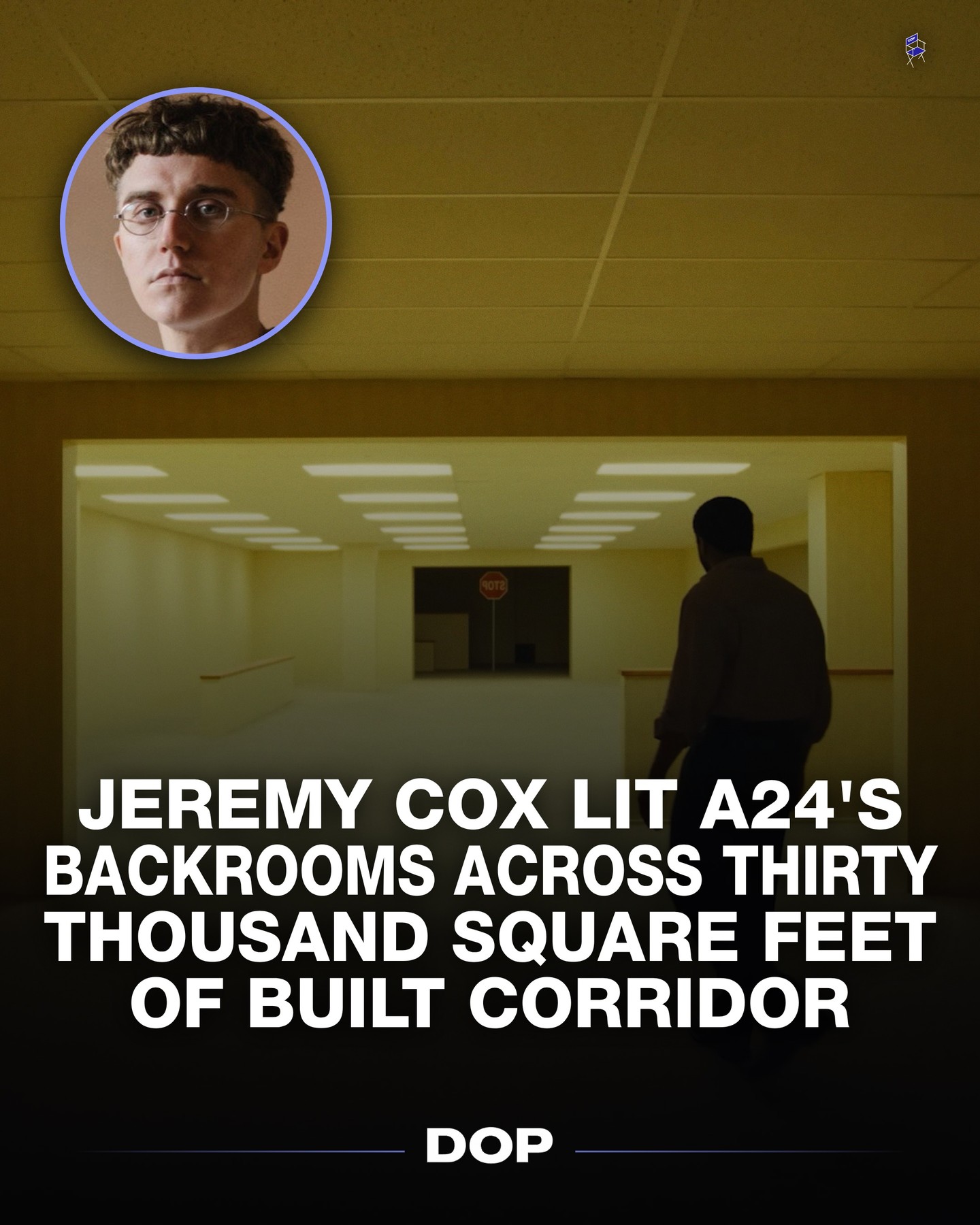
When Kane Parsons’ analog-horror short film The Backrooms (Found Footage) exploded across the internet, its terror relied on a terrifying digital abstraction: endless, procedurally generated office corridors drenched in sickly yellow fluorescent hum. Transitioning that liminal nightmare into a feature film backed by A24 required more than an expansion of lore, it demanded a complete rethinking of physical spatial geography. To bring the feature adaptation to life, director Kane Parsons teamed with cinematographer Jeremy Cox to construct one of the most audacious practical maze sets in recent horror history.
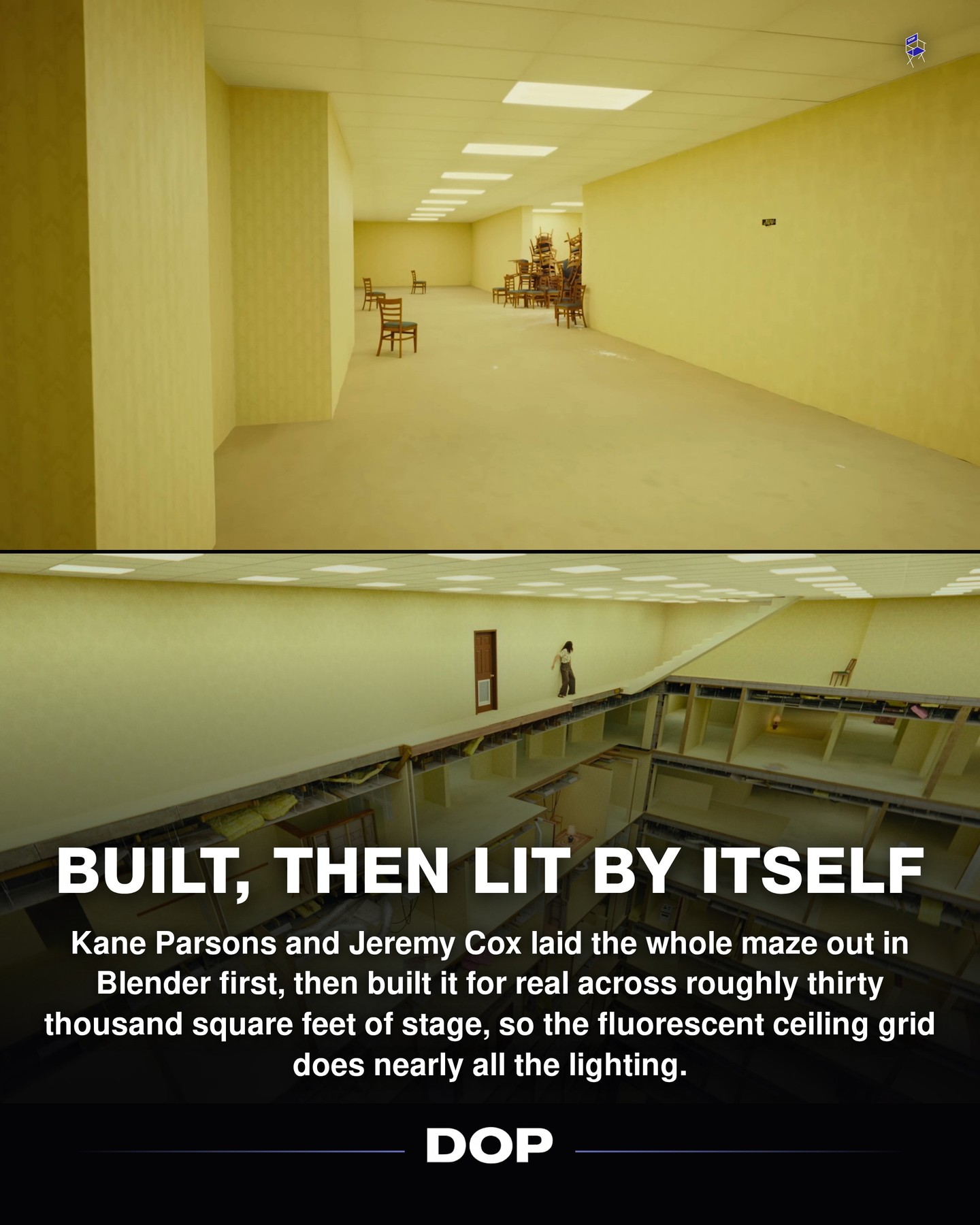
Before a single flat was hammered into place, Parsons and Cox mapped out the entire geometry in Blender. Pre-visualization wasn’t just a tool for shot listing; it was an architectural necessity. The creative team needed to ensure that camera sightlines felt simultaneously suffocating and boundless, allowing characters to round corners into continuous, unyielding repetition. Once dialed in virtual space, the production realized the maze across roughly 30,000 square feet of stage space, creating a tangible physical ecosystem that the camera and actors could actually inhabit.
A Practical Labyrinth of Fluorescent Decay
Rather than relying on modern off-camera diffusion or floating softboxes that would shatter the stark realism of an abandoned office complex, Cox anchored the film’s entire lighting architecture directly into the ceiling. The overhead grid of practical fluorescent fixtures is doing almost all the heavy lifting. By outfitting hundreds of integrated fixtures with customized, DMX-addressable LED tubes calibrated to institutional color temperatures, hovering in that nauseating 4100K range with deliberate green spikes, the stage became an all-encompassing, 360-degree lit environment.
The ceiling grid isn’t just an ambiance generator; it is the primary light source and the architecture of the film's psychological dread.
This approach allowed the production to strip away the artifice of traditional movie lighting. The fixtures generate harsh, top-down downlight, carving deep shadows under the actors' brows and emphasizing the sickly, textured wallpaper. When fixtures fail, flicker, or shift in intensity, the changes ripple across the DMX console in real time, reacting organically to the characters' movement through the labyrinth without requiring hidden bounce cards or off-axis fill to sweeten the image.
Bridging Analog Grit and Modern Precision
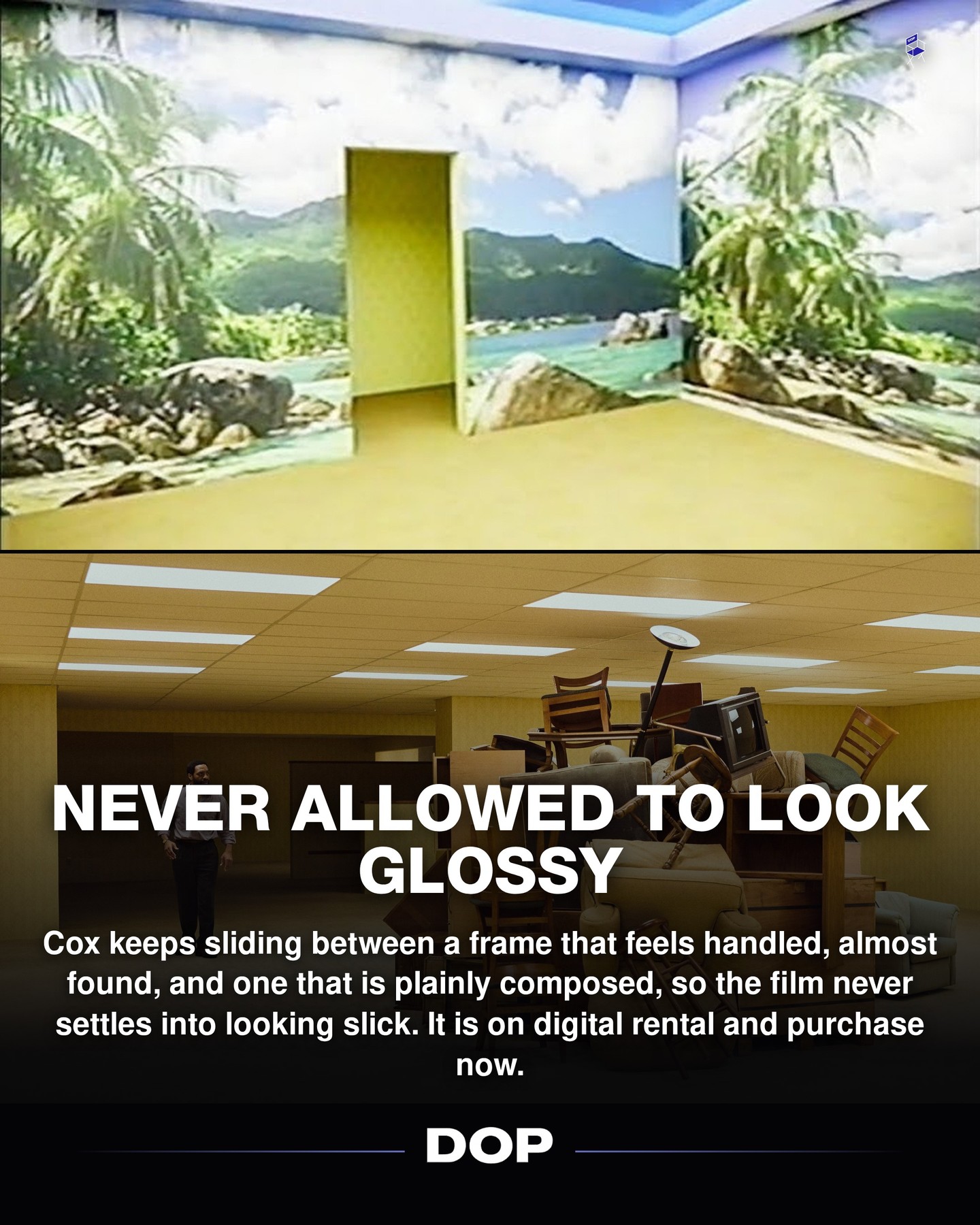
Cox’s visual language carefully threads the needle between the low-fidelity immediacy of found footage and the rigorous composition of modern high-concept horror. Rather than locking into pure handheld chaos or sterile, tripod-bound clinical frames, the camera operates in a liminal space of its own. It feels handled, reactive, and physically present, yet suddenly locks into geometric frames that honor the claustrophobic symmetry of the set design.
To maintain an aesthetic that rejects commercial slickness, Cox paired a modern large-format sensor with optics that introduce gentle optical aberrations, flare compression, and soft edge falloff. The image retains a raw, tactile quality that evokes VHS artifacting and low-tier camcorder optics without resorting to cheap post-production filters. In shadows, the digital grain feels organic and heavy, leaning into the sensor’s native noise floor to evoke the grimy texture of forgotten video tapes.
By prioritizing massive physical builds, functional in-camera lighting schemes, and an intentionally imperfect operating style, Jeremy Cox and Kane Parsons have created a masterclass in modern atmospheric cinematography. Backrooms proves that the most effective way to capture an infinite digital void is to build it with wood, wire, and buzzing practical glass.