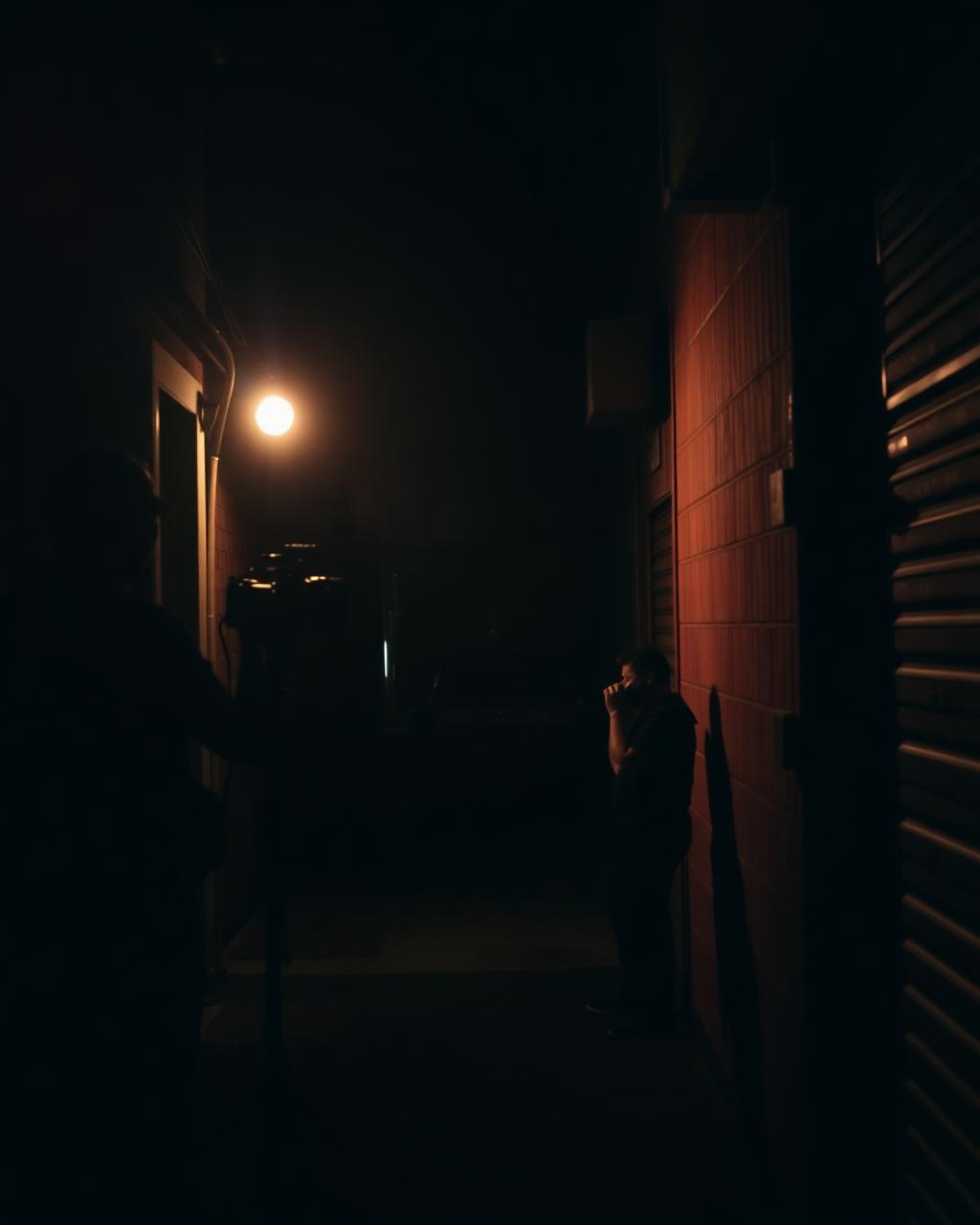
Lighting Rules, Candlelight Rigs, and Shadow as Character: How 2026's Festival DPs Design With Light
Light, in most contemporary cinematography, is a technical management system. You light for a certain f-stop. You balance color temperature. You place key and fill to achieve a ratio that the director or studio prefers. You're solving for visibility and flattery. But the cinematographers reshaping festival cinema in 2026 are operating from a different philosophy: light is narrative language. The quality, direction, and absence of light encode character, emotion, and thematic meaning.
This shift manifests in strategies that would seem technically backward if understood purely as technical choices, but which reveal themselves as compositional philosophy when understood correctly. James Hogan's Christy, shot with essentially no artificial lighting. LED candlelight rigs engineered for period dramas where practical candles would be insufficient or unsafe. The cultivation of shadow as a compositional element that carries as much information as illuminated surfaces.
The Candlelight Problem and Contemporary Solutions
Period cinematography faces a technical dilemma: authentic candlelight is insufficient for sensor exposure, flickers unpredictably, and creates color temperature chaos when mixed with ambient light. For decades, the solution was simple: light the scene with modern equipment, white-balance for a canonical "candlelight" color temperature (roughly 3200K), then add practical candles on set for the audience to see.
But this creates a false separation between the light that illuminates the scene (hidden studio equipment) and the light that the audience perceives (practical candles). The cinematography becomes a composite of photographic reality and lighting convenience. Sensitive viewers, even if they cannot articulate why, recognize this discontinuity.
Contemporary festivals showcase a different approach: cinematographers and lighting designers have engineered LED candlelight rigs that can be positioned in actual candlesticks or candelabra. These are not crude flickering LEDs. They're precision-engineered light sources that approximate the optical characteristics of actual candleflame: color temperature drift as the flame "breathes," color shift as soot particles in the flame affect light transmission, the particular spatial distribution of candlelight (focused on a narrow plane, with rapid falloff at the edges).
These rigs allow cinematographers to light period scenes with light sources that are visually authentic. The illumination that exposes the sensor is the same light that the audience perceives. This creates visual coherence—the photography and the production design operate from the same optical logic.
Practical Sources as Primary Lighting Language
The extension of this philosophy appears in films like Christy, where cinematographer James Hogan operates from a radical constraint: the frame is illuminated only by light sources visible or logically present in the scene. No hidden studio equipment. Sunlight from windows. Ambient room light. Practical lamps and fixtures.
This sounds like documentary cinematography or intentionally low-budget constraint. But Hogan's execution demonstrates that it's a sophisticated compositional language. The absence of key light from the cinematographer's toolkit forces absolute attention to negative space, to shadow as a compositional element, to depth and spatial relationships conveyed through the play of available light rather than through lighting ratio.
When you remove the cinematographer's ability to place light where convenient, you're forced to plan differently. How does the scene sit spatially? What light sources are actually available? How do you position the camera and actors to work with those sources rather than against them? This isn't simpler than traditional three-point lighting. It's more disciplined.
Shadow as Character and Emotional Register
For cinematographers like Hogan, shadow isn't the absence of light—it's an active element of visual composition. In Christy, unlit areas of frames carry as much information as illuminated areas. A character's face partially in shadow isn't a technical compromise; it's an emotional encoding. The shadow side of a face becomes part of the internal landscape.
This philosophy contradicts decades of standard practice: always ensure the faces are sufficiently lit for audience legibility. But legibility and specificity are different qualities. A well-lit face is legible. A face that's partially shadowed, lit only by available sources, conveys emotional texture that flat, even key light cannot achieve.
Compositionally, this creates images with genuine depth. The foreground might be in light while the background retreats into shadow. The human eye, accustomed to reading faces in particular lighting ratios, finds faces lit only by practical sources more psychologically present, more real. The cinematography becomes less "lit" and more "observed."
LED Practicality and the Problem of Consistency
As festival cinematography increasingly emphasizes practical and near-practical lighting approaches, LED technology becomes crucial infrastructure. An LED lamp positioned in a table fixture has to maintain color temperature consistency across multiple takes while still registering as warm, tungsten-like light. It has to be dimmable without severe color shift. It has to fit within the production design rather than screaming "this is a film light."
Contemporary LED fixtures—particularly the tunable RGB and high-CRI (color rendering index) LED panels—allow cinematographers to dial in specific color temperatures and maintain them precisely across a shoot day. But the trade-off is complexity: you need power infrastructure, wireless dimming control, and careful metering to ensure that the practical LED sources integrate seamlessly with other light sources on set.
For period films, this is especially crucial. A scene lit by candlelight, fireplace light, and a distant practical lamp has to read tonally coherent even though it combines multiple color temperatures and light sources. LEDs, precisely controlled, make this possible in ways that would be difficult with pure practicals or hybrid practical-studio approaches.
Low-Light Cinematography and Sensor Performance
The emphasis on practical and minimal lighting in 2026 festival cinematography is enabled partly by advances in digital sensor technology. Modern cameras—ARRI Alexa 35, Sony Venice 2—perform remarkably well at high ISOs with minimal noise and excellent color accuracy. This means cinematographers can work with lower light levels than was practicable five years ago while still maintaining technical image quality.
But sensor capability is just infrastructure. The artistic choice is what matters: cinematographers like Hogan deliberately work at low light levels not because they have to, but because the resulting visual tone serves the film's emotional logic. An image that was shot at ISO 800 with minimal key light feels different than an image shot at ISO 200 with conventional three-point lighting. The difference is legible to audiences: the low-light image feels more intimate, more shadowed, more internally focused.
Color Temperature and Emotional Information
Lighting design at the 2026 festival level treats color temperature as narrative information. A scene lit entirely at 3200K (tungsten) versus 5600K (daylight) versus a mixture of the two carries emotional weight. Warm light feels intimate, familiar, safe. Cool light feels distant, uncertain, dangerous. Mixing warm and cool light creates emotional tension.
Contemporary cinematographers are increasingly conscious of this. Where older practice might separate "color temperature correction" from "emotional lighting," the approach here integrates them. If a scene is meant to feel emotionally discordant, you might deliberately create color temperature discontinuities. A warm practical lamp mixed with cool daylight creates visual tension that serves the narrative.
This requires discipline and planning. It also requires that the cinematographer and director have shared visual language. The director needs to understand that the color choices being made in lighting design are not technical necessities but emotional choices. The cinematographer has to be able to articulate why a particular color temperature serves the story.
Previs and Planning: Lighting as Collaborative Language
The complexity of contemporary practical and minimal-lighting approaches requires detailed previs and planning. You cannot improvise on set when your entire lighting strategy consists of practical sources. You have to know, before rolling, exactly where those sources are, what they illuminate, and how the camera will move relative to them.
This has transformed cinematography previs from rough visual sketching into detailed technical planning. Cinematographers are now working with 3D models of locations, running virtual camera through spaces, pre-setting LED fixture positions, and planning blocking around available light rather than expecting blocking to be accommodated by flexible lighting.
This requires collaboration with production designers, location managers, and directors in ways that traditional studio lighting did not demand. But the result is that lighting becomes integrated into the production design, the location selection, and the directorial vision from the first planning stages rather than being imposed as a technical afterthought.
Conclusion: Light as Intentional Craft
The cinematographers leading in 2026 understand light not as a technical service that enables the camera to see, but as a compositional language. How light behaves, where it comes from, what it illuminates and what it shadows—these are narrative choices. The precision engineering of LED candlelight rigs, the discipline of minimal-light cinema like Hogan's Christy, the cultivation of shadow as compositional element—all of this represents light being treated as craft rather than as technical requirement.
This is labor-intensive. It requires planning, collaboration, and constant attention during production. But the visual specificity it creates is unmistakable. Films lit with this intentionality feel coherent in ways that conventionally-lit cinematography, for all its technical perfection, cannot achieve.
Gear Recommendations
- Aputure MC 4-Light RGBWW LED Panel Kit | Adorama, B&H Photo
- Nanlite PavoTube II RGBWW Tube Lights | Adorama, B&H Photo
- Lee & Rosco Gel Filter Set (Premium) | Adorama, B&H Photo
- Genaray Spectral LED Lights (Studio Kit), Amazon
- Lightbridge Standard Light Bridge Grip System | Adorama, B&H Photo
- Sekonic SpectralMaster C-7000 Spectrophotometer | Adorama, B&H Photo
Note: Links above are affiliate links. Occupy Cinematography may earn a commission on qualifying purchases at no additional cost to you.