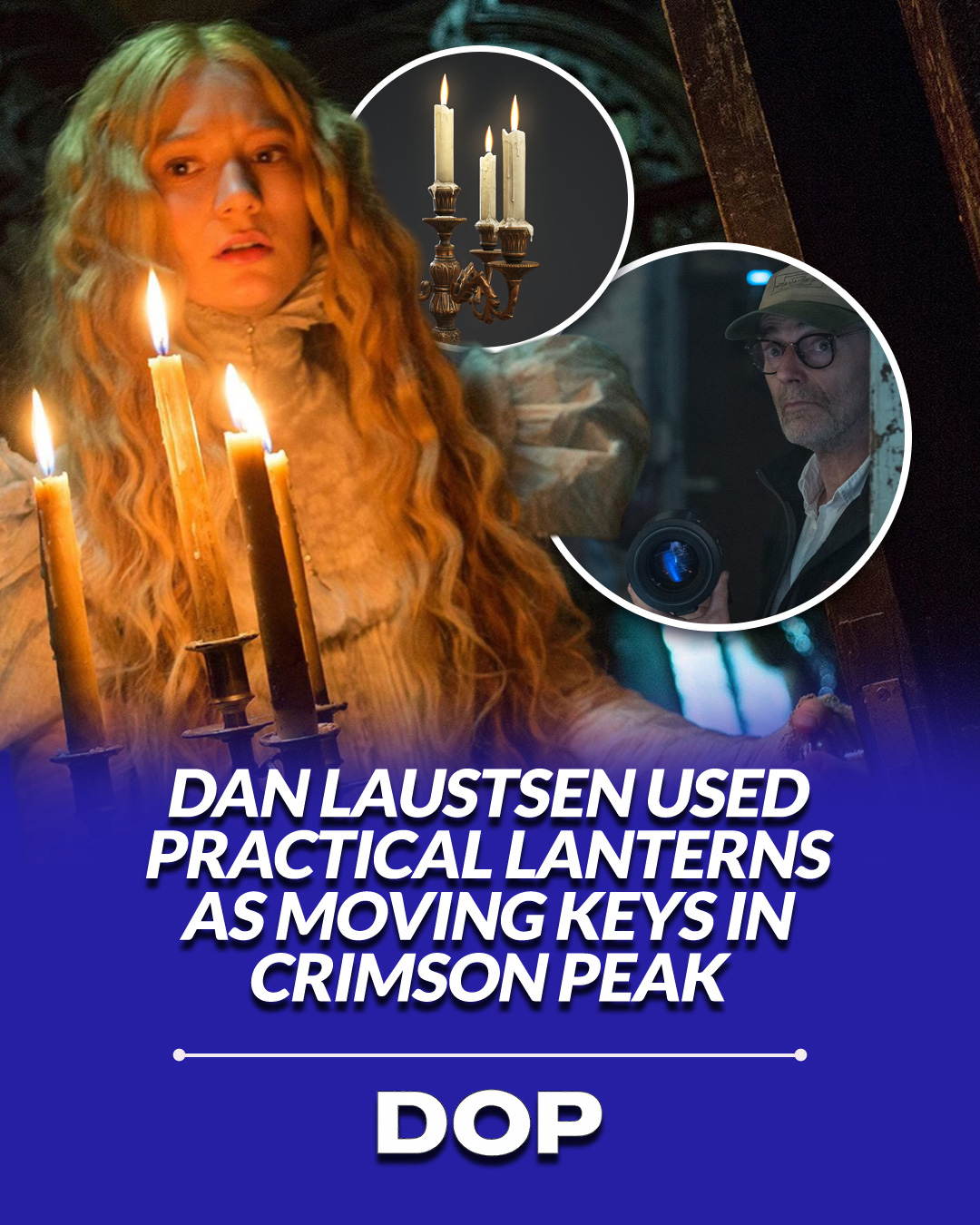
Guillermo del Toro's 2015 gothic romance, Crimson Peak, is a masterclass in visual storytelling, where every frame is meticulously crafted to immerse the audience in its haunting, beautiful world. At the heart of its distinct aesthetic lies the brilliant cinematography of Dan Laustsen, ASC, DFF, whose collaboration with del Toro extends across multiple visually stunning features, including The Shape of Water and Nightmare Alley. One of the most inspired and technically sophisticated decisions in Crimson Peak involved the seemingly simple, yet profoundly effective, use of practical lanterns as key lights for the actors.
This wasn't just a stylistic flourish; it was a foundational lighting strategy. Laustsen and his team ingeniously built dimmable tungsten units directly into the period-appropriate lanterns carried by the characters. This meant that the light source visible on screen was the very same source illuminating the actors' faces, defining the intricate textures of the decaying Allerdale Hall, and sculpting the opulent costumes. As characters navigated the mansion's labyrinthine corridors, their primary light source moved with them, creating a dynamic interplay of light and shadow that felt inherently organic and deeply immersive.
The Art of the Moving Key Light
The impact of this technique cannot be overstated. In traditional filmmaking, key lights are often static, carefully positioned off-camera to achieve a desired look. While effective, this can sometimes lead to a more 'lit' rather than 'natural' feel, especially in environments meant to feel dark and mysterious. By integrating the key light into the prop, Laustsen effectively handed control of the primary illumination to the performers themselves. This allowed for blocking that felt more fluid and spontaneous, as the actors' movements directly dictated the fall of light and the creation of shadows.
“Giving performers control of their own primary light can create more organic blocking and more interesting shadows than fixed sources ever will.”
Consider the visual implications: as Edith Cushing (Mia Wasikowska) or Thomas Sharpe (Tom Hiddleston) moved through the vast, shadowed halls, the light from their lanterns would sweep across walls, revealing glimpses of forgotten details, then plunging them back into darkness. Faces would be sculpted by the moving light, emphasizing expressions and adding a layer of psychological depth. This dynamic lighting isn't merely atmospheric; it's narrative. It reinforces the characters' vulnerability, their tentative exploration of a dangerous environment, and the constant presence of the unknown.
Technical Ingenuity Meets Gothic Authenticity
From a technical standpoint, implementing dimmable tungsten units within the lanterns was a masterful stroke. Tungsten light, with its warm color temperature, inherently lends itself to the gothic aesthetic, evoking the flickering glow of candles and gaslight. The ability to dim these units gave Laustsen precise control over intensity, allowing for subtle shifts in mood and emphasis without resorting to artificial-looking fill light. This commitment to practical sources ensured that the light behaved exactly as an audience would expect a lantern to behave in a dark, enclosed space, a crucial element in maintaining suspension of disbelief in a fantastical setting.
Laustsen's choice of lenses and camera likely further enhanced this practical lighting approach. While specific details on the camera package for Crimson Peak are less publicized than some of his other works, his frequent use of large format cameras and anamorphic lenses on projects like The Shape of Water and Nightmare Alley suggests a preference for lenses that offer a beautiful, natural fall-off and a painterly quality, which would complement the soft, directional light from the lanterns. The depth of field and bokeh characteristics of such lenses would allow the practical light sources to truly shine, drawing the eye to the illuminated subjects while allowing the surrounding darkness to envelop the frame.
The result is a visual tapestry where light is not just an illumination tool, but an active participant in the storytelling. The live, shifting shadows thrown by these moving key lights on the decaying mansion walls become characters in themselves, hinting at secrets, obscuring dangers, and amplifying the film's pervasive sense of dread and melancholic beauty. It’s a powerful reminder for any cinematographer that sometimes, the most sophisticated solutions are those that embrace and elevate the fundamental principles of light, allowing it to behave as it would in the real world, even in the most fantastical of settings.
Laustsen's work on Crimson Peak stands as a testament to the power of thoughtful, integrated lighting design. It underscores that authenticity in light, even when meticulously engineered, can create an unparalleled sense of presence and atmosphere. For those aspiring to craft visually rich narratives, the lesson from Allerdale Hall is clear: empower your light sources, and in doing so, empower your story.
This article contains affiliate links. We may earn a small commission at no extra cost to you. Learn more.