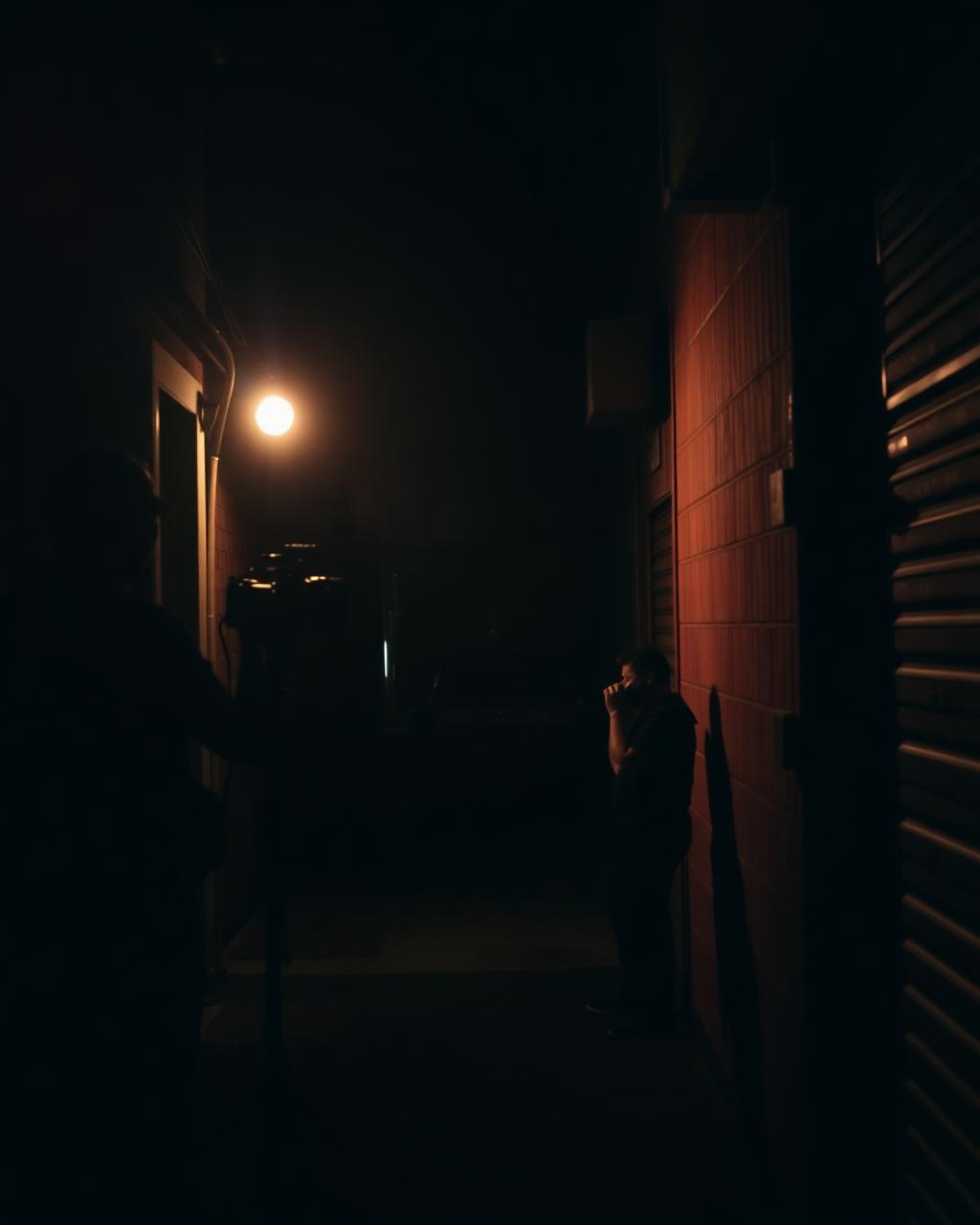
Lidia Nikonova's opening shot for Night Nurse (Sundance 2026) is a four-minute one-shot executed on a robotic arm with a 24mm probe lens, following a phone cord as it wraps around an actor's body. The film is a psychosexual thriller set in a retirement community. The opening sequence is not exposition. It is argument: we are entering a space where seduction, danger, and the body's vulnerability are compressed into a single unbroken moment.
Nikonova described the production challenge with specificity: 'The opening sequence is a four-minute oner that we shot on a robotic arm with a 24mm probe lens. The camera, paired with our probe lens, travels with the cord of a phone as it is wrapped around Cemre's body.' A probe lens—a specialized tool that extends long and thin—allows the camera to move into intimate spaces without needing a larger camera body present. The 24mm focal length creates the wide, slightly distorted perspective that makes close proximity feel claustrophobic rather than romantic.
The actor had to lie motionless for takes while the robotic arm moved through its programmed path. Each movement was keyed in advance. Each angle had been calculated. The precision required means that a single four-minute take could require hours of setup and programming. If the robotic arm's calibration was off by millimeters, the entire take would fail. The actor's stillness had to be absolute.
This is not cinematography as responsiveness or improvisation. This is cinematography as engineering. The camera movement is predetermined. The actor's position is predetermined. The probe lens's path is predetermined. What Nikonova is programming is not a take but an argument about intimacy, vulnerability, and violation. The phone cord wrapping around the body while the camera documents every micro-movement is not just a shot. It is a statement about objectification and the body's exposure to outside control.
Nikonova describes the overall visual approach: 'We needed the world of the film to feel both alluring and hypnotic, as well as eerie and dangerous.' That balance—alluring but eerie, hypnotic but dangerous—required visual choices that would sustain across the entire production. The opening sequence sets the tone. The probe lens follows a phone cord. The camera is intimate but controlling. The body is beautiful but vulnerable.
Nikonova had a previous Sundance near-miss: her debut was planned for the 2021 edition, which moved online due to the pandemic. She arrived at 2026 with two films: Night Nurse and a short, Birdie. The robotic arm opening shot is the kind of technical ambition that would seem unnecessary to many cinematographers. For Nikonova, it was necessary because it is the precise visual argument the film required.
A four-minute oner on a robotic arm following a phone cord wrapped around a human body. Nikonova programmed every keyframe while the actor held still. That is not a flex. It is a technique in service of an argument.
Gear Recommendations
- DJI RS 4 Pro Gimbal – Amazon
- Easyrig Vario 5 | Adorama – B&H Photo
- Blackmagic Pocket Cinema Camera 6K Pro | Adorama – B&H Photo
- Sigma 18-35mm f/1.8 Art | Adorama – B&H Photo
- Tiffen Black Pro-Mist 1/4 Filter | Adorama – B&H Photo
Note: Links above are affiliate links. Occupy Cinematography may earn a commission on qualifying purchases at no additional cost to you.