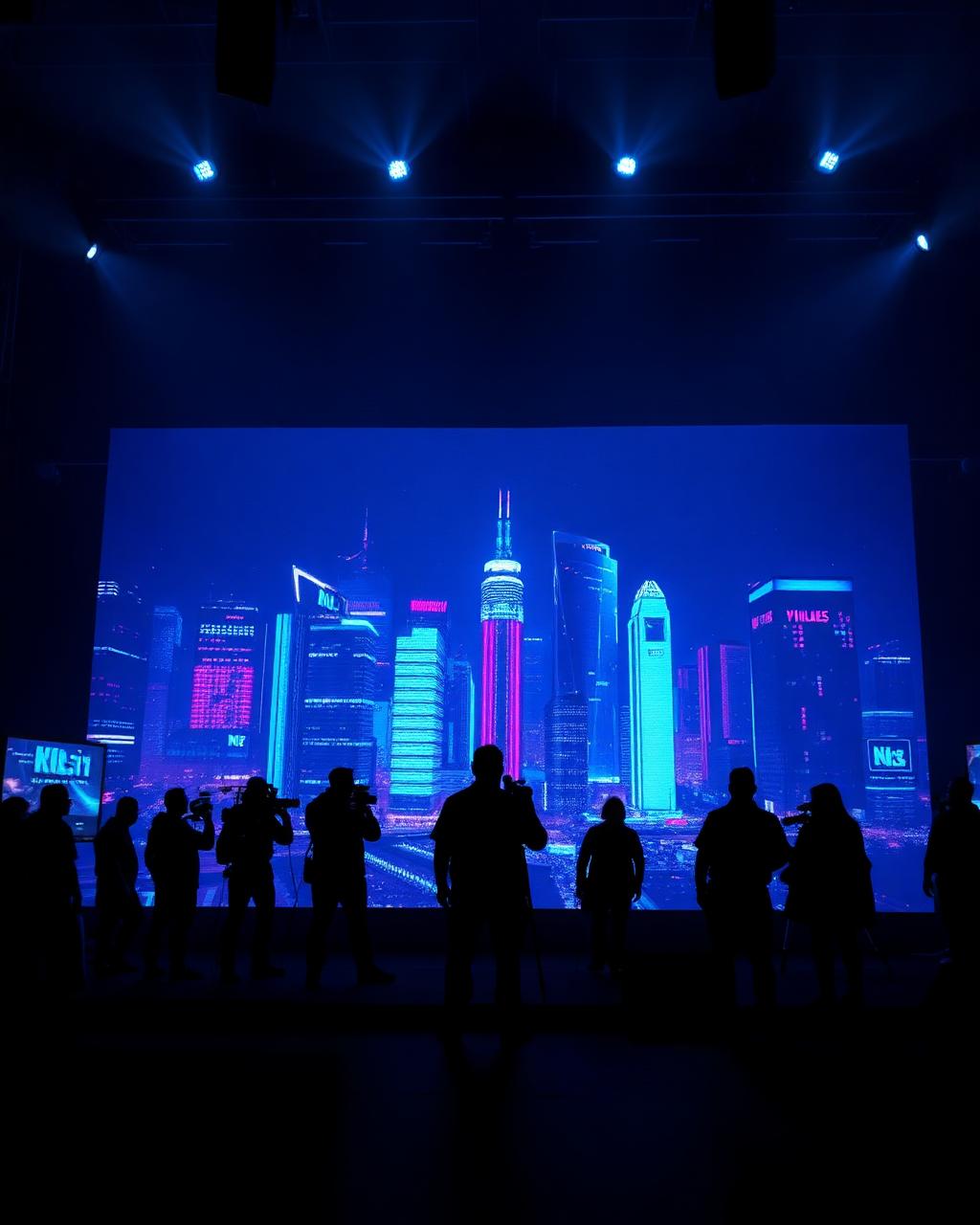
In Where To?, playing at Berlinale 2026 Perspectives, director Avni Machnes and cinematographer Maayane Bouhnik faced a specific production constraint: the film takes place almost entirely inside a taxi at night, driving through Berlin. Mounting cameras to an actual moving vehicle would have exposed the production to the unpredictability of real traffic, real weather, real light sources changing moment by moment as the car moved through the city. Instead, Bouhnik and Machnes chose an LED stage—a controlled environment where the moving cityscape would be reproduced on screens surrounding the taxi interior.
This is not new technology. LED stages have been used in cinema since approximately 2019, and they have become increasingly common in high-budget productions. What is instructive about Bouhnik's approach is how she used the LED stage not as a compromise solution, but as a cinematographic choice that enabled specific visual language that practical on-location shooting could not have achieved.
The advantage of the LED stage solution, as the ASC noted, is complete control. The cinematographer controls the reflections on the car windows. She controls the direction and color temperature of the passing streetlights. She controls the consistency of exposure across multiple takes of dialogue scenes where the actors might need to perform the same lines five or six times. She controls the rhythm of exterior light, making it move at a rate that feels like a car traveling through a city, without depending on the actual speed of an actual vehicle on actual streets.
The challenge, which Bouhnik solved elegantly, is making the LED exterior read as genuine movement rather than as a stationary set with moving images around it. A viewer watching a film knows the difference between a car actually moving and a stationary car with a backdrop behind it. The cinematography has to communicate motion—the sense that the vehicle is traveling through space—without depending on the physical fact of movement.
Bouhnik maintained what Screen Anarchy described as "visual fluidity despite the restricted space." She did this through camera work and composition rather than through reliance on actual movement. By alternating angles between the front and back seats, by using different focal lengths that create different spatial relationships to the vehicle's interior, by framing dialogue scenes in ways that emphasize the intimacy of the enclosed space, she created a cinematic rhythm that sustains the impression of motion without requiring motion.
The LED stage also allows Bouhnik precise control over how the passing city appears through the windows. The light reflecting in the windows, the way streetlights appear in specific frames, the color temperature of the urban night exterior—all of these elements can be designed and adjusted to support the film's visual language. In a practical on-location shoot, the cinematographer has to work with whatever light conditions the city provides at the moment of shooting. On the LED stage, every visual element can be intentional.
For cinematographers considering LED stage solutions, Bouhnik's approach demonstrates the key: the stage is not a compromise. It is a tool. It allows the cinematographer to be more precise, not less precise, about what the audience sees. The conversation between cinematographer and director shifts from "how do we make this location work for us" to "what exactly do we want the audience to see, and how do we reproduce that precisely, every take."
The film's setting—a taxi at night in Berlin—becomes a contained visual world where every element is chosen. The exterior city is not observed. It is designed. This level of control makes the cinematography a more active participant in the visual storytelling. The passing cityscape is not just background. It is part of the film's visual argument.
Gear Recommendations
- DaVinci Resolve Studio | Adorama – B&H Photo
- Tangent Element Panels | Adorama – B&H Photo
- DJI Ronin 4D-8K – Amazon
- Tiffen Variable ND Filter | Adorama – B&H Photo
- Blackmagic Pocket Cinema Camera 6K Pro | Adorama – B&H Photo
Note: Links above are affiliate links. Occupy Cinematography may earn a commission on qualifying purchases at no additional cost to you.