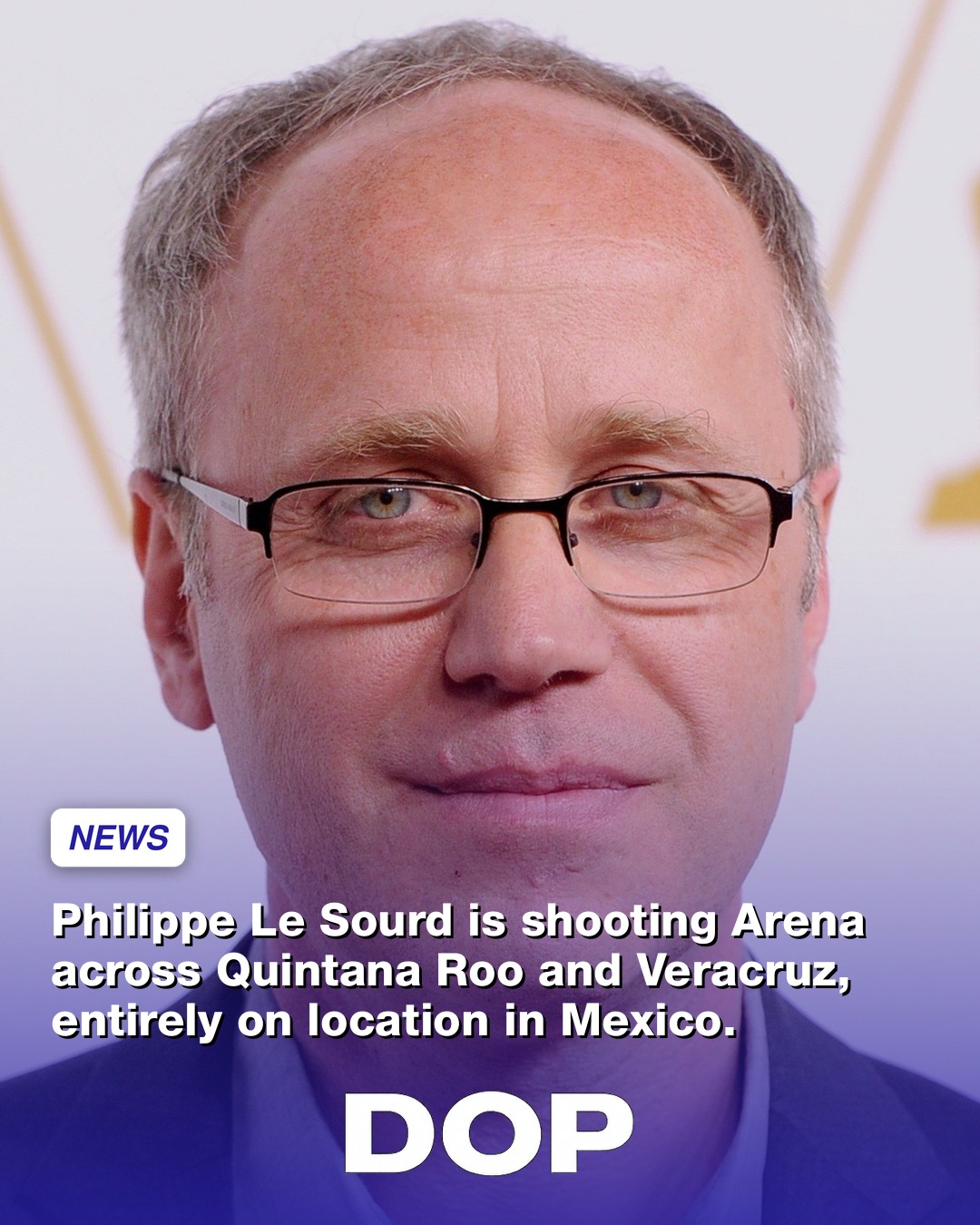
The announcement that Philippe Le Sourd, ASC, AFC, is helming the cinematography for Salma Hayek Pinault's directorial debut, Arena, sent a ripple of excitement through the cinematography community. Le Sourd, a master craftsman whose work spans the delicate intimacy of Sofia Coppola's narratives to the breathtaking grandeur of Wong Kar-wai's martial arts epics, is an inspired choice for what is described as an 'epic romantic adventure.' With production underway across the vibrant landscapes of Quintana Roo and Veracruz, Mexico, the stage is set for a visual feast that will undoubtedly bear Le Sourd's distinctive signature.
Le Sourd's career is a testament to versatility and an unwavering commitment to visual storytelling that transcends genre. His Academy Award-nominated work on Wong Kar-wai's The Grandmaster stands as a masterclass in controlled chaos and poetic motion, utilizing anamorphic lenses to craft a ballet of light and shadow that felt both historically authentic and profoundly artistic. The film’s meticulously choreographed fight sequences, often bathed in a chiaroscuro reminiscent of classic painting, showcased his ability to elevate action into art. This experience, blending grand scale with intricate detail, positions him perfectly for an 'epic romantic adventure' that will likely demand both sweeping vistas and intimate emotional close-ups.
The Le Sourd Aesthetic: Light, Texture, and Emotion
What defines the Le Sourd aesthetic? It's a nuanced blend of exquisite lighting, a deep understanding of color science, and an innate ability to capture the emotional core of a scene through visual texture. His collaborations with Sofia Coppola, including the atmospheric period piece The Beguiled and the recent, intimately observed Priscilla, reveal a cinematographer who can imbue seemingly simple domestic scenes with profound subtext. In The Beguiled, Le Sourd masterfully employed natural light, often filtered and diffused, to evoke the stifling, humid atmosphere of the Civil War-era South, using the interplay of light and shadow to heighten tension and sensuality within the cloistered female world.
“Le Sourd’s genius lies in his ability to make the camera disappear, leaving only the raw emotion and visual poetry of the story to resonate with the audience.”
For Arena, set against the rich, diverse backdrops of Mexico, we can anticipate Le Sourd leveraging the region's intense natural light, perhaps softening it, shaping it, or allowing its raw power to define the emotional landscape. His preference for capturing naturalistic skin tones, often achieved through careful keying and fill, will undoubtedly bring a tangible warmth and authenticity to the performances of Salma Hayek Pinault and her cast. Given the 'romantic adventure' genre, expect dynamic compositions that balance expansive landscapes with the intimate gazes of lovers, perhaps employing a wider aspect ratio to fully immerse the audience in the grandeur of the setting.
Technical Nuances and Anticipated Visuals
Delving into Le Sourd's technical approach, one often notes his sophisticated use of available light augmented by subtle, yet impactful, artificial sources. He’s known for his meticulous control over exposure and color temperature, ensuring that every frame feels intentional and emotionally resonant. While specific camera and lens choices for Arena are yet to be fully revealed, his past work suggests a leaning towards cameras that offer excellent dynamic range and color fidelity, such as ARRI Alexa systems, paired with lenses that possess character without being overly distorting. For an 'epic romantic adventure,' a blend of modern, sharp optics for clarity in wide shots and vintage or detuned glass for a softer, more romantic feel in close-ups wouldn't be surprising, allowing for a rich textural palette.
The choice of locations in Quintana Roo and Veracruz offers an incredible visual canvas. Quintana Roo, with its pristine Caribbean coastlines, ancient Mayan ruins, and lush jungles, provides opportunities for breathtaking natural beauty. Veracruz, with its volcanic peaks, coffee plantations, and vibrant port cities, adds layers of cultural and topographical diversity. Le Sourd's challenge, and his brilliance, will be to unify these disparate elements into a cohesive visual language that serves the narrative. We can expect him to explore the interplay of light filtering through dense jungle canopies, the dramatic silhouettes against ocean sunsets, and the vibrant color palettes of Mexican architecture and culture.
As an independently financed film produced by Angelina Jolie, Arena likely benefits from a creative freedom that can sometimes be constrained by larger studio systems. This environment, coupled with Salma Hayek Pinault's vision as director, could allow Le Sourd to push the boundaries of visual storytelling even further. His membership in both the ASC and AFC speaks volumes about his standing within the global cinematography community, signifying a DP who is not only technically proficient but also deeply respected for his artistic contributions.
The anticipation for Arena is palpable. With Philippe Le Sourd behind the camera, we are not just expecting a beautiful film; we are anticipating a masterclass in visual storytelling, where every frame is a brushstroke, painting an epic tale of romance and adventure against the stunning, sun-drenched canvas of Mexico. It's a project that promises to be a significant entry in the filmographies of all involved, especially for those of us who appreciate the profound impact of thoughtful, artistic cinematography.