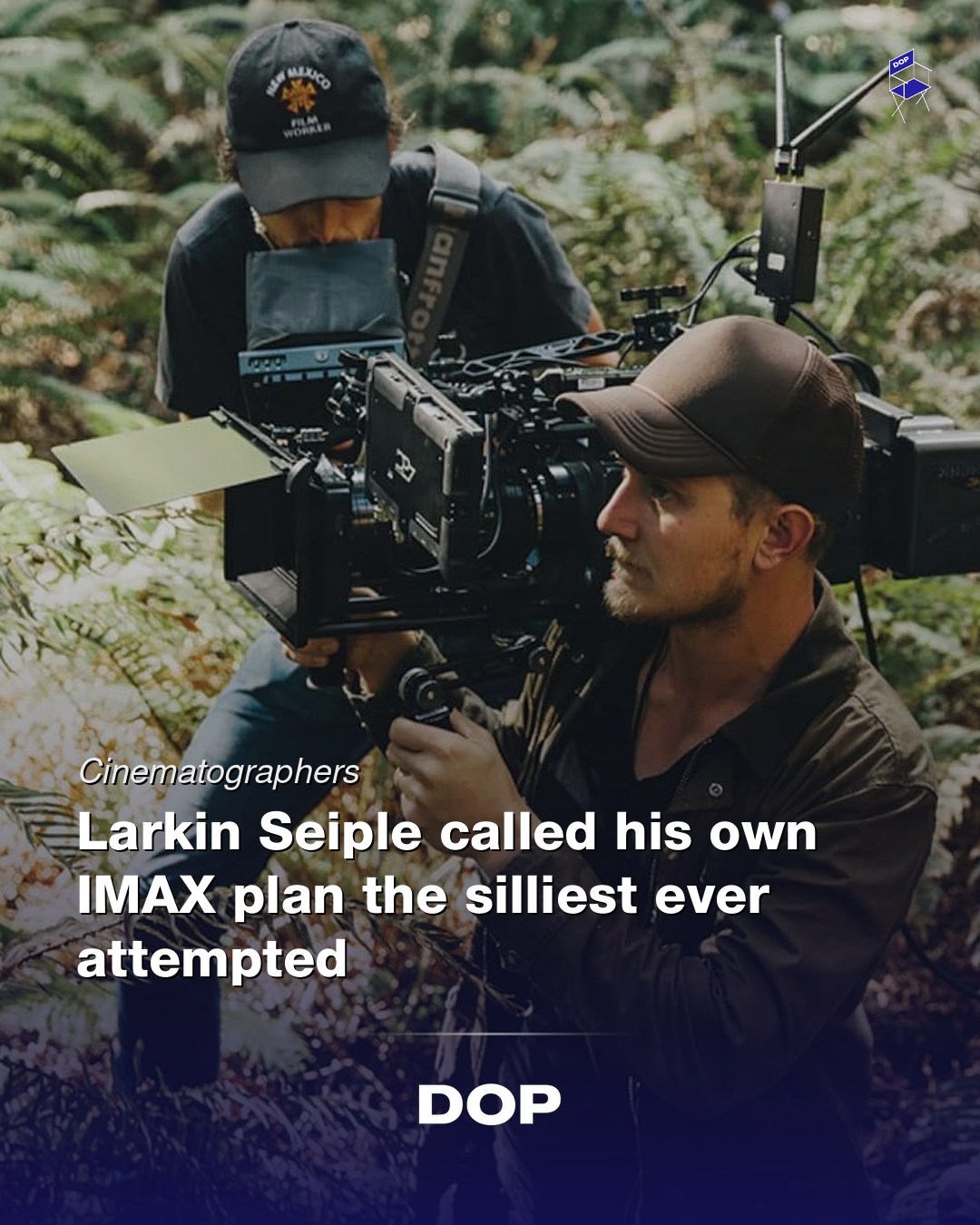
Larkin Seiple, a name that has become synonymous with audacious visual storytelling, was justly recognized with his election to the American Society of Cinematographers (ASC) in June 2026. His filmography reads like a masterclass in pushing aesthetic boundaries, from the delirious absurdity of Swiss Army Man to the kaleidoscopic multiverse of Everything Everywhere All at Once. Seiple's work consistently demonstrates a profound understanding of how visual language can elevate narrative, often employing bold, unconventional choices that leave an indelible mark on the viewer. It's this very spirit of innovation and daring that makes his insights into the craft so invaluable to our community.
The IMAX Dream and the Googly-Eyed Rocks
One particular anecdote from the production of Everything Everywhere All at Once, shared by Seiple with Filmmaker Magazine, perfectly encapsulates his creative ambition and pragmatic adaptability. The scene in question involves the now-iconic googly-eyed talking rocks, a moment of profound, albeit absurd, emotional resonance within the film's sprawling narrative. Seiple's initial vision for this sequence was nothing short of monumental: to shoot it on IMAX, utilizing a staggering 200 feet of film for a single, expansive shot. This wasn't merely a technical choice; it was a conceptual one, aiming to imbue the scene with a sense of cosmic grandeur and tactile presence that only the IMAX format can truly deliver. The sheer scale of the rocks, juxtaposed with their unexpected sentience, would have been amplified exponentially by the immersive, high-resolution canvas.
The logistics of this ambition were, naturally, immense. The scene was a COVID pickup, a testament to the production's resilience and the Daniels' unwavering commitment to their vision, even under challenging circumstances. Filming took place four hours south of Los Angeles, under the scorching glare of a 115-degree desert sun. Such conditions present their own formidable hurdles for any cinematographer, from managing light and shadow in extreme temperatures to protecting sensitive camera equipment. Seiple and his crew were operating at the very edge of possibility, pushing against both environmental and logistical constraints.
From Grandeur to Gritty Reality: The Budget's Call
Ultimately, as is so often the case in filmmaking, the realities of budget intervened. The grand IMAX plan, while creatively intoxicating, proved untenable. This pivot, however, led to an equally fascinating, if different, aesthetic choice: the use of Todd-AO lenses. These anamorphic lenses, known for their distinct oval bokeh, wide aspect ratio, and often slightly softer, more organic image quality, brought a different kind of magic to the rock scene. While not the monumental scale of IMAX, the Todd-AO glass imparted a cinematic sweep and a subtly distorted reality that perfectly complemented the film's multiversal chaos and emotional depth. This decision highlights a crucial aspect of a cinematographer's artistry: the ability to adapt, to pivot under pressure, and to find equally compelling visual solutions when the ideal is out of reach.
A cinematographer calling his own idea the silliest use of a format in that format's history is rarer than it should be.
Seiple's candid admission to Filmmaker Magazine, describing his IMAX idea as potentially the 'silliest use of a format in that format's history', is a refreshing display of self-awareness and humility. It’s a sentiment that, frankly, is rarer than it should be in an industry often prone to grand pronouncements. This self-deprecating humor doesn't diminish the ambition; rather, it humanizes it, reminding us that even the most visionary cinematographers grapple with the practicalities and sometimes absurdities of their craft. It speaks to a deep understanding of the medium, an awareness of its historical context, and a willingness to challenge conventions even if the initial idea seems outlandish.
The choice of Todd-AO lenses for Everything Everywhere All at Once, and specifically for the rock sequence, reveals Seiple's discerning eye for lens character. Todd-AO lenses, often associated with classic Cinerama and epic productions, provide a distinct visual signature. Their anamorphic squeeze yields an expansive widescreen canvas, which, even without the physical size of an IMAX print, conveys a sense of grandeur and epic scope. The unique flaring and fall-off characteristics of these lenses also add a textural quality, contributing to the film's overall aesthetic of heightened reality and emotional intensity. This wasn't just a compromise; it was a deliberate artistic choice that shaped the film's visual identity.
Larkin Seiple’s journey with the googly-eyed rocks, from IMAX aspiration to Todd-AO triumph, serves as a powerful lesson for aspiring and seasoned cinematographers alike. It underscores the importance of vision, the necessity of adaptability, and the profound impact of creative problem-solving under pressure. His work on films like Everything Everywhere All at Once and Swiss Army Man consistently demonstrates a cinematographer unafraid to experiment, to break rules, and to use every tool in his arsenal to serve the story, even if it means acknowledging the glorious absurdity of some of his own ideas. His election to the ASC is not just a recognition of his past achievements but an affirmation of his ongoing influence on the future of cinematography.
This article contains affiliate links. We may earn a small commission at no extra cost to you. Learn more.