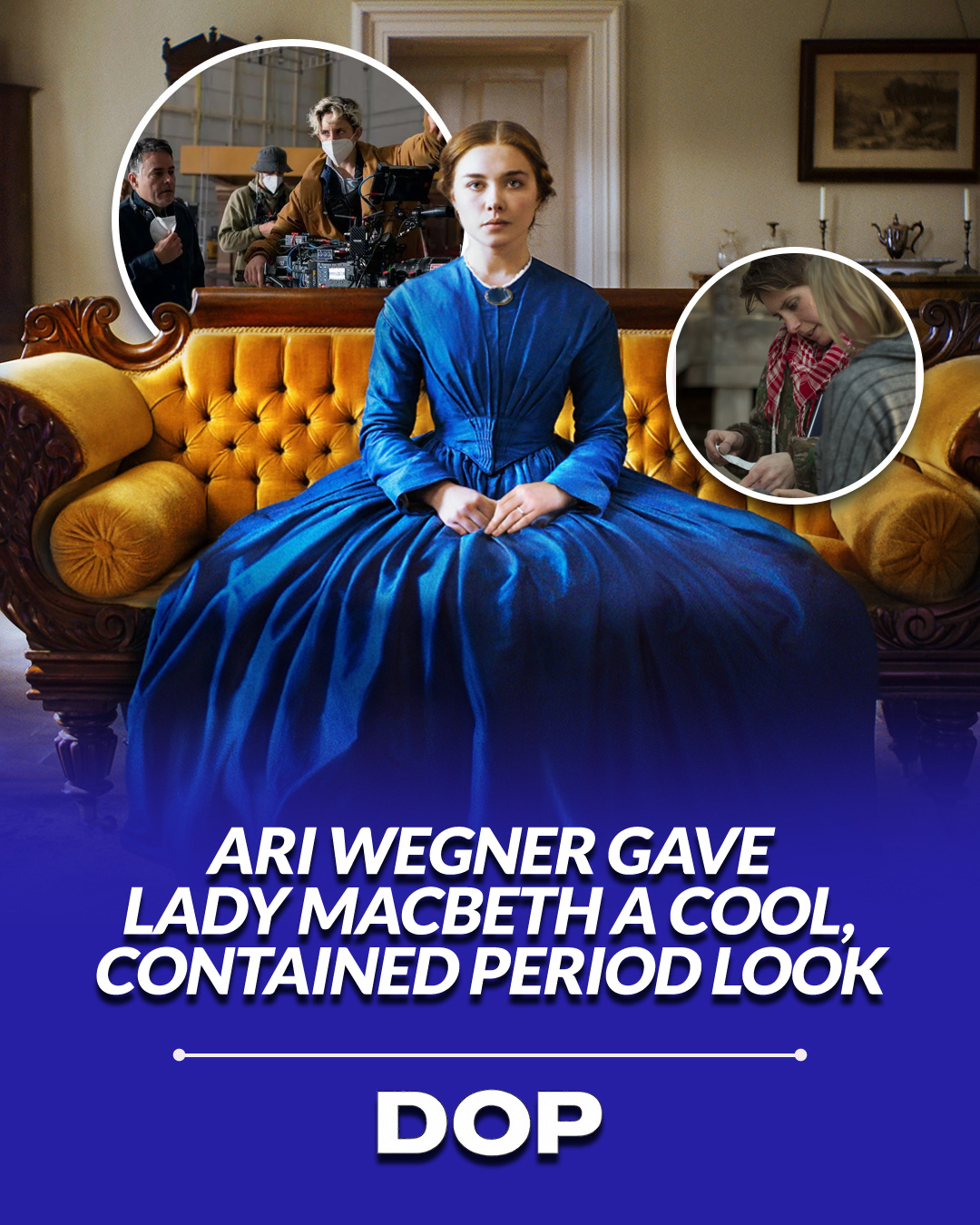
Ari Wegner's masterful cinematography in William Oldroyd's 2016 psychological drama, Lady Macbeth, isn't just a visual accompaniment; it's a primary narrative force, meticulously crafting an atmosphere of suffocating constraint and emotional frigidity. The film's aesthetic is an exercise in deliberate restraint, employing a stark, almost austere visual language that mirrors the protagonist Katherine's entrapment within a loveless, oppressive marriage and the rigid social confines of 19th-century rural England. Wegner, known for her nuanced and often unsettling work in films like The Power of the Dog and Zola, demonstrates an early command of visual storytelling that transcends mere beauty, actively shaping the audience's understanding of Katherine's desolate world.
The film's lighting strategy is perhaps its most striking characteristic. Wegner leans heavily on a palette of cool daylight, almost exclusively illuminating scenes with the diffused, often overcast light filtering through large windows. This choice immediately establishes a sense of emotional sterility. Faces are frequently framed against pale, unadorned walls or the muted, cloudy skies outside, stripping away any potential warmth or comforting hues. This deliberate absence of color and warmth isn't accidental; it's a calculated decision to underscore the emotional barrenness of Katherine's existence. The cool color temperature, likely achieved through careful white balance and minimal artificial light intervention, creates an environment that feels perpetually unwelcoming, a visual manifestation of her psychological prison.
The Intrusion of Warmth: A Visual Dissonance
What makes this cool palette so effective is the rare, almost jarring introduction of warmth. When a solitary shaft of sunlight penetrates the gloom, or the flickering glow of a candle briefly illuminates a scene, it doesn't feel like a welcome reprieve. Instead, these moments land with the weight of an intrusion, a foreign element disrupting the established visual order. This visual dissonance is crucial; it highlights the unnaturalness of joy or passion within Katherine's world. Consider the intimate moments she shares with Sebastian; even then, the warmth is fleeting, often tinged with a sense of danger or illicit pleasure, never truly comforting. This precise control over color temperature and light source speaks volumes about Wegner's meticulous approach, using these elements not just for illumination, but for profound emotional resonance.
"The film's lighting strategy is perhaps its most striking characteristic. Wegner leans heavily on a palette of cool daylight, almost exclusively illuminating scenes with the diffused, often overcast light filtering through large windows. This choice immediately establishes a sense of emotional sterility."
Beyond lighting, Wegner's compositional choices further cement the film's oppressive atmosphere. The camera work is often static, characterized by precise, almost symmetrical framing. Many shots are squared up, presenting a rigid, formal aesthetic that echoes the suffocating societal expectations placed upon Katherine. This deliberate lack of dynamic camera movement, much like the stark framing seen in Kiyoshi Kurosawa's Tokyo Sonata, transforms the house itself into a character, a box, a cage from which escape seems impossible. The compositions are not designed to invite the viewer in but rather to observe from a distance, reinforcing Katherine's isolation and the inescapable boundaries of her world. This rigidity in framing, combined with the cool, austere lighting, makes any deviation, a burst of color, a sudden movement, or an outburst of emotion, feel like a violation, a transgression against the established rules of her existence.
Technical Prowess and Emotional Impact
While specific camera and lens choices are not always overtly discussed for Lady Macbeth, the aesthetic points towards a preference for clean, sharp imagery that prioritizes clarity over overt cinematic flair. The use of natural light suggests a camera with excellent low-light capabilities and dynamic range, allowing for subtle gradations in shadow and highlight even within a cool, diffused environment. Lenses would likely be chosen for their precise rendering and minimal distortion, maintaining the formal, almost clinical feel of the compositions. The color science employed by Wegner and her team is clearly geared towards a desaturated, cool look, with a careful calibration to ensure skin tones, while cool, retain a believable quality without becoming entirely monochromatic. This technical precision underpins the film's emotional impact, proving that less can indeed be more when wielded by a cinematographer of Wegner's caliber.
For cinematographers, Lady Macbeth stands as a compelling case study in the power of visual minimalism. It's a masterclass in using fundamental elements, color temperature, minimal camera movement, and austere framing, to not only reinforce narrative themes but to actively shape the audience's emotional response. Ari Wegner's work here demonstrates a profound understanding of how visual choices can communicate social suffocation and psychological turmoil with devastating effectiveness, making the house not just a setting, but a tangible representation of Katherine's inescapable fate.
The film is a testament to the idea that a powerful visual style doesn't always require elaborate setups or flashy techniques. Sometimes, the most profound statements are made through deliberate restraint, through the careful curation of what is seen and, crucially, what is withheld. Wegner's Lady Macbeth continues to resonate as a powerful example of cinematography in service of story, proving that a cold gaze can reveal the deepest human truths.