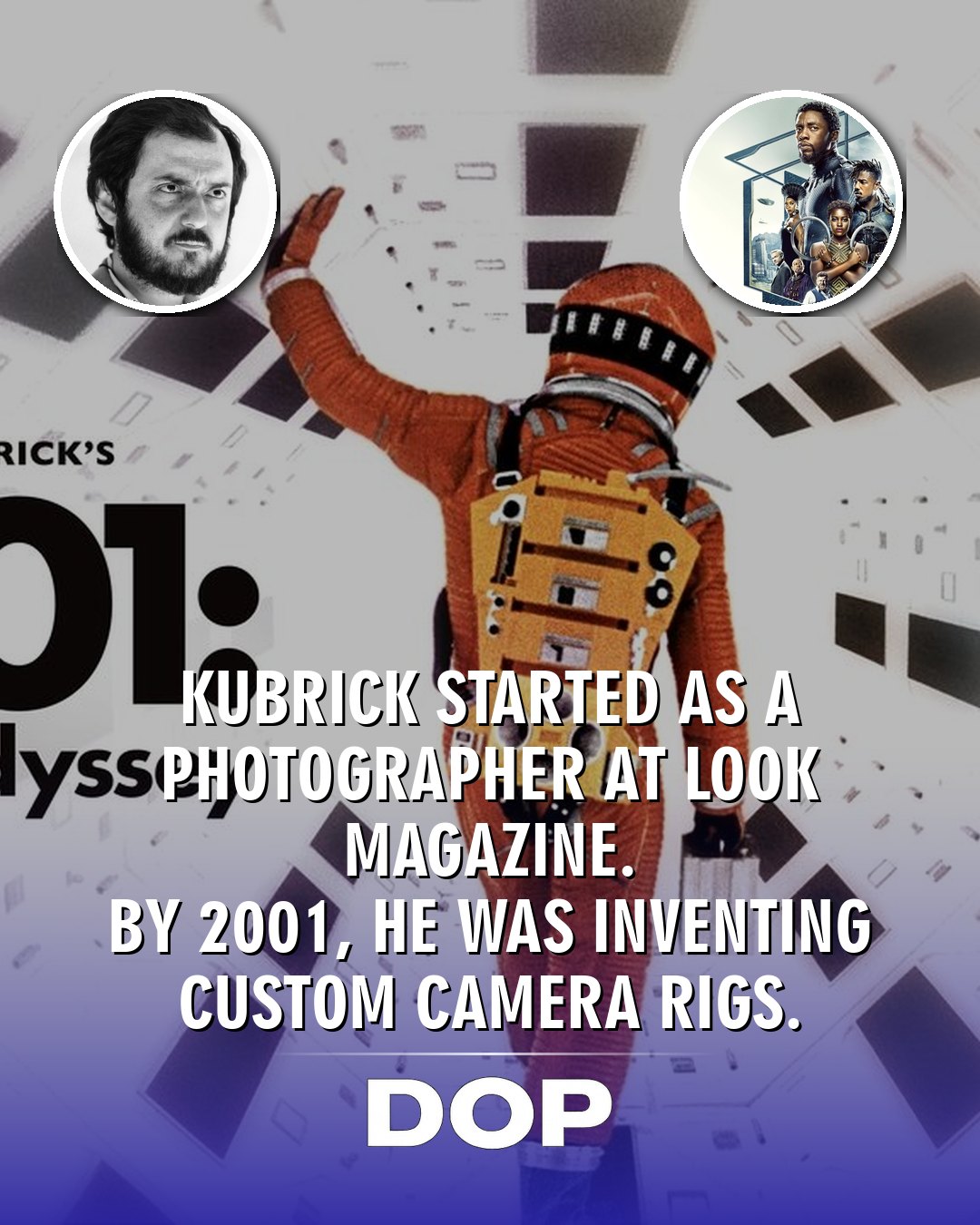
Stanley Kubrick. The name alone conjures images of meticulously crafted frames, audacious narratives, and a visual grammar unlike any other. But to truly appreciate the genius behind 2001: A Space Odyssey, one must look back to his formative years, a period often overshadowed by his later cinematic triumphs. At just 17, Kubrick joined Look magazine as a staff photographer, a crucible where he forged an unparalleled understanding of composition, light, and the power of a single, arresting image. This isn't merely biographical trivia; it's the foundational bedrock upon which his entire directorial philosophy was built.
The transition from still photography to motion pictures for Kubrick wasn't a departure but an evolution. He approached the moving image with the same rigorous discipline he applied to a static frame. Every shot, every angle, every focal length was a deliberate choice, intended to convey specific emotion, information, or abstract concept. By the time he embarked on 2001, shooting in the expansive canvas of Super Panavision 70, this photographic precision had matured into an almost architectural approach to filmmaking. The frame wasn't just a window; it was a carefully constructed tableau, each element placed with purpose, each line guiding the viewer's eye.
The Birth of a Cinematic Language in 2001
2001: A Space Odyssey is not just a film; it's a cinematic landmark, and its visual language remains revolutionary over five decades later. The choice of Super Panavision 70, with its massive 65mm negative, provided an unparalleled level of detail and sharpness, allowing Kubrick and his cinematographers – primarily Geoffrey Unsworth, though often uncredited, and John Alcott for reshoots – to create visuals that felt immense and immersive. This wasn't merely about technical superiority; it was about conveying the vastness of space and the grandeur of the unknown. The wide aspect ratio (2.20:1) became a character in itself, emphasizing isolation and scale.
Kubrick’s visual philosophy, deeply rooted in his photographic background, meant treating every shot as a self-contained work of art. The camera movements, when they occurred, were often deliberate and stately, allowing the audience to absorb the intricate details of the production design and the carefully choreographed blocking. This static, almost tableau-like approach to many scenes, particularly in the early segments of 2001, directly echoes the compositional rigor of a master photographer. He understood that sometimes, the most profound impact comes from allowing an image to simply exist, to be contemplated rather than rushed past.
"Kubrick approached the moving image with the same rigorous discipline he applied to a static frame. Every shot, every angle, every focal length was a deliberate choice, intended to convey specific emotion, information, or abstract concept."
The Star Gate: A Slit-Scan Revolution
Perhaps the most iconic testament to this blend of photographic precision and cinematic innovation is the film's 'Star Gate' sequence. This wasn't just an effect; it was a visual symphony, a psychedelic journey into the unknown that pushed the boundaries of film technology. Special photographic effects supervisor Douglas Trumbull, a visionary in his own right, was tasked with bringing Kubrick's abstract vision to life. The solution? A custom-designed slit-scan camera rig, a monumental undertaking that redefined what was possible in motion picture effects.
While the basic principle of slit-scan photography – where a narrow slit is moved across a stationary image or an object is moved past a stationary slit – had existed in panoramic photography and even 'photo-finish' cameras at racetracks, its application to motion pictures, especially at this scale and complexity, was unprecedented. Trumbull's machine employed 65mm Mitchell cameras, the same large format used for principal photography, ensuring seamless integration with the film's visual aesthetic. The process was painstakingly slow, requiring exposures of approximately one minute per frame to create the illusion of an infinite, pulsating corridor of light and color. This wasn't quick CGI; it was a deeply analogue, highly mechanical, and profoundly artistic endeavor, requiring immense patience and technical ingenuity.
The 'Star Gate' sequence is a testament to Kubrick's relentless pursuit of visual perfection and his willingness to invent new technologies to achieve his artistic goals. It demonstrates a profound understanding of how light, color, and movement, when meticulously controlled, can evoke profound emotional and intellectual responses. The slit-scan technique, blending the static capture of lines and colors with the dynamic movement of the camera, created an effect that was simultaneously abstract and deeply immersive, pushing the audience into a state of sensory overload that mirrored the film's thematic exploration of consciousness and evolution.
Kubrick's legacy, particularly through 2001: A Space Odyssey, is a powerful reminder that cinematography is not merely about pointing a camera; it's about seeing, composing, and manipulating light with a photographer's eye and a storyteller's heart. His journey from the still frame of Look magazine to the cosmic ballet of the 'Star Gate' sequence illustrates the enduring power of visual precision and the boundless potential of the cinematic medium when wielded by a true master.