Twenty-one films. Two decades of unparalleled visual storytelling. The creative partnership between director Steven Spielberg and cinematographer Janusz Kaminski, ASC, is one of cinema's most revered and enduring. Their synergy has consistently pushed the boundaries of what is possible on screen, blending visceral realism with breathtaking spectacle. Even today, the opening sequence of their 2005 sci-fi epic, War of the Worlds, stands as a testament to their audacious vision and Kaminski's relentless pursuit of authentic, impactful imagery.
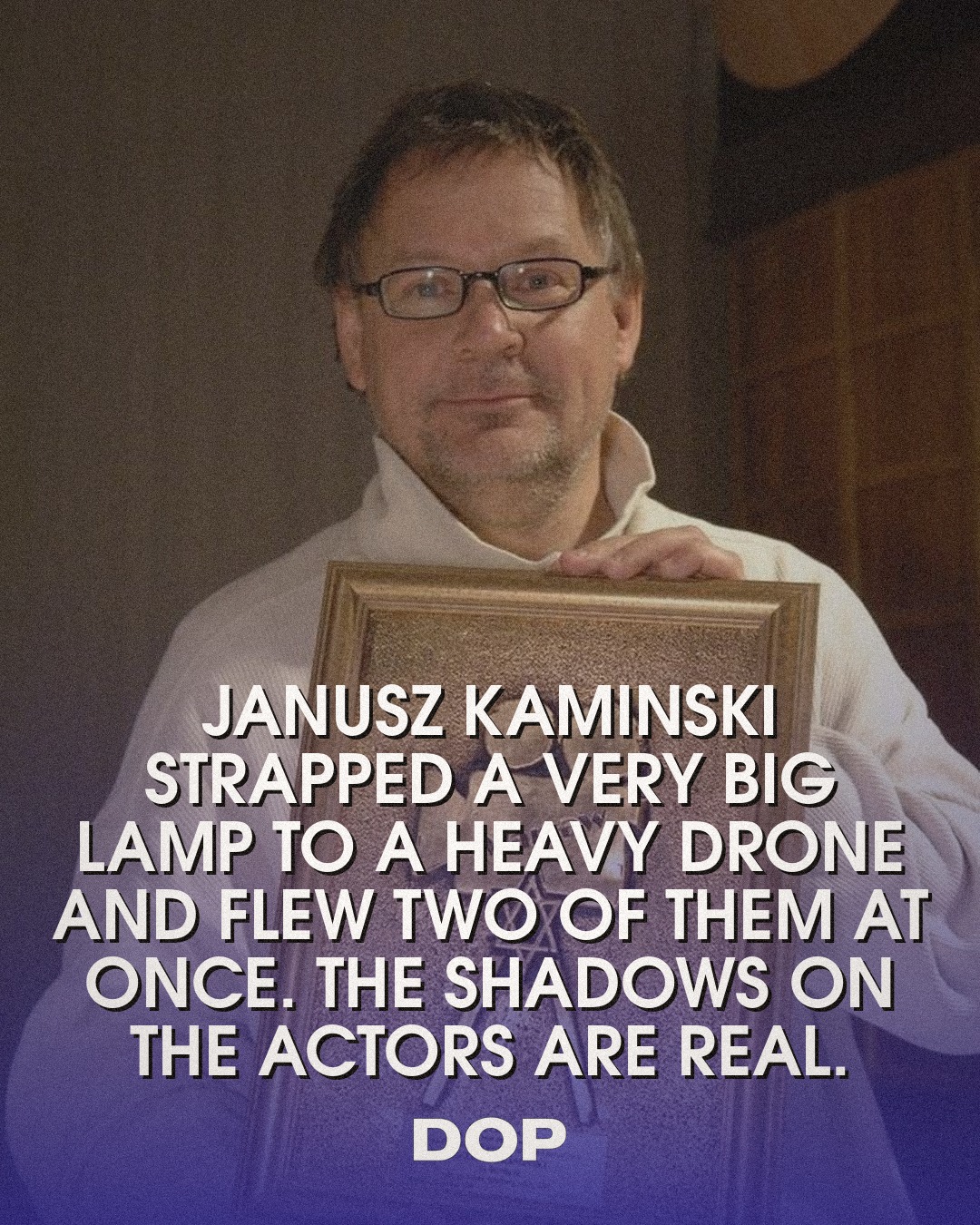
The film’s 'Disclosure Day' sequence, depicting the arrival of the alien Tripods, is a masterclass in controlled chaos and practical effects integration. Kaminski, ever the innovator, collaborated with New York-based specialists Flying Monster, deploying heavy-lift drones long before they became commonplace in narrative filmmaking. This wasn't merely about getting a high shot; it was about dynamic, impossible camera movements that conveyed the sheer scale and terror of the unfolding invasion. The drones allowed the camera to 'climb, drop, and travel across' the suburban landscape with an agility that would have been cost-prohibitive or physically impossible via traditional means like cranes or helicopters, particularly for such intricate, low-altitude work.
The Art of the Practical: Lighting and VFX Synergy
What truly elevates this sequence is Kaminski’s meticulous attention to light and shadow, even when anticipating heavy visual effects integration. The Instagram caption notes, "The light hit the lens and threw moving shadows on the ground." This wasn't incidental; it was a deliberate choice to provide the visual effects team with a tangible, real-world foundation. By capturing authentic lens flares and dynamic shadows cast by the practical rig, Kaminski provided invaluable data and a reference point for the CG artists to build the massive landing craft around. This commitment to practical elements, even in a VFX-heavy film, is a hallmark of Kaminski’s approach, grounding the fantastical in a perceptible reality.
"Audiences do not care about formats. They care about stories." This quote encapsulates Kaminski's philosophy: technical choices serve the narrative, not the other way around. His mastery lies in making those choices invisible, allowing the audience to be fully immersed.
Kaminski's preference for celluloid is well-documented, and for War of the Worlds, he shot on 35mm film. This decision was crucial for capturing the rich texture, subtle color nuances, and organic grain that defined the film's aesthetic. The choice of film stock, likely Kodak Vision3, provided the latitude necessary to manage the extreme dynamic range of the sequence, from bright, overcast skies to the ominous, shadow-laden ground as the Tripods emerge. The inherent characteristics of film, its ability to render naturalistic skin tones and handle highlights gracefully, contributed significantly to the film's gritty, almost documentary-like feel, despite its blockbuster scale.
Kaminski's Signature Style: Lenses, Color, and Collaboration
While specific lens choices aren't detailed in the caption, Kaminski often favors anamorphic lenses for their distinctive oval bokeh, shallow depth of field, and characteristic flares, which contribute to the epic scope and emotional intensity of his work. For War of the Worlds, a combination of spherical and anamorphic lenses (perhaps Panavision Primos or E-Series) would have been used to achieve the desired visual language, wide, immersive shots for scale and tighter, more intimate framing to convey character perspective and terror. His signature 'flashing' technique, often involving a light source aimed directly at the lens, creates those ethereal flares and a slightly desaturated, high-contrast look that has become synonymous with his collaborations with Spielberg.
Kaminski’s process also highlights the collaborative nature of filmmaking. Bringing two key personnel from Los Angeles to complement a locally sourced crew speaks to his trust in established relationships while also valuing local talent and resources. This blend of core team and local expertise ensures consistency in vision while fostering new creative connections. His comment, "Audiences do not care about formats," while perhaps an oversimplification for our enthusiast readership, underscores a profound truth: the technical medium is merely a tool. What truly resonates is the story, the emotion, and the immersive experience crafted by the cinematographer's art.
The enduring power of War of the Worlds' opening sequence lies not just in its visual effects spectacle, but in Kaminski’s masterful control of light, movement, and emotional impact. His ability to integrate cutting-edge technology with traditional cinematic principles, all while maintaining a clear narrative focus, cements his status as one of the most influential cinematographers of our time. Every frame is a testament to the fact that even in an age of digital dominance, the fundamental principles of photography, how light falls, how shadows play, and how a camera moves, remain paramount to crafting unforgettable cinema.