In the hallowed halls of Hollywood, where legacies often intertwine with nepotism and the 'who-you-know' adage frequently rings true, the narrative of Julia Swain offers a refreshing, and indeed, essential counterpoint. Her journey, meticulously built on academic rigor, professional diligence, and an undeniable talent, serves as a powerful testament to the idea that there is a viable, meritorious route into this demanding industry that doesn't solely rely on familial ties or chance encounters. Swain's trajectory is a beacon for aspiring cinematographers, illustrating that mastery of the craft, coupled with strategic professional development, can indeed open doors.
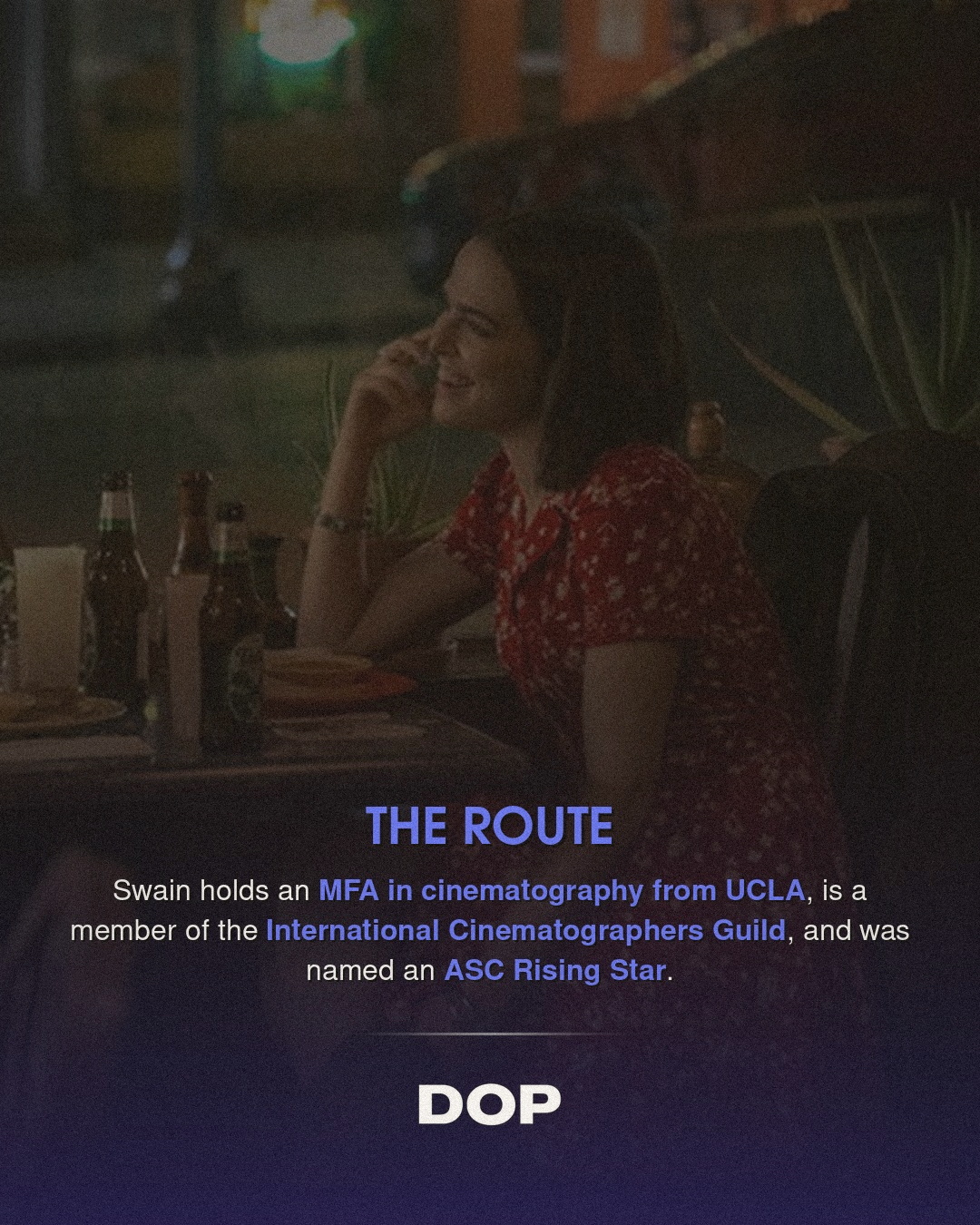
Swain's foundational commitment to her art is underscored by her MFA in Cinematography from UCLA, one of the most respected film programs globally. This isn't merely a credential; it signifies years spent immersed in the theoretical underpinnings and practical applications of visual storytelling. It’s in these academic crucibles that DPs like Swain hone their eye, learn the language of light, and dissect the works of masters, evolving from enthusiasts into informed artists ready to tackle the complexities of production. Her membership in the International Cinematographers Guild further solidifies her standing as a working professional, deeply integrated into the industry's operational framework.
The Rising Star's Ascent: Beyond the Pedigree
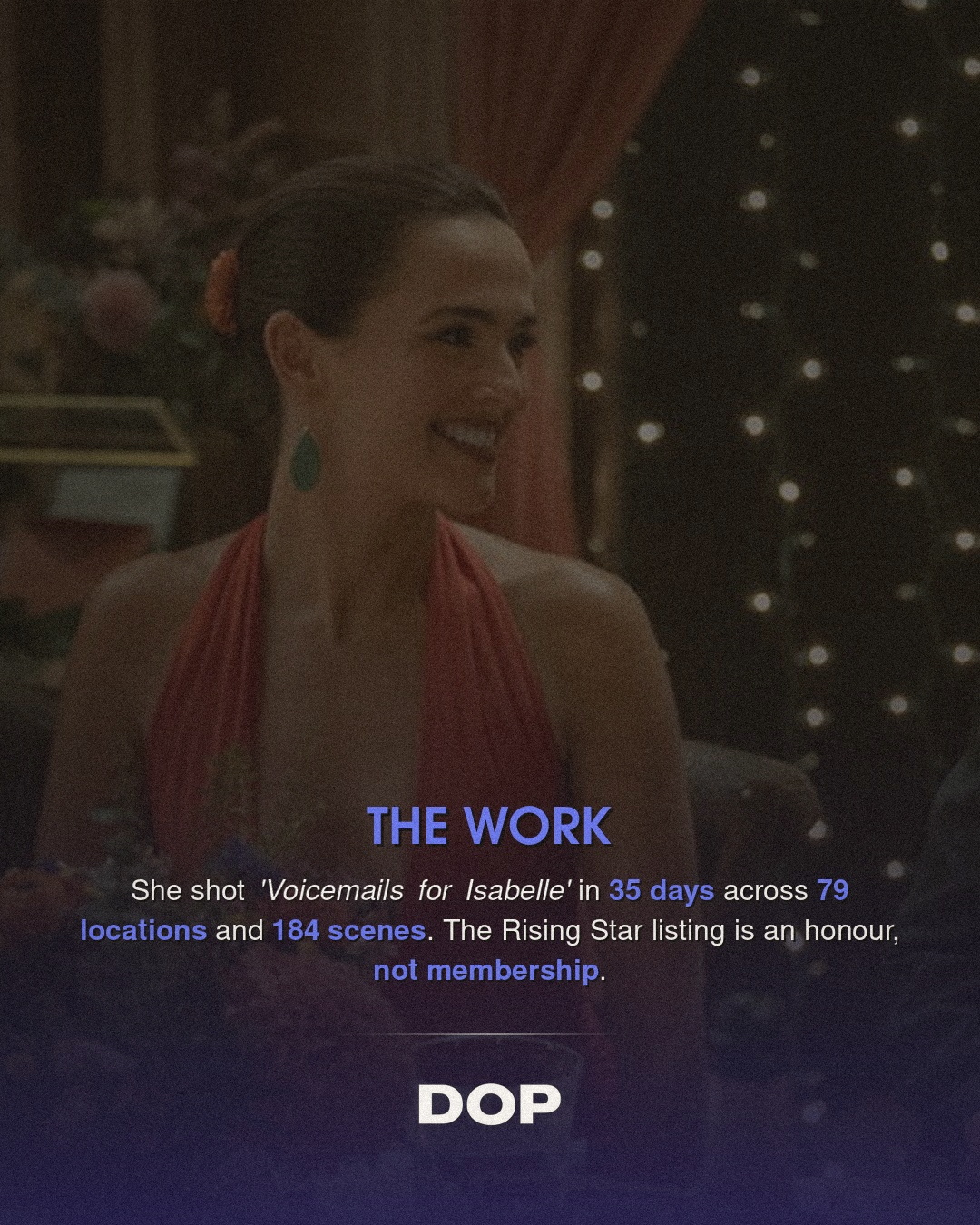
The distinction of being named an ASC Rising Star is not merely an accolade; it's a profound acknowledgment from the American Society of Cinematographers, the premier organization for DPs worldwide. While it's crucial to understand, as the original caption clarifies, that this honor is distinct from full ASC membership and does not confer post-nominal letters, its significance cannot be overstated. It represents the collective recognition by industry titans of a cinematographer's burgeoning talent and potential to shape the future of visual artistry. For Swain, this recognition validates a career built on merit, skill, and an exceptional work ethic, positioning her as a formidable force in contemporary cinematography.
Her work on 'Voicemails for Isabelle' stands as a monumental case study in cinematic resilience and ingenuity. Shooting a feature film in just 35 days, across an astonishing 79 locations, and encompassing 184 distinct scenes, is not merely a logistical challenge; it's a profound test of a cinematographer's ability to adapt, innovate, and maintain visual coherence under immense pressure. This kind of schedule demands a DP who can make rapid, informed decisions about lighting, framing, and camera movement, often with limited resources and time for extensive setups. It speaks volumes about Swain's pre-visualization skills, her collaborative spirit with the director, and her technical prowess to execute complex sequences efficiently.
“The true measure of a cinematographer lies not just in their ability to create beautiful images, but in their capacity to solve complex visual problems under the relentless pressures of production, maintaining artistic integrity throughout.”
Technical Prowess Under Pressure
Imagine the technical demands of 'Voicemails for Isabelle.' Each of those 79 locations would have presented unique lighting challenges, from natural light scenarios requiring meticulous diffusion and negative fill, to practical lighting augmented by subtle, yet effective, cinematic instruments. Swain would have likely relied on a versatile camera package, perhaps a RED Komodo or ARRI Alexa Mini LF for their compact form factor and robust dynamic range, paired with fast, characterful prime lenses like Cooke S4/i or Zeiss Supreme Primes to handle varying light conditions and maintain a consistent aesthetic across diverse environments. Her lighting philosophy, honed through her UCLA training, would have prioritized efficiency without compromising mood or narrative intent, utilizing LED panels like Aputure 600d or Astera tubes for quick setups and precise control.
The sheer number of scenes, 184, suggests a narrative rich in transitions and shifts in tone, each requiring a nuanced visual approach. This means not just capturing images, but crafting a visual language that evolves with the story, guiding the audience's emotional journey. Swain's ability to maintain a cohesive color science and visual texture across such disparate scenes, often within the same shooting day, points to a deep understanding of post-production workflows and a strong working relationship with her colorist. Her choices in filtration, perhaps subtle Pro-Mist or Black Satin, could have been instrumental in softening digital sharpness and imparting a filmic quality, especially given the rapid pace of production.
Julia Swain embodies the modern cinematographer: highly educated, technically adept, and passionately dedicated to the art form. Her journey is a powerful reminder that while connections can open doors, it is undeniable talent, persistent effort, and a profound understanding of the craft that truly forge a lasting and impactful career in cinematography. As Occupy Cinematography continues to champion the unsung heroes behind the lens, Swain’s story shines brightly as an inspiration for all who aspire to capture the world through a cinematic gaze.
This article contains affiliate links. We may earn a small commission at no extra cost to you. Learn more.