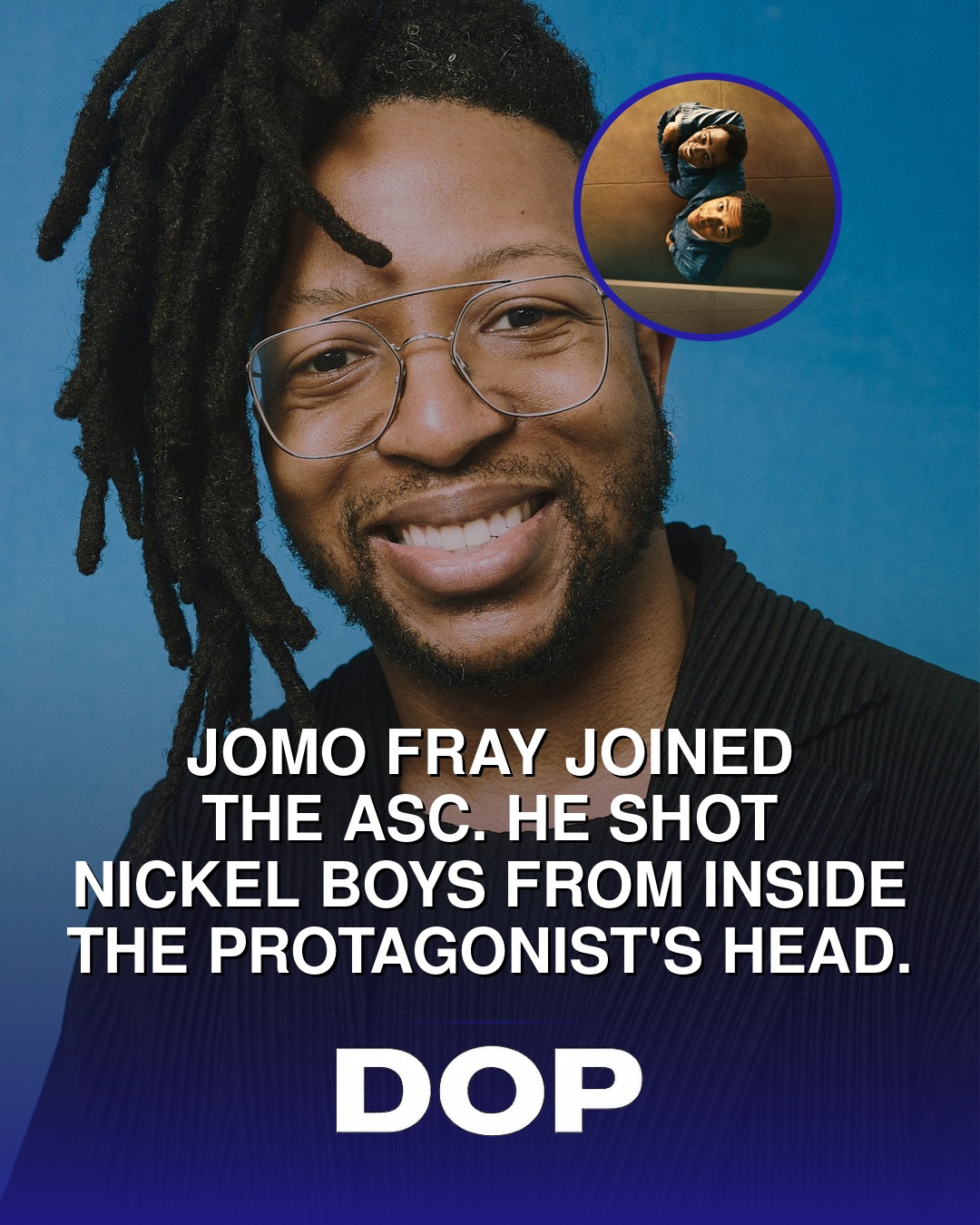
In an industry often lauded for its technical prowess and visual spectacle, true innovation sometimes arrives not with a bang, but with a quiet, insistent shift in perspective. Jomo Fray's work on RaMell Ross's Nickel Boys stands as a monumental example of such a shift. Fray, recently welcomed into the esteemed ranks of the American Society of Cinematographers, didn't just shoot a film; he redefined the very language of cinematic point of view, immersing the audience in a narrative with an unflinching, visceral intimacy.
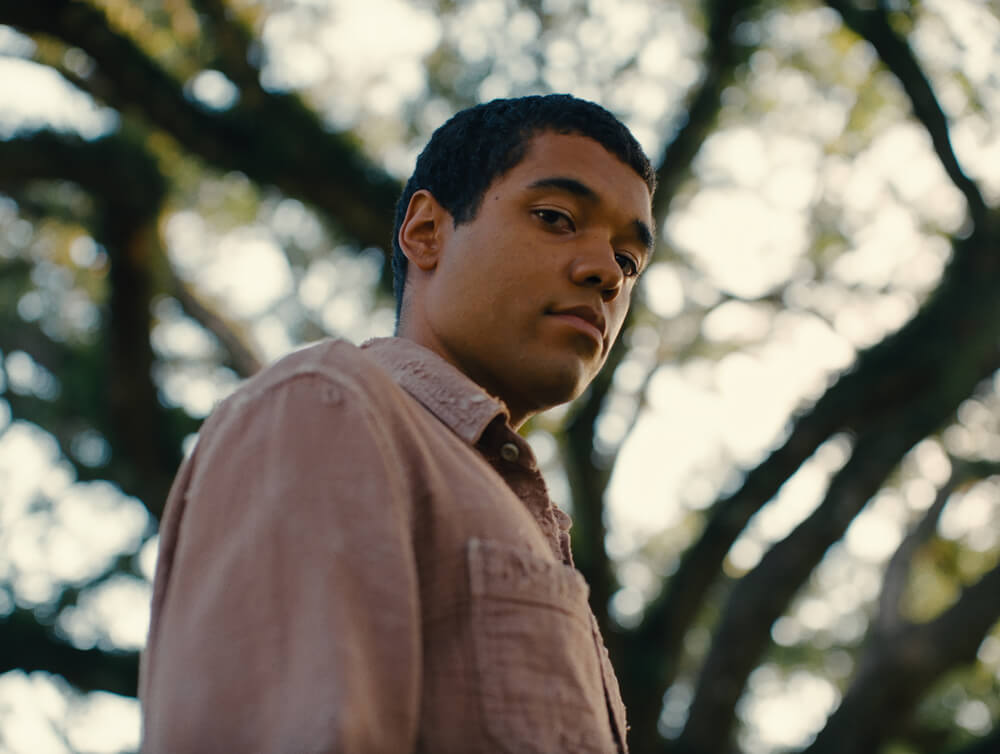
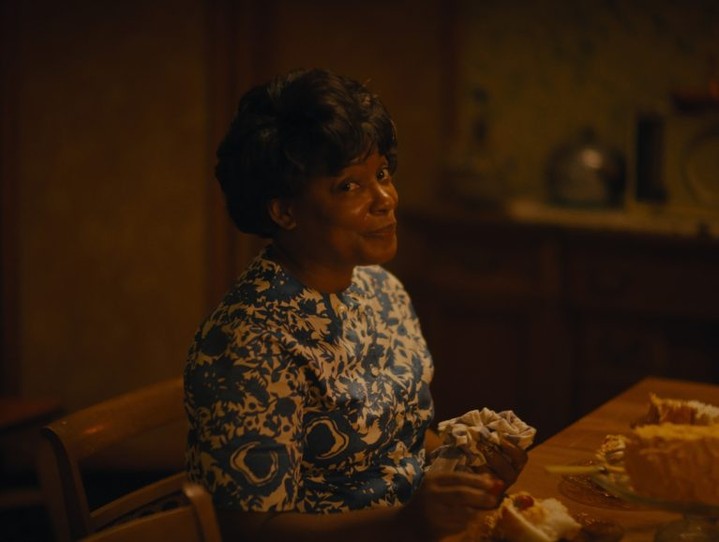
The premise is deceptively simple, yet utterly radical: Nickel Boys is shot entirely in first-person POV. Every single frame is perceived through the eyes of Elwood Curtis, the protagonist. There is no traditional coverage, no cutaways, no reverse shots to externalize the action. Each scene is meticulously designed as a single, unbroken take, forcing the audience into an unprecedented state of subjective experience. This wasn’t merely a formal exercise; it was a profound act of empathy, designed to place the viewer directly within the harrowing reality of a Black boy navigating the brutal confines of a Jim Crow-era reform school. Fray’s vision earned him the ASC Spotlight Award and a Film Independent Spirit Award, accolades that speak volumes about the impact of his audacious approach.
The Camera as a Scene Partner
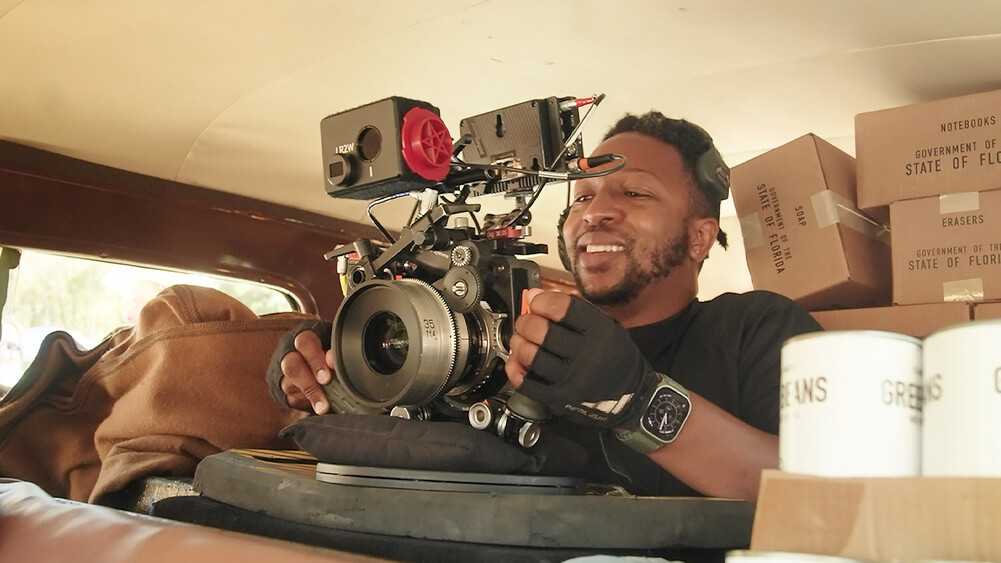
Fray articulated his philosophy with striking clarity: the camera had to evolve beyond a mere recording device to become "a scene partner to the actors." This isn't just poetic language; it speaks to a dynamic, responsive form of cinematography that demands constant, intuitive interplay. If an actor shifted their performance, their intention, or their emotional core, the camera language – its movement, its focus, its framing – had to adapt instantly, organically, to meet that change. This required an extraordinary level of collaboration between Fray, Ross, the actors, and the camera team, blurring the lines between performance and photographic capture. It transformed the camera from an observer into an active participant, an extension of Elwood's consciousness.
"You're not just watching his experience; you're *having* his experience. That's the power of Fray's POV."
Achieving this required a meticulous understanding of movement and blocking. The camera, likely a lightweight, highly maneuverable system, would have been operated with an almost choreographic precision. While specific camera and lens details for Nickel Boys aren't widely publicized, one can infer the necessity for a setup that allowed for fluid, organic motion without sacrificing image quality. A smaller form factor, perhaps a compact digital cinema camera like an ARRI Mini or a RED Komodo, paired with relatively wide, fast prime lenses, would have offered the necessary flexibility for handheld work, Steadicam, or even custom rigs to simulate Elwood's eye line. The choice of sensor and color science would have been crucial for rendering the period setting with authenticity while maintaining the subtle nuances of human emotion, often captured in close proximity.
Rewriting the Visual Rulebook
Fray's work on Nickel Boys challenges the very foundations of cinematic grammar we've come to accept. Traditional coverage, with its master shots, two-shots, and close-ups, serves to orient the audience, to provide context and emotional distance. By stripping these conventions away, Fray forces an unmediated confrontation with Elwood's reality. The absence of reverse shots means we never see Elwood from an external perspective; we only ever see *through* him. This technique fosters an unparalleled sense of identification and vulnerability, making the audience complicit in his experiences, his fears, and his moments of fleeting hope.
Consider the technical implications: every lighting setup had to account for the camera's constant movement and its unique perspective. Light sources couldn't simply be placed for a static frame; they had to illuminate the environment in a way that felt natural and motivated from Elwood's shifting viewpoint. This implies a masterful use of practicals, bounce, and perhaps even dynamic lighting cues to maintain continuity and mood within extended single takes. The film's color palette, likely leaning towards a desaturated, period-appropriate look, would have been carefully graded to enhance the emotional weight of the narrative without ever feeling artificial or distracting from the immersive POV.
A Legacy of Empathy Through the Lens
Jomo Fray's filmography, while still evolving, consistently demonstrates a keen sensitivity to character and a willingness to push formal boundaries. His previous work, such as Selah and the Spades, showcases a nuanced approach to character and atmosphere, but Nickel Boys represents a quantum leap in its formal ambition and emotional impact. By choosing to shoot a period drama set in the Jim Crow South entirely from inside a Black boy's eyes, Fray doesn't just tell a story; he makes you *feel* every second of it. He transforms the camera into a conduit for empathy, a direct line to the protagonist's soul.
This isn't merely a technical achievement; it's a profound artistic statement. In an era where visual storytelling often prioritizes spectacle, Fray reminds us of the power of intimacy, of perspective, and of the camera's unique ability to bridge the gap between viewer and character. His cinematography in Nickel Boys is a masterclass in subjective immersion, a testament to the idea that sometimes, the most revolutionary acts in filmmaking are those that dare to see the world through someone else's eyes, without compromise or traditional intervention. It is, without hyperbole, cinematography that rewrites the rules and sets a new benchmark for experiential storytelling.
This article contains affiliate links. We may earn a small commission at no extra cost to you. Learn more.