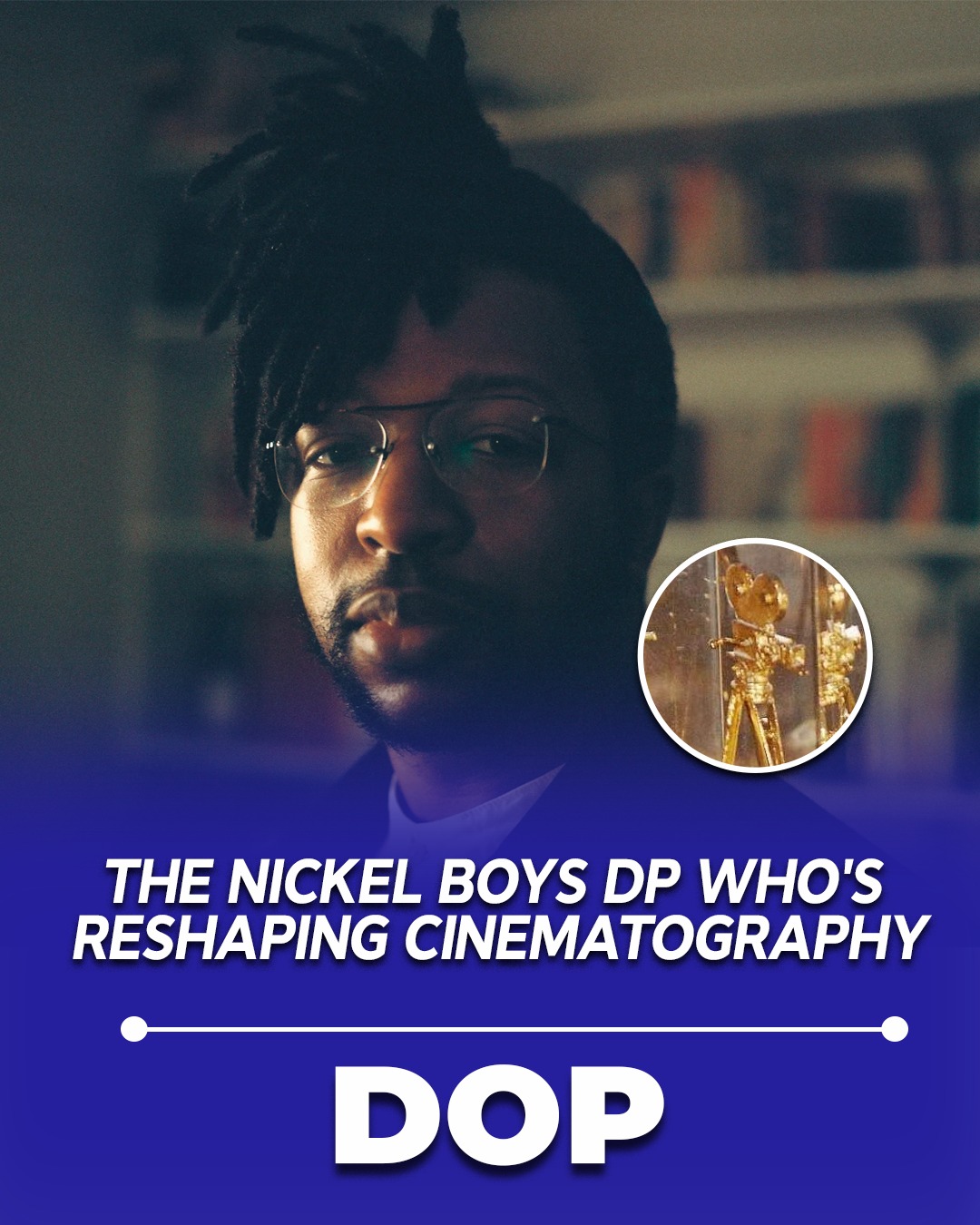
The American Society of Cinematographers (ASC) recently welcomed Jomo Fray into its esteemed ranks, a move that resonates deeply within the cinematography community. Fray’s induction is not merely a recognition of his technical prowess, but a celebration of a distinctive artistic voice that is reshaping the landscape of American independent cinema. His work, particularly on Raven Jackson’s feature debut, All Dirt Roads Taste of Salt, has garnered significant critical acclaim, drawing comparisons that speak volumes about his visual philosophy and impact.
The film’s visual approach has frequently been likened to the collaborative genius of Terrence Malick and Emmanuel Lubezki. This comparison is not made lightly; it points to a shared aesthetic of poetic, non-linear visual storytelling that prioritizes atmosphere, emotion, and the tactile quality of light over conventional narrative exposition. Like Lubezki, Fray demonstrates a profound ability to immerse the viewer in a character's subjective experience, allowing light, shadow, and composition to articulate unspoken truths and evoke deep-seated memories. It’s a style that demands patience and rewards contemplation, inviting the audience to feel the story rather than simply observe it.
The Tactile Language of Light and Shadow
Fray’s cinematography on All Dirt Roads Taste of Salt is a masterclass in evoking a sense of place and time through naturalistic means. He eschews overtly artificial lighting setups, opting instead to harness the inherent beauty and drama of available light. This commitment to naturalism isn't born of limitation but rather a deliberate artistic choice to ground the narrative in an authentic, lived-in reality. The sun-drenched fields, the dappled light filtering through trees, the soft glow of interior spaces, each frame feels imbued with a tangible quality, almost as if you can feel the warmth of the sun or the coolness of a shaded porch.
“Fray’s lens captures not just images, but the very texture of memory and the quiet dignity of human experience.”
This tactile imagery is a hallmark of his style. On All Dirt Roads Taste of Salt, Fray utilized an ARRI Alexa Mini LF, often paired with vintage anamorphic lenses, to achieve a soft, organic look that complements the film's meditative pace. The large-format sensor of the Alexa Mini LF, combined with the characterful fall-off and unique bokeh of anamorphic glass, creates a shallow depth of field that isolates subjects within their environments, drawing attention to subtle gestures and expressions. His color science leans towards a muted, earthy palette, enhancing the film’s timeless quality and evoking a sense of nostalgic longing.
A Distinctive Voice in Independent Cinema
Fray's ASC membership underscores his rising prominence and the recognition of his unique contributions to the craft. His work on All Dirt Roads Taste of Salt, which earned significant buzz at Sundance, solidified his reputation as a cinematographer unafraid to push boundaries and explore non-traditional narrative structures through visual means. He understands that cinematography is not just about capturing images, but about sculpting light and shadow to create emotional resonance and profound meaning.
Beyond All Dirt Roads Taste of Salt, Fray's filmography reveals a consistent dedication to evocative visual storytelling. His earlier work, such as Selah and the Spades, showcased his ability to craft compelling visual narratives within diverse genres, always maintaining a keen eye for character and atmosphere. He is a DP who understands the power of subtlety, allowing the frame to breathe and the audience to engage on a deeper, more visceral level.
The influence of cinematographers like Lubezki, known for his long takes and immersive camera work, is discernible in Fray’s approach, yet he carves out his own distinct path. He is not merely imitating; he is synthesizing these influences with his own vision, creating a visual language that feels both familiar and refreshingly new. His focus on the human experience, rendered through an almost spiritual connection to natural light, positions him as a significant voice for a new generation of cinematographers.
As Jomo Fray embarks on this new chapter as an ASC member, the cinematography community eagerly anticipates his future projects. His elevation to such a prestigious society is a testament to his artistic integrity, his technical skill, and his unwavering commitment to using the camera as a tool for profound emotional expression. He represents a powerful reminder that in an increasingly fast-paced world, there remains immense power in the quiet, reflective beauty of carefully crafted imagery.
This article contains affiliate links. We may earn a small commission at no extra cost to you. Learn more.