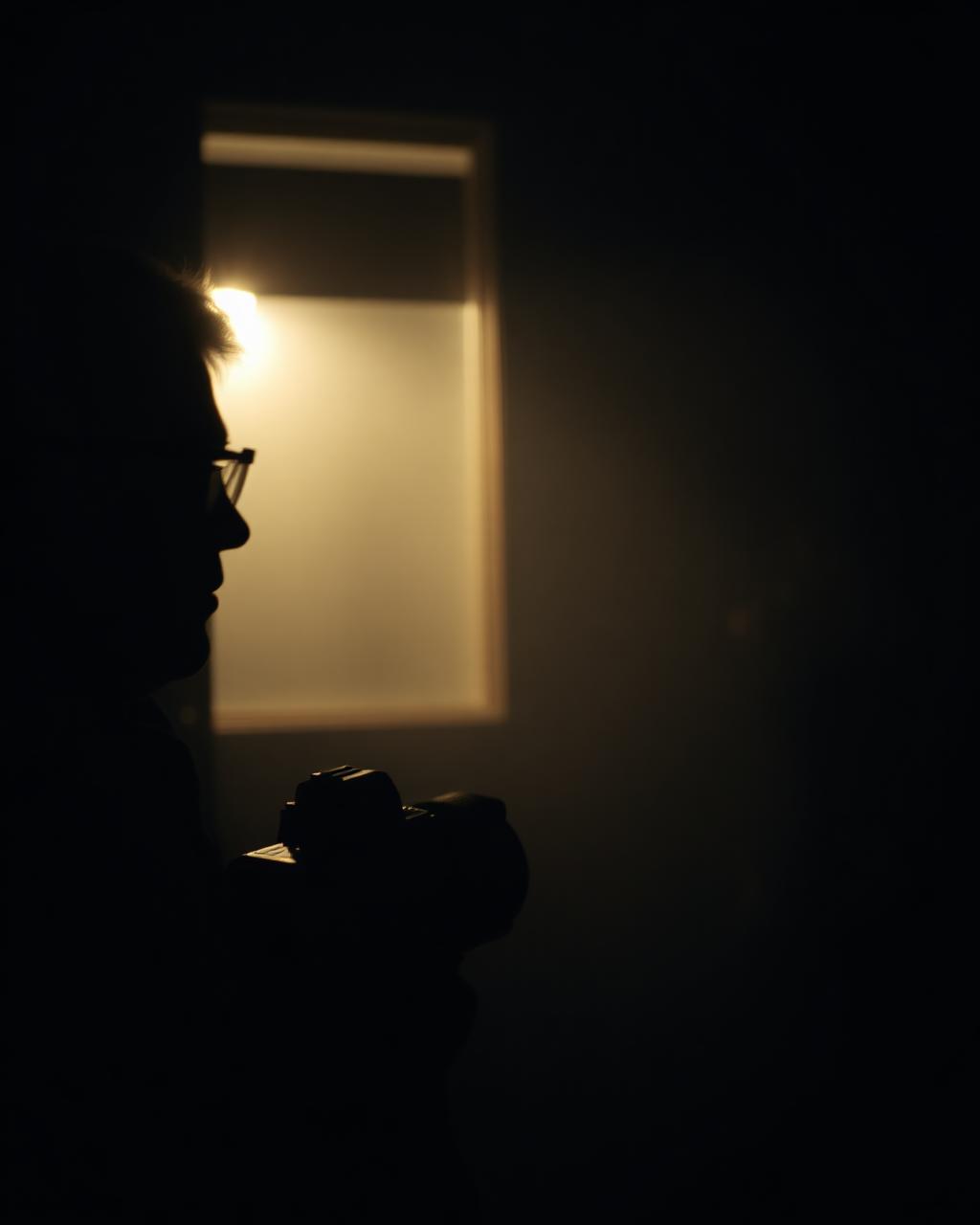
Jeremy Cox is 2026's most watched emerging Canadian cinematographer, and his trajectory from CSC Award winner to TIFF premiere to theatrical release demonstrates the specific path that emerging DPs can take in the Canadian film ecosystem. Before Mile End Kicks, Cox's reputation was built on careful work in documentary and narrative shorts, including Until Branches Bend (2022), for which he won the Canadian Society of Cinematographers Award for Best Cinematography. That award is not given to cinematographers who shoot good images. It is given to cinematographers who understand that the camera's relationship to its subject is as important as the technical execution of that relationship.
In an extended interview with Booooooom, Cox described his approach to portrait-style documentary cinematography with a phrase that clarifies his entire practice: "I realised while taking this image the weight that the subject can hold in a frame." That insight—that a human being, placed carefully in composition, can carry emotional and narrative significance simply through their presence in the frame—is the foundation of his cinematography. It explains why his work feels alive. It explains why people who appear in front of his camera seem to reveal something true.
Cox's background combines Canadian documentary practice with narrative feature work. But the distinction between these two modes is less important than what they share: both require a cinematographer who can work embedded within communities rather than observing from outside. Documentary embeds you in the real world. Narrative feature work requires you to embed your camera in the emotional world of the characters. Cox's approach across his work is consistent: build a camera relationship that belongs to the world rather than standing apart from it.
Mile End Kicks gave Cox his highest-profile feature platform to date. The film premiered at TIFF 2025 and released theatrically in April 2026, which means it reached audiences beyond the festival circuit. The critical reception, described across reviews as "beautifully photographed," is significant not because it praises Cox, but because it recognizes that his cinematography made the film's world—Montreal's indie music scene—feel authentic and specific. He did not photograph Montreal. He photographed Montreal through the eyes of someone who belongs there.
The emerging DP arc that Cox represents is worth watching because it is built on principle rather than opportunity. He won a CSC Award for understanding how the camera relates to people. That understanding led to a TIFF premiere. That premiere led to theatrical distribution. At each stage, Cox was doing the same work: placing the camera in a way that respects the truth of the world in front of it. That consistency is what builds careers.
For emerging cinematographers in Canada and beyond, Cox's path suggests something crucial: your reputation is built on how you see people and places, not on the size of your projects. A CSC Award for a short feature leads to features. A TIFF premiere leads to distribution. But the foundation is always the same: the weight that the subject can hold in a frame, if the cinematographer knows how to see it.
Until Branches Bend won him a CSC Award. Mile End Kicks gave him a TIFF premiere. That is the emerging DP arc worth watching.
Gear Recommendations
- Blackmagic Pocket Cinema Camera 6K Pro | Adorama – B&H Photo
- Sigma 18-35mm f/1.8 Art | Adorama – B&H Photo
- DJI RS 4 Pro Gimbal – Amazon
- Aputure 300d Mark II | Adorama – B&H Photo
Note: Links above are affiliate links. Occupy Cinematography may earn a commission on qualifying purchases at no additional cost to you.