Jarin Blaschke isn't just a cinematographer; he's an architect of atmosphere, a visual historian, and arguably one of the most technically rigorous DPs working in contemporary cinema. His collaborations with director Robert Eggers are less individual films and more meticulously constructed worlds, each possessing a unique visual language painstakingly designed to transport the audience into a specific time, place, and psychological state. With the recent wrap of principal photography on Eggers' latest, Werwulf, the anticipation isn't just for the film itself, but for the next evolution of Blaschke's unparalleled craft.
Blaschke's journey with Eggers began with The Witch, a masterclass in period authenticity and naturalistic horror. Shot almost entirely in available light and under the brooding, overcast skies of New England, the film eschewed artificial illumination for a stark, painterly quality that felt both ancient and unsettling. This commitment to verisimilitude extended to the choice of lenses – often Cooke S4s or similar, known for their slightly softer, organic fall-off – which contributed to the film's haunting, almost documentary-like aesthetic. It was a bold statement, demonstrating that true horror could be found not in jump scares, but in the slow burn of psychological dread amplified by an unflinching visual truth.
Crafting Distinct Visual Dialects
The duo’s next collaboration, The Lighthouse, pushed the boundaries of visual experimentation even further. Blaschke embraced an anachronistic 1.19:1 aspect ratio, a nearly square frame that immediately invoked the suffocating claustrophobia of its isolated setting and the aesthetic of early 20th-century photography. To achieve its distinctive, high-contrast monochrome look, Blaschke employed a custom-developed filtration and post-production process designed to mimic the orthochromatic film stocks of the era. This wasn't merely a stylistic choice; it was a narrative tool, imbuing the film with a sense of historical artifact, a faded photograph come to life, mirroring the decaying sanity of its protagonists.
"Blaschke's work with Eggers is a testament to the power of a cinematographer not just to light a scene, but to imbue it with palpable history, texture, and psychological weight."
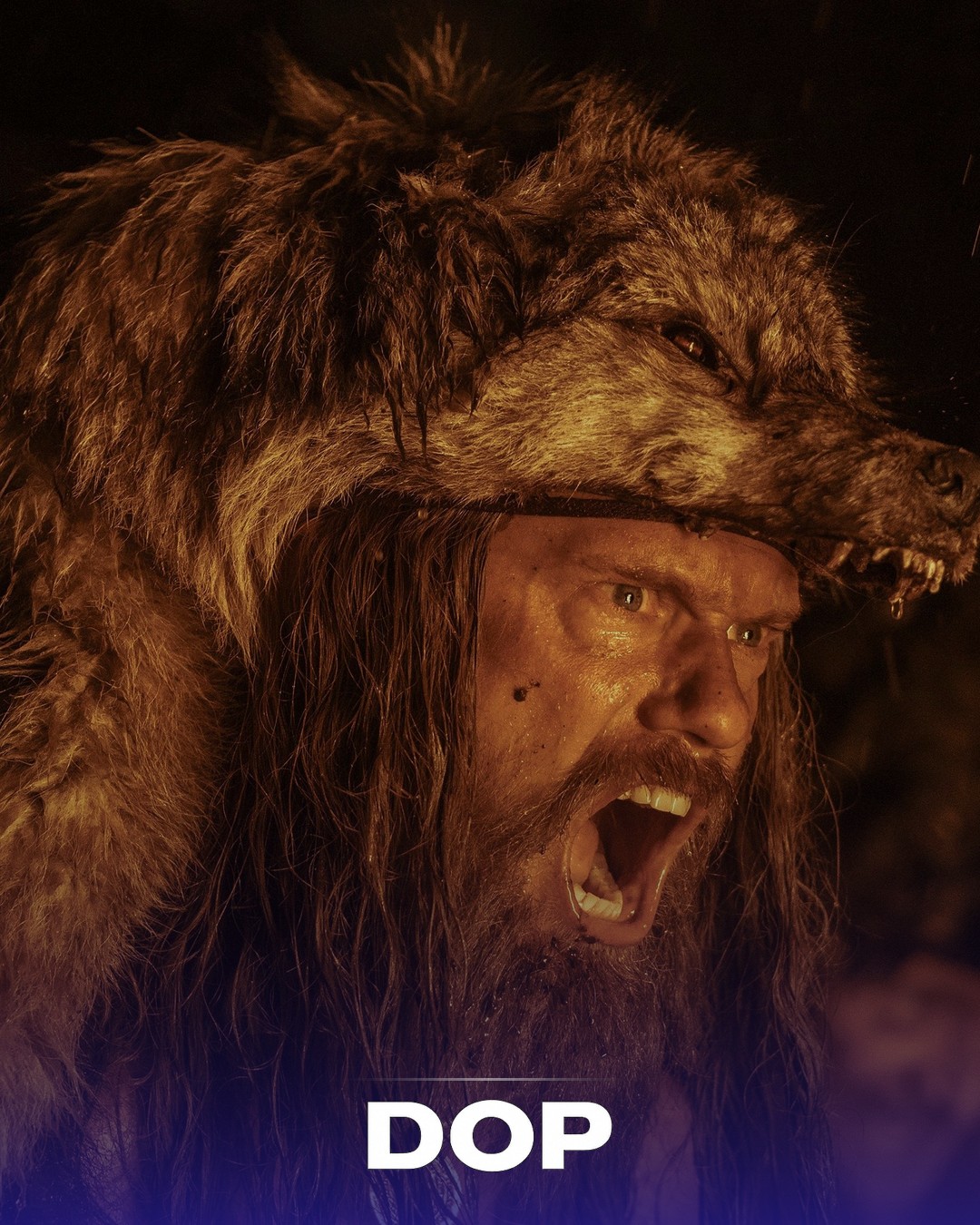
With The Northman, Blaschke ventured into a different kind of historical epic, drawing inspiration from Northern European oil paintings. Shot in the rugged landscapes of Iceland and Ireland, the film's palette was rich yet desaturated, emphasizing the brutal beauty of the Viking age. The choice of large-format Alexa LF and Mini LF cameras provided a cinematic grandeur, while specific lens choices – often rehoused vintage glass or custom anamorphic sets – contributed to the film's epic scale and unique character. The lighting, while still rooted in naturalism, allowed for more dramatic contrasts and stylized compositions, reflecting the heightened reality of a saga.
The Evolution of a Partnership: From Painterly to Grim
The recently wrapped Nosferatu, filmed in the gothic landscapes of Germany and Romania, promised a deep dive into Weimar-era expressionism. This would undoubtedly have seen Blaschke exploring stark chiaroscuro, exaggerated shadows, and perhaps even forced perspectives, echoing the visual vocabulary of F.W. Murnau and German Expressionist art. It’s a testament to his versatility that he can pivot so dramatically between aesthetic philosophies while maintaining a consistent commitment to historical and thematic resonance.
Now, with Werwulf, Blaschke describes the approach as "raw and grim," a deliberate departure from the "painterly quality of Nosferatu." This suggests a return to a more visceral, perhaps even handheld, aesthetic, stripping away overt stylization in favor of an unvarnished, brutal authenticity. Given the medieval horror setting, one can anticipate a return to the naturalistic, available light philosophy seen in The Witch, but perhaps with even greater intensity. Expect deep shadows, harsh textures, and a visual language that mirrors the primal fear and desperate struggle of its characters. The collaboration with actors like Aaron Taylor-Johnson, Lily-Rose Depp, Willem Dafoe, and Ralph Ineson, known for their intense performances, will undoubtedly be amplified by Blaschke's unflinching lens.
Jarin Blaschke's filmography with Robert Eggers is a masterclass in how cinematography can transcend mere image-making to become an integral part of storytelling. Each film is a meticulously researched and executed visual experiment, pushing the boundaries of period authenticity, aspect ratio, color science, and lighting philosophy. As we await the December 25, 2026 release of Werwulf, the excitement isn't just for another Eggers film, but for another captivating visual journey crafted by one of cinema's most compelling DPs.