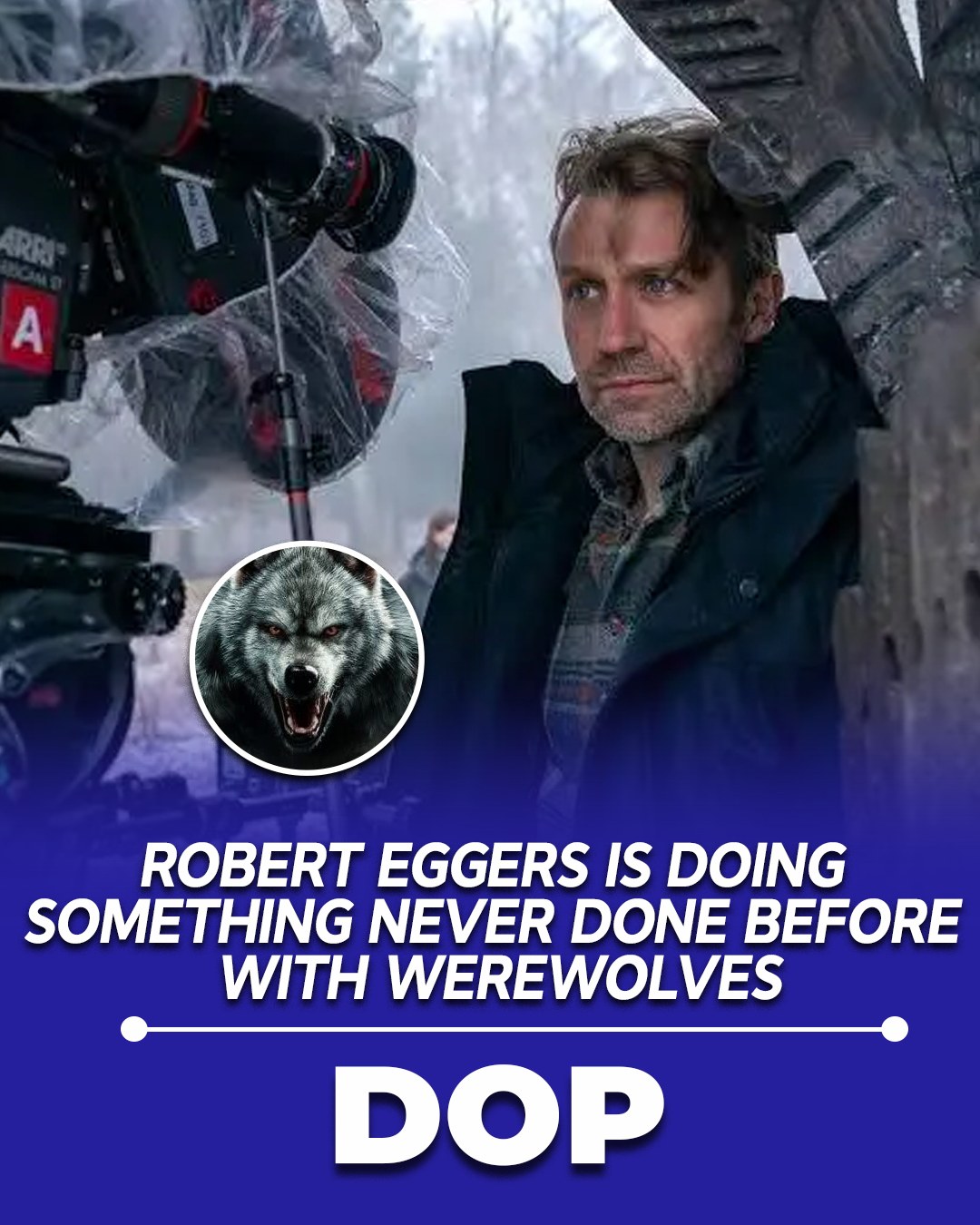
The cinematic landscape is bracing itself for what promises to be Robert Eggers’ most unsettling and ambitious work to date: Werwulf. This medieval werewolf saga, shrouded in the mists of 13th-century England, reunites Eggers with his indispensable visual architect, Jarin Blaschke. Their fourth collaboration, following the critically acclaimed The Witch, The Lighthouse, and The Northman, signals not just a continuation of a potent creative partnership, but a profound deepening of their shared aesthetic philosophy. For those of us who revere the meticulous craft of cinematography, this project is a beacon in the encroaching darkness, promising a masterclass in historically authentic, psychologically resonant visual storytelling.
Blaschke's approach to cinematography is less about capturing an image and more about forging an experience. His work is characterized by a visceral commitment to practical lighting, a technique that doesn't merely illuminate a scene but imbues it with a tangible sense of time, place, and emotional weight. For Werwulf, set in an era devoid of electricity, this commitment is not just an artistic choice but a narrative imperative. Blaschke has hinted that this project will push their practical lighting philosophy further than ever before, relying almost exclusively on period-accurate sources: flickering candlelight, the dancing glow of a hearth, and the stark, unforgiving light of the moon. This isn't just about historical accuracy; it's about immersing the audience in a world where light is precious, unpredictable, and often, terrifyingly scarce.
The Alchemy of Darkness: Blaschke's Lensing and Lighting Philosophy
In previous collaborations, Blaschke has demonstrated an uncanny ability to craft distinct visual languages for each of Eggers' unique worlds. For The Witch, he embraced a desaturated, naturalistic palette, often shooting with vintage lenses like the Cooke Speed Panchros to achieve a softer, more organic feel, complementing the film’s puritanical dread. The Lighthouse saw him pivot to a stark, high-contrast black and white, utilizing large format lenses and an orthochromatic film stock emulation to evoke the claustrophobic madness of early cinema. With The Northman, while still grounded in natural light, the scale expanded, embracing the rugged grandeur of the landscape while maintaining an intimate connection to the characters’ primal struggles.
“Blaschke's genius lies not just in his technical prowess, but in his profound understanding that light is not merely illumination; it is a character, a harbinger of fate, and a mirror to the soul.”
For Werwulf, we can anticipate a synthesis and evolution of these methodologies. The medieval setting, with its inherent lack of artificial illumination, demands an even greater reliance on the cinematographer's ability to sculpt with shadow. This isn't just about making things dark; it's about making darkness meaningful. Expect to see Blaschke meticulously crafting pools of light that barely pierce the gloom, highlighting faces etched with fear or glinting off ancient weaponry. The choice of camera and lens package will be critical. Given the desire for period authenticity and the challenges of low-light shooting, a highly sensitive digital cinema camera, perhaps an ARRI Alexa Mini LF or Venice, paired with fast, characterful lenses, perhaps rehoused vintage glass or custom-tuned modern optics, will be essential to capture the subtle nuances of firelight and moonlight without sacrificing the texture and depth of the image.
Psychological Horror Through the Lens
Eggers' films are renowned for their meticulous research and their ability to delve into the darkest corners of human psychology, often through the lens of folklore and historical dread. Werwulf, exploring the primal terror of lycanthropy, offers fertile ground for Blaschke to amplify this psychological horror through his visual choices. The interplay of light and shadow will not merely depict the physical transformation of a man into a beast, but will externalize the internal struggle, the creeping madness, and the inherent savagery that lies beneath the veneer of civilization. The practical light sources will not just illuminate the scene, but will become extensions of the characters' emotional states, a flickering candle reflecting a fragile hope, a sudden burst of firelight revealing a monstrous truth, or the cold, indifferent glow of the moon presiding over an unspeakable act.
The color science will also play a crucial role. While previous films have leaned into desaturated or monochrome palettes, Werwulf may demand a different approach to convey the visceral horror of blood and the earthy tones of medieval life. However, even with color, Blaschke is likely to maintain a subdued, naturalistic approach, ensuring that any vibrant hues are earned and impactful, rather than overtly stylized. The texture of the image will be paramount, aiming for a tactile quality that grounds the supernatural elements in a grim reality. This could involve careful filtration, subtle diffusion, or even specific post-production grading techniques that enhance grain and organic imperfections, further blurring the line between the historical document and the terrifying fable.
As the production of Werwulf unfolds, cinematographers and film enthusiasts alike will be watching with bated breath. The collaboration between Robert Eggers and Jarin Blaschke has consistently delivered films that challenge, provoke, and visually astound. With Werwulf, they are not just making another movie; they are crafting a new benchmark in atmospheric horror, a testament to the power of committed, historically informed cinematography to transport us to another time and confront us with our deepest fears. It will be a masterclass in seeing the unseen, and in making darkness truly terrifying.
This article contains affiliate links. We may earn a small commission at no extra cost to you. Learn more.