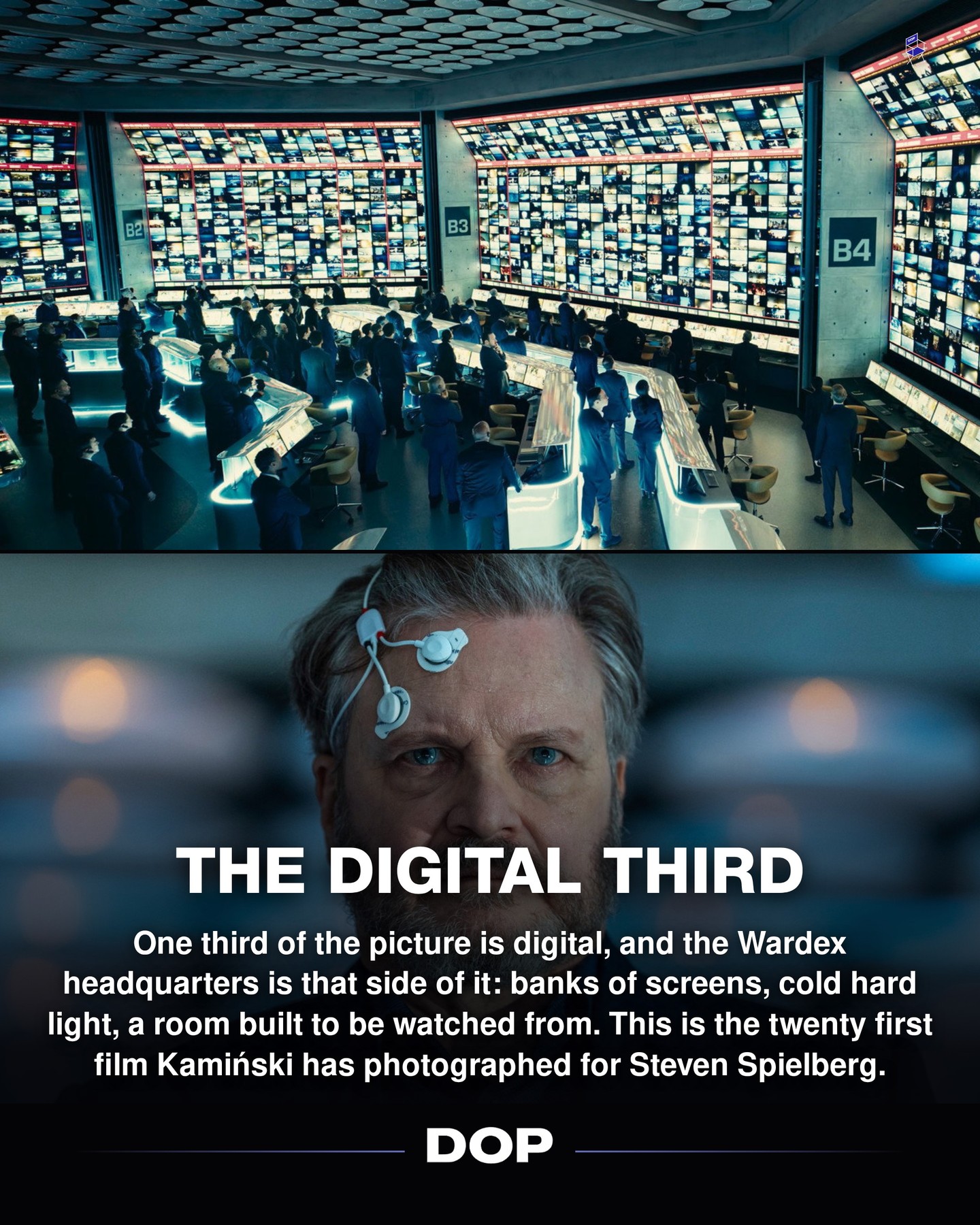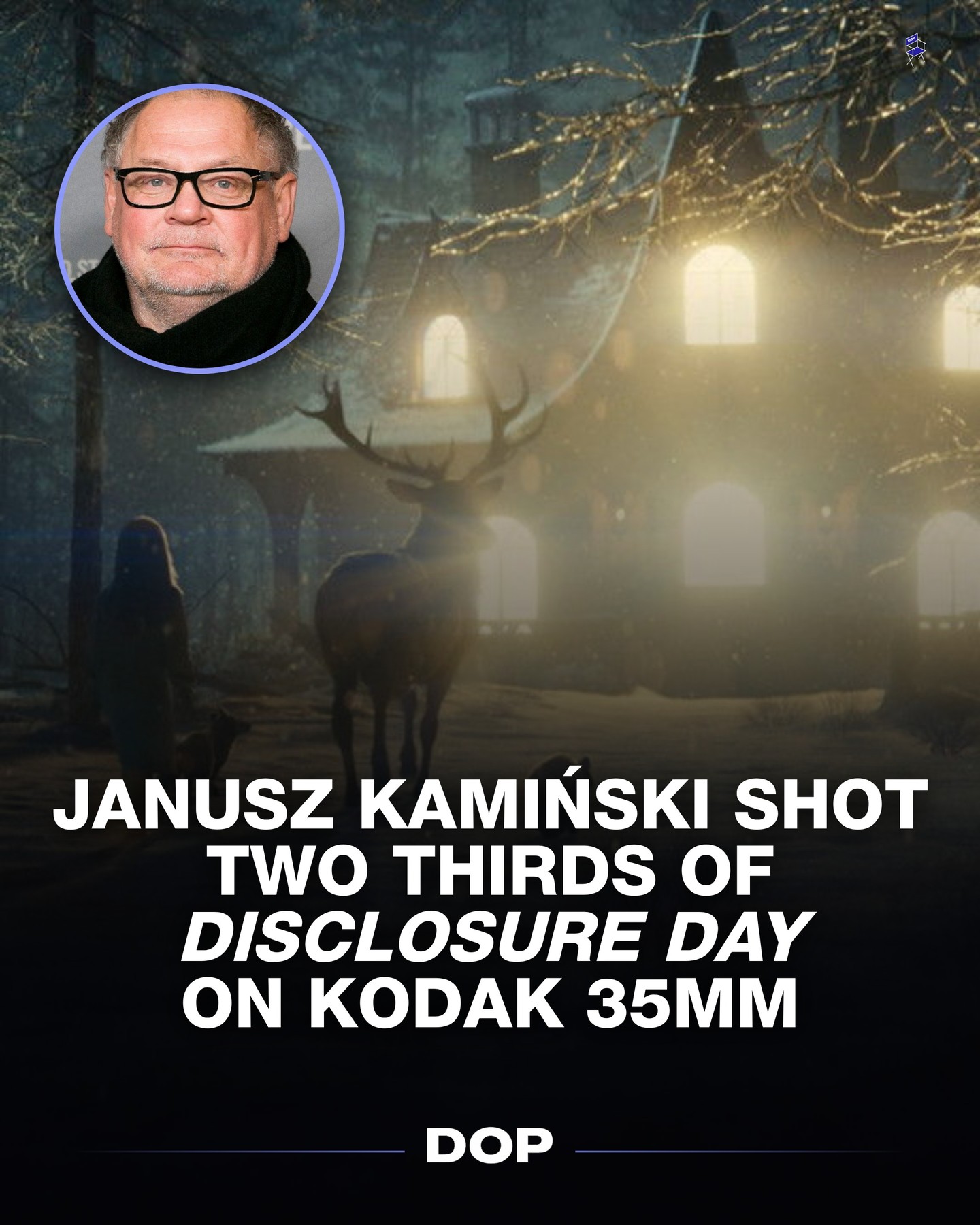
Across a historic thirty-year collaboration spanning 21 feature films, Steven Spielberg and Janusz Kamiński, ASC, have continually redefined cinematic language. From the bleach-bypass grit of Saving Private Ryan to the blown-out, expressionistic shafts of light in Minority Report and War of the Worlds, their visual signature is rooted in tactile texture and uninhibited contrast. On Disclosure Day, Kamiński approaches modern imaging with a distinctive hybrid strategy: capturing two-thirds of the picture on photochemical 35mm emulsion and the remaining third digitally, bound together by a bespoke LUT pipeline derived strictly from positive release prints.
Photochemical Foundations: Panavision Glass and Kodak Stocks
Framed in the duo's favored 2.39:1 widescreen aspect ratio, the photochemical foundation of Disclosure Day was captured on Panaflex Millennium XL2 studio bodies alongside lightweight ARRI 235 cameras deployed for visceral handheld and tight-space operating. To render the image, Kamiński reached for Panavision T Series anamorphic primes. Tuned specifically to blend modern optical performance with vintage optical aberrations, the T Series lenses deliver razor-sharp center resolution while falling off into organic astigmatism, gentle field curvature, and the trademark horizontal flare streaks that have defined Kamiński’s atmospheric framing for decades.
The DP harnessed a suite of four Kodak VISION3 negative stocks, 50D 5203 for exterior daylight scenes requiring deep dynamic range, 250D 5207 for overcast and interior daylight, 200T 5213 for mixed-light setups, and 500T 5219 for low-light nocturnal sequences. By intentionally exposing the stocks at varying ratings and embracing the inherent silver halide grain structure, Kamiński preserved a tangible, organic depth across every frame.
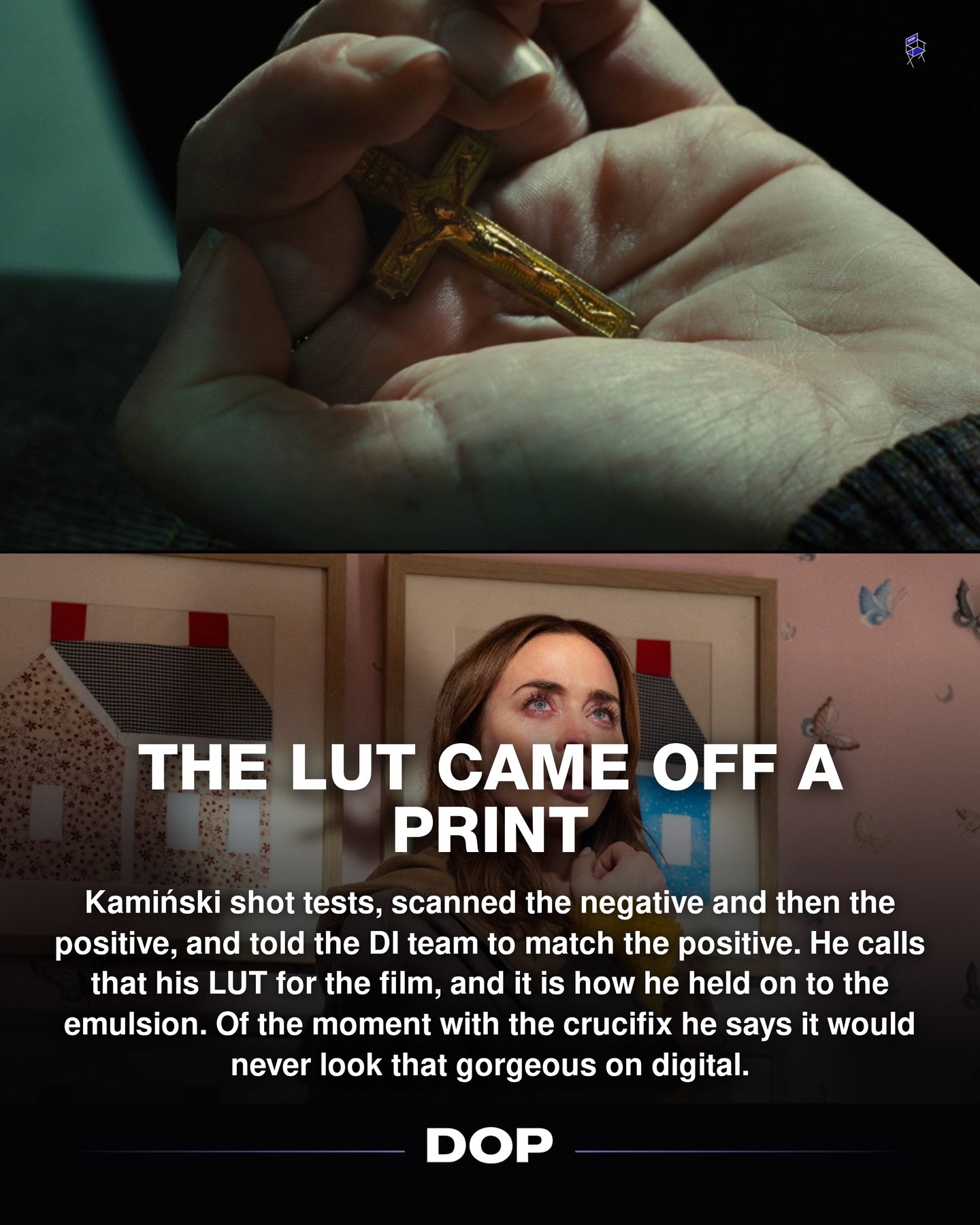
Kamiński rejected the DI color team’s initial pass, mandating that the digital show LUT must replicate the dense, high-contrast character of a photochemical positive print.
The Print-Matched Digital Color Architecture
Integrating a digital camera package into a predominantly 35mm pipeline presented a unique color-science challenge. Rather than allowing the digital segments to feel clinical or modern, Kamiński engineered a reverse-engineered workflow during pre-production testing. He shot extensive side-by-side emulsion tests, scanning both the raw negative and a struck positive 35mm print. When the digital intermediate facility presented an initial digital pass that leaned into modern HDR latitude and neutral midtones, Kamiński rejected it immediately.
Instead, Kamiński insisted that the team calibrate the primary digital show LUT directly to the optical response of the positive print stock. This approach introduces aggressive toe compression in the shadow regions, rich black density, and the unmistakable color crosstalk characteristic of photochemical dye layers. When cutting between the Millennium XL2 footage and the digital cameras, the perceptual bridge is nearly invisible, the digital capture behaves with the kinetic vitality and density of pushed motion picture film.
Atmosphere, Hard Light, and Expressive Contrast
Lighting-wise, Disclosure Day exemplifies Kamiński’s career-long philosophy of treating light as an active narrative force rather than mere illumination. Sets were perpetually charged with dense atmospheric haze, allowing high-output HMI sources and Maxi-Brutes to trace violent, tactile shafts through windows and industrial architecture. Kamiński continues to favor hot, overexposed rim lighting that wraps around his subjects, deliberately blowing past clipping thresholds to create ethereal, halated highlights.
The result is a masterclass in hybrid cinematography that honors the medium’s photochemical history while wielding modern toolsets with unapologetic intent. Disclosure Day confirms once again that Kamiński and Spielberg remain cinema's most fearlessly expressive visual partners.
This article contains affiliate links. We may earn a small commission at no extra cost to you. Learn more.