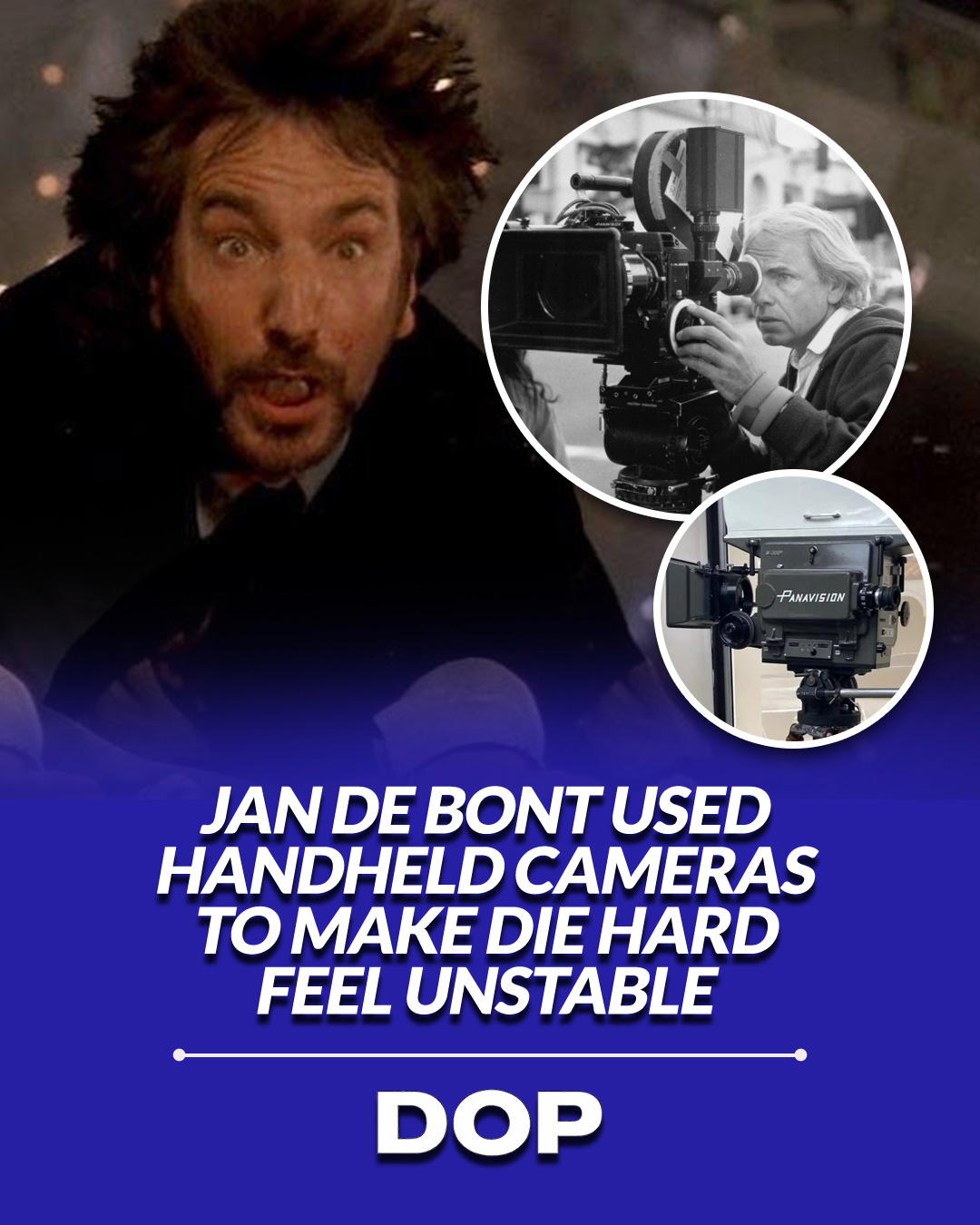
When John McTiernan’s Die Hard hit theaters in 1988, it fundamentally altered the language of American action cinema. While much of the film's enduring legacy is rightly credited to Bruce Willis’s charismatic, blue-collar heroism, the true engine of the film’s visceral tension lies behind the viewfinder. Director of Photography Jan de Bont, ASC, who would later direct action classics like Speed and Twister, approached Nakatomi Plaza not as a polished studio playground, but as a living, claustrophobic pressure cooker.
Prior to Die Hard, the prevailing aesthetic for eighties action was glossy, clean, and rigid. Cameras were often locked down on heavy studio pedestals or swept smoothly across sets on massive cranes, rendering action stars as invincible demigods. De Bont dismantled this paradigm by intentionally introducing instability, kinetic energy, and spatial authenticity to every frame.
The Camera as a Nervous Witness
Rather than relying on omniscient, god-like camera placements, de Bont favored long lenses shot handheld or on loose fluid heads. Operating inside the actual floors of Fox Plaza (which was still under construction at the time), the camera team was forced to navigate narrow hallways, low ceilings, and cramped elevator shafts. By opting for longer focal lengths in tight spaces, de Bont compressed the background, bringing the impending danger uncomfortably close to the protagonist.
The slight instability sells the idea that the camera is a nervous witness, not an omniscient crane.
Crucially, Die Hard was captured on 35mm film utilizing Panavision Panaflex cameras, substantial, heavy pieces of machinery. Operating a fully rigged Panavision setup handheld requires immense physical exertion, and that physical inertia translates directly onto the emulsion. Unlike the weightless, high-frequency micro-jitter often seen with modern lightweight digital camera builds and mirrorless bodies, de Bont’s handheld operating possesses a rolling, rhythmic human momentum. You feel the operator's breathing, the hesitation, and the violent recoil of action as it unfolds in real time.
This organic movement makes John McClane's desperate scramble through shattered glass and air ducts feel genuinely hazardous. The frame stumbles with him, hesitates when he hides, and surges forward when he runs. The camera isn't simply recording the action; it is participating in the survival effort.
Practical Lighting and Corporate Realism
De Bont’s subversion of genre tropes extended deeply into his lighting philosophy. Action films of the era routinely leaned on stylized, unmotivated studio lighting with deep neon backlights and heavy atmospheric fog. For Die Hard, de Bont embraced the cold, functional reality of a corporate high-rise.
He relied heavily on motivated practical light sources, overhead fluorescent tubes, emergency exit signs, desk lamps, and the stark night skyline of Los Angeles bleeding through massive floor-to-ceiling windows. To keep the space feeling grounded, de Bont allowed fluorescents to retain their natural, slightly harsh color cast, contrasting the cool, sterile greens and blues of the office floors with the warm, chaotic bursts of gunfire, explosions, and fire flares.
This high-contrast environment demanded exceptional dynamic range. Shooting on Kodak 35mm stock, de Bont carefully balanced the low-light interiors with the ambient light of the city outside, creating a deep sense of spatial geometry. Viewers always understand where McClane is in relation to the building's exterior and his captors, reinforcing the spatial logic that makes the set pieces so intensely effective.
Lessons for the Modern Digital Cinematographer
In an era dominated by smooth three-axis gimbals, motorized sliders, and infinite digital retouching, modern action cinema often struggles with a sense of weightlessness. Sequences are frequently so meticulously pre-visualized and digitally stabilized that the sense of genuine physical stakes evaporates.
Jan de Bont’s work on Die Hard remains a masterclass in controlled imperfection. It demonstrates that a deliberate touch of camera instability, combined with organic physical weight and authentic environmental lighting, yields an undeniable texture of danger. For contemporary DPs, the lesson is clear: allowing the frame to breathe, sweat, and occasionally stumble can turn a standard action set piece into a immortal cinematic event.
This article contains affiliate links. We may earn a small commission at no extra cost to you. Learn more.