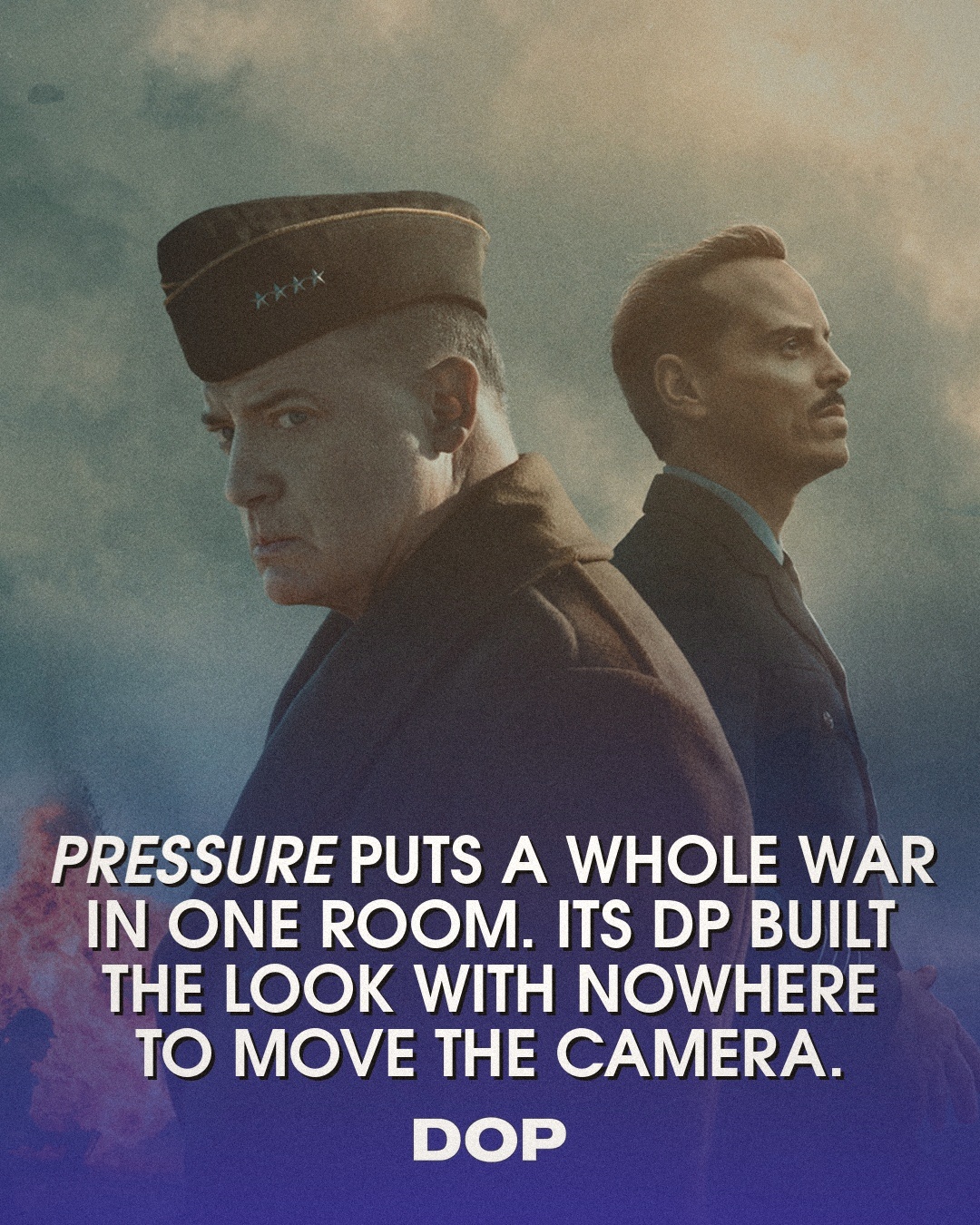
In the August issue of *American Cinematographer*, a true masterclass in spatial storytelling unfolds as Jamie D. Ramsay discusses his work on Anthony Maras's World War II drama, *Pressure*. For cinematographers, the challenge of shooting predominantly within a single, confined location is both a daunting constraint and a fertile ground for creative problem-solving. Ramsay, known for his ability to craft evocative visuals under diverse conditions, demonstrates how he transformed a seemingly limiting set into a dynamic canvas, building visual range and narrative tension where conventional wisdom might suggest stagnation.
The essence of Ramsay’s approach to *Pressure* lies in his meticulous understanding of light and shadow, and the psychological impact of framing. When a story is predominantly set in one room, every flicker of light, every shadow cast, and every subtle camera movement becomes amplified. It’s a testament to Ramsay’s skill that he could imbue such a static environment with a palpable sense of claustrophobia, hope, and despair, often relying on practical lighting elements and carefully sculpted shafts of light to define mood and time. His choice of lenses, likely leaning towards primes that offer both sharpness and character, would have been crucial in isolating characters within the tight confines, drawing the audience’s focus to their internal struggles.
Crafting Visual Dynamics from Constraint
Ramsay’s strategy for *Pressure* involved a deep dive into the emotional landscape of the narrative, using the confined space not as a hindrance, but as a crucible for intense human drama. He would have meticulously pre-visualized each scene, understanding how even a slight camera shift or a change in lighting intensity could drastically alter the audience's perception of space and character relationships. This isn't just about technical execution; it's about a philosophical approach to cinematography where the environment, however small, becomes an active participant in the storytelling. Think of how a single ray of sunlight cutting through a dusty window can signify hope, or how deep, enveloping shadows can speak volumes about impending dread.
“Building visual range out of a set with nowhere to go requires not just technical prowess, but an almost architectural understanding of how light and lens can sculpt perception and emotion.”
The technical choices would have been paramount. One can imagine Ramsay experimenting with various sensor sizes to achieve the desired depth of field, balancing the need for intimate close-ups with wider shots that still convey the oppressive nature of the location. Lens character, perhaps favoring vintage glass for a period-appropriate texture or modern anamorphics for a cinematic sweep within the tight quarters, would have been a key consideration. The color science, too, would have been carefully calibrated, perhaps a desaturated palette to underscore the grim realities of war, punctuated by specific color accents to highlight moments of tension or revelation.
Beyond the Confines: A Broader Look at Cinematography
While Ramsay’s work on *Pressure* offers a captivating case study, the August issue of *American Cinematographer* also casts a wider net, celebrating the breadth and depth of our craft. The legendary Janusz Kaminski, a frequent collaborator with Steven Spielberg, delves into his approach for *Disclosure Day*. Kaminski's filmography is a masterclass in dynamic, often high-contrast lighting and a visual language that perfectly complements Spielberg's narrative vision. His insights into their collaborative process are invaluable, offering a rare glimpse into the synergy between a director and a cinematographer at the pinnacle of their respective fields. We anticipate a discussion rich in his signature backlighting, strong key lights, and a keen sense of camera movement that serves the story's emotional core.
Furthermore, the issue shines a spotlight on the future of cinematography, naming nine Rising Stars. This recognition is crucial for the industry, highlighting talents like Alex Ashe, Juliette Lossky, and Rayana Rasamee, whose innovative approaches and distinctive visual voices are shaping the next generation of cinematic storytelling. Their inclusion underscores the magazine’s commitment to both honoring established masters and nurturing emerging talent, providing a platform for diverse perspectives and techniques.
The inclusion of lighting diagrams from six different productions is a treasure trove for any aspiring or working DP. These diagrams offer a practical, behind-the-scenes look at how cinematographers translate their vision into tangible lighting setups. They demystify the process, showing how various fixtures, modifiers, and power sources are deployed to achieve specific aesthetic and narrative goals. Whether it’s a complex multi-light setup for a dramatic interior or a subtle augmentation of natural light, these diagrams are blueprints for understanding the practical application of lighting theory.
Ultimately, the August issue of *American Cinematographer* serves as a powerful reminder of the artistry and technical ingenuity inherent in cinematography. From Ramsay’s masterful manipulation of confined spaces to Kaminski’s continued brilliance and the fresh perspectives of the Rising Stars, it’s a celebration of a craft that continues to evolve, innovate, and inspire. For those of us who live and breathe visual storytelling, it’s essential reading.
This article contains affiliate links. We may earn a small commission at no extra cost to you. Learn more.