When rendering pivotal historical moments on screen, the line between cinematic myth-making and archival truth is notoriously fragile. For director Anthony Maras’s historical drama Pressure, which recounts the nerve-shredding meteorological countdown to the Normandy landings, cinematographer Jamie D. Ramsay, BSC, SASC faced a foundational challenge: the historical archive is real, and the narrative footage needed to sit alongside it without betraying modern artifice. Rather than leaning on overt post-production degradation or superficial film emulation plugins, Ramsay engineered a deliberate, tactile visual strategy grounded in optical discipline and mixed-format capture.
The Deep-Focus Philosophy
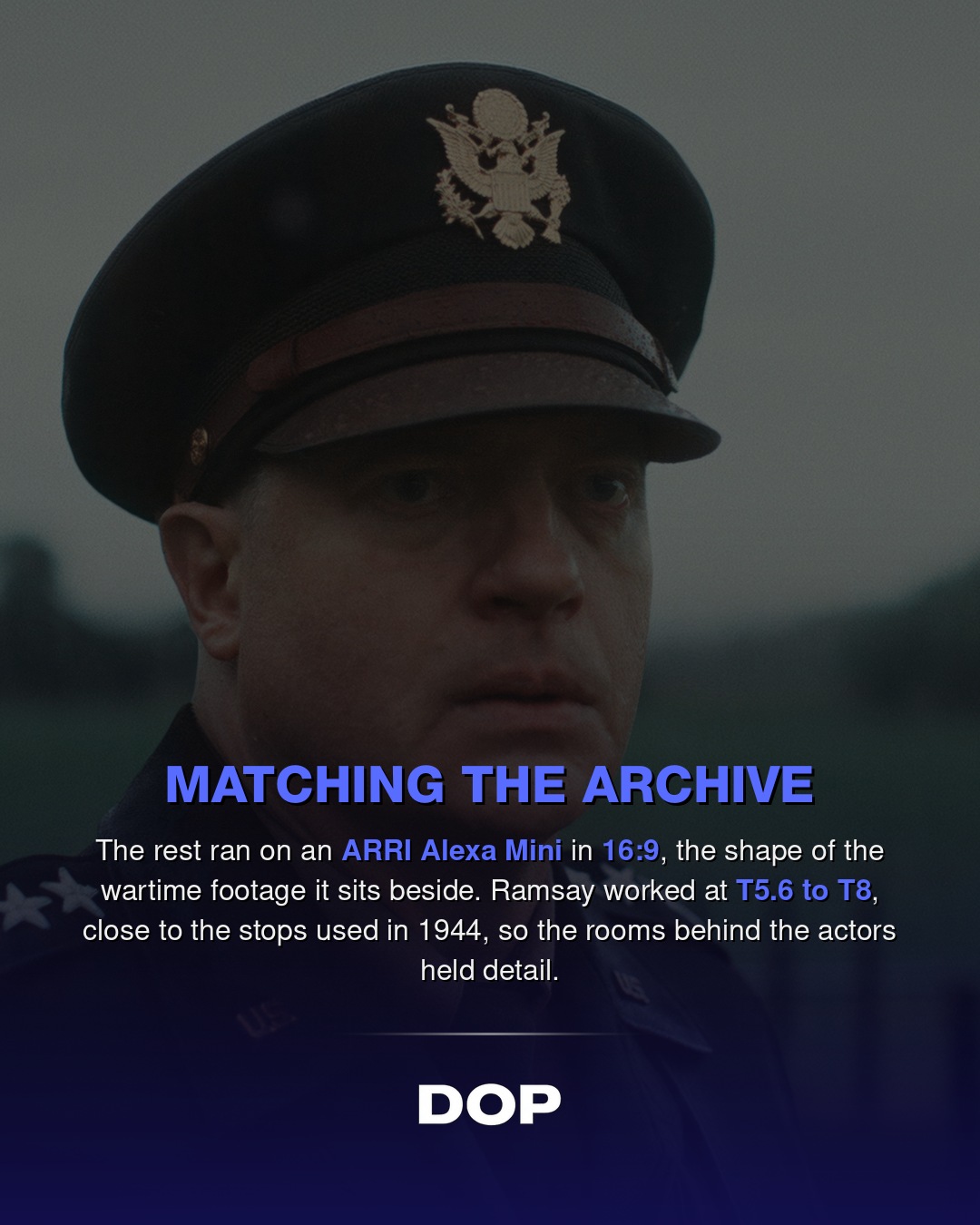
In modern digital cinematography, the reflexive impulse is often to shoot wide open, isolating faces against creamy, impressionistic bokeh. Ramsay pushed decisively in the opposite direction. Working primarily at deep stops between T5.6 and T8, Ramsay ensured that background architecture, tactical weather maps, and plotting tables remained sharp and legible. In a chamber piece where national destiny hinges on barometric readings and shifting isobars, the environment is not mere scenery; it is narrative fuel. By maintaining deep focus, the audience is forced into the spatial pressure cooker of the British meteorological team.
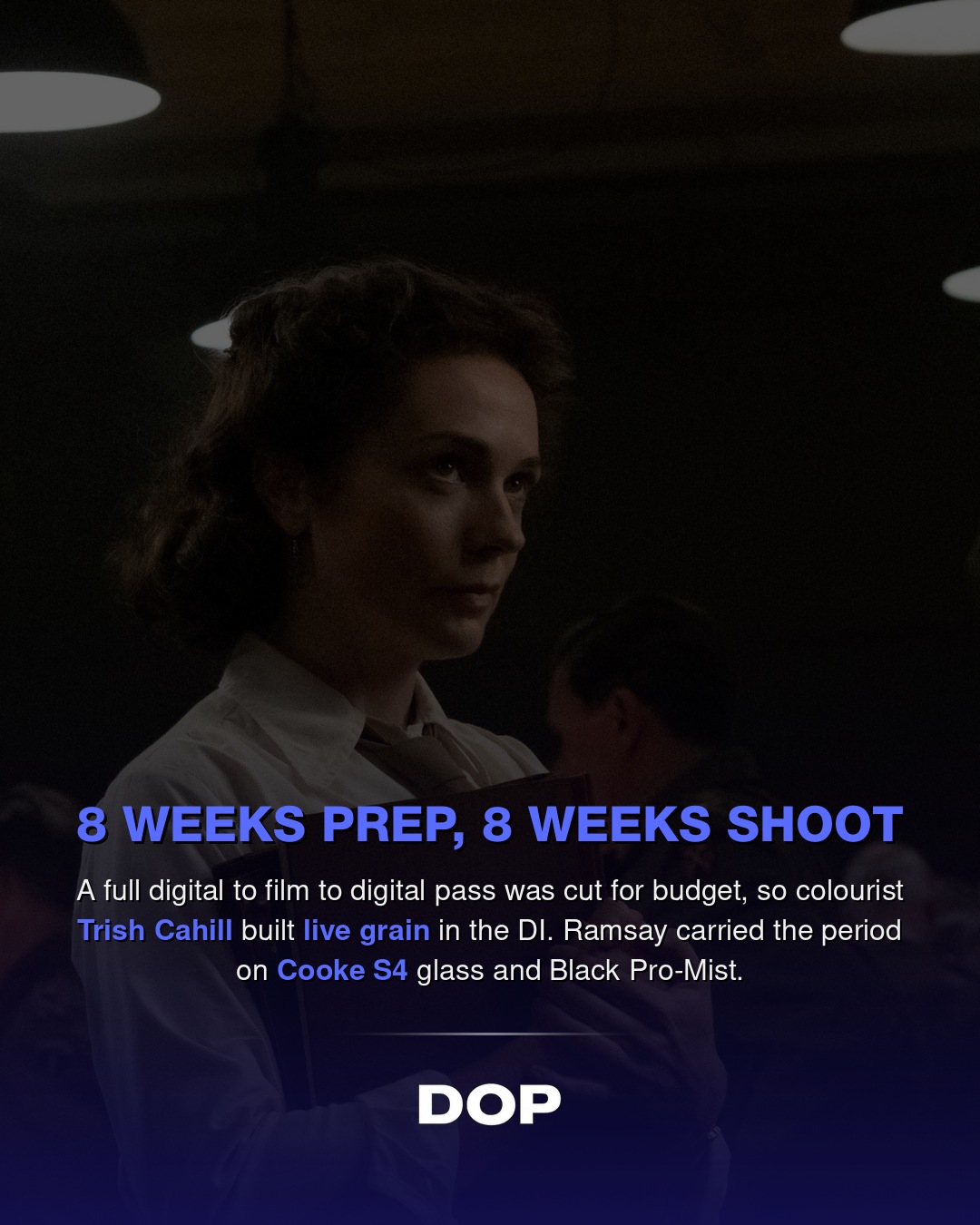
To execute this look, Ramsay paired the ARRI Alexa Mini with Cooke S4 primes, tamed slightly with subtle strengths of Tiffen Black Pro-Mist filtration. The Cooke S4s provided their signature gentle roll-off, warm skin tones, and controlled aberrations, while the Black Pro-Mist softened modern digital micro-contrast without reducing resolving power. This combination allowed Ramsay to capture crisp interior detail without the sterile edge that often plagues digital period pieces.
The archive is real, and the new footage had to disappear into it. We couldn’t treat history like an abstract blur; every map, instrument, and shadow had to carry genuine weight.
Mixing Emulsions: Super 16mm and the Alexa Mini
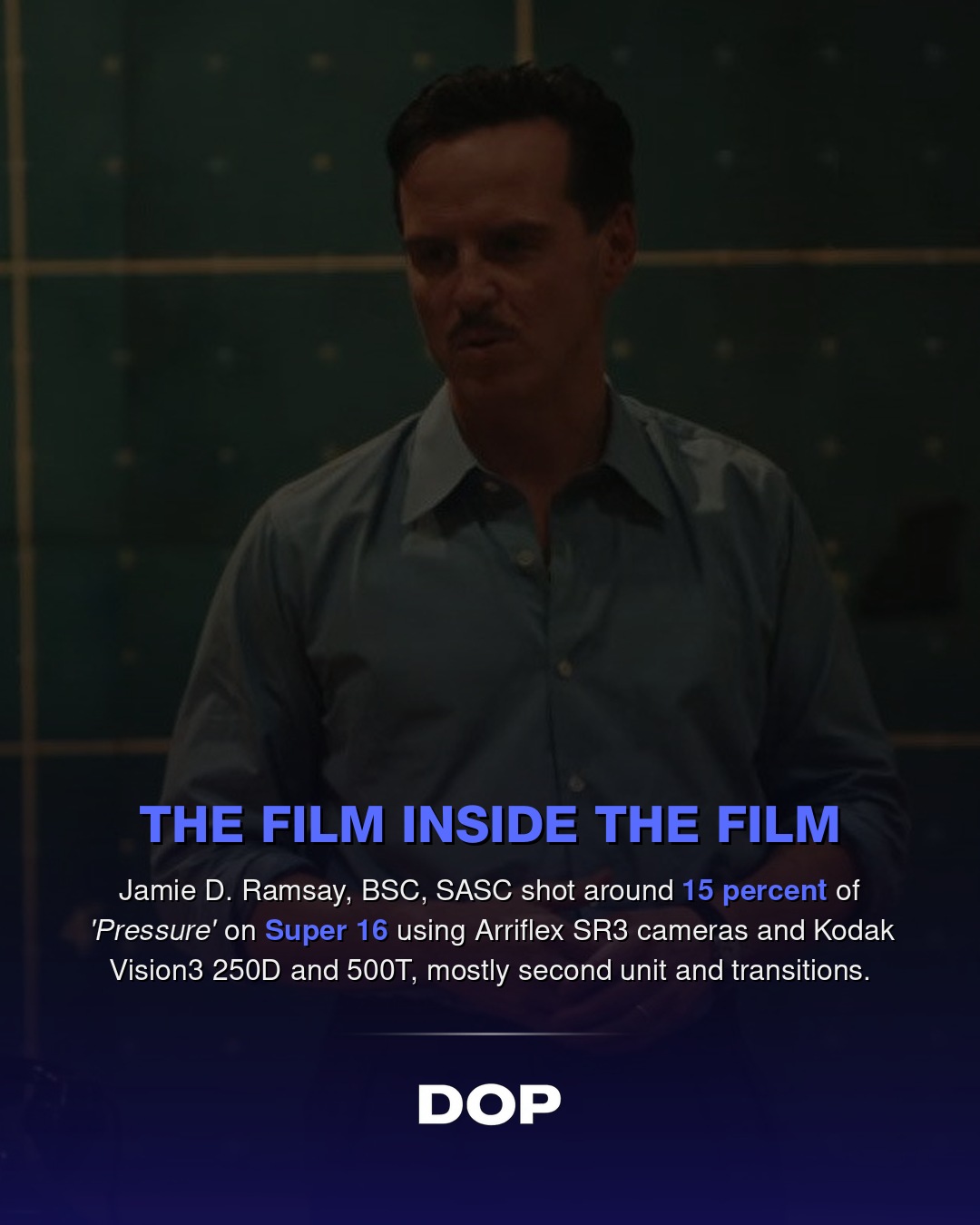
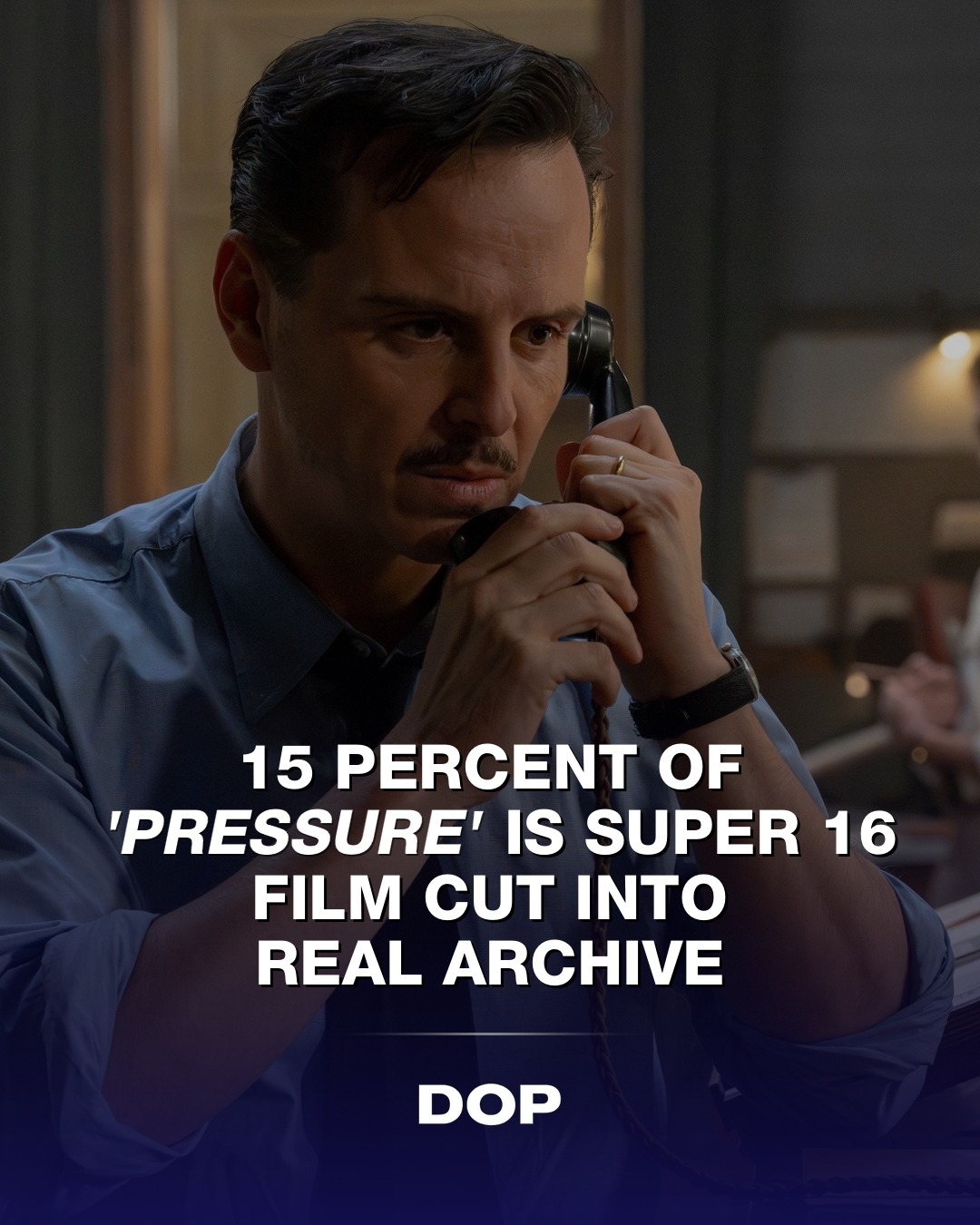
To seamlessly weave original historical footage into the fabric of the film, Ramsay opted to shoot approximately 15 percent of Pressure on celluloid, deploying Arriflex SR3 cameras loaded with Kodak Vision3 250D and 500T stocks. Super 16mm inherently carries a prominent grain structure, natural organic halation, and a highlight roll-off that mirrors mid-century newsreel documents. Rather than reserving 16mm exclusively for faux-archival inserts, the grain and texture of the celluloid were integrated strategically, bleeding organic authenticity into the digital 16:9 Alexa Mini pipeline.
Matching the two mediums required meticulous planning during an intensive eight-week pre-production phase. Ramsay, known for his sensitive lighting and color work on projects like Living and All of Us Strangers, developed custom LUTs that bridged the Alexa Mini’s ALEV III sensor with the dynamic range and color curves of Kodak Vision3. The digital footage received a film-grain pass mapped directly from Ramsay’s own 16mm scans, ensuring that the transition between digital drama, celluloid texture, and archival reel felt entirely seamless on screen.
Atmosphere and Practical Lighting on Location
Production took place primarily in a heritage house in Ealing, standing in for Southwick House, the Allied headquarters in Hampshire where General Dwight D. Eisenhower made the momentous decision to launch Operation Overlord. Lighting a real historical interior to maintain deep stops of T5.6 to T8 demanded serious punch from the lighting package. Ramsay and his crew rigged large HMI sources through diffusion frames outside practical windows, mimicking the bleak, overcast conditions of an English June while pushing enough foot-candles into the rooms to hold stop.
Inside, practical period tungsten desk lamps and brass sconces were augmented with concealed ribbon LEDs and soft, directional bounces to preserve the claustrophobia of wartime interiors. The result is a visual language that feels heavy, humid, and freighted with tension. By fusing mechanical discipline, historical accuracy, and photochemical grain, Ramsay proves once again that period cinematography achieves its greatest resonance when the camera chooses to honor reality rather than simply stylize it.
This article contains affiliate links. We may earn a small commission at no extra cost to you. Learn more.