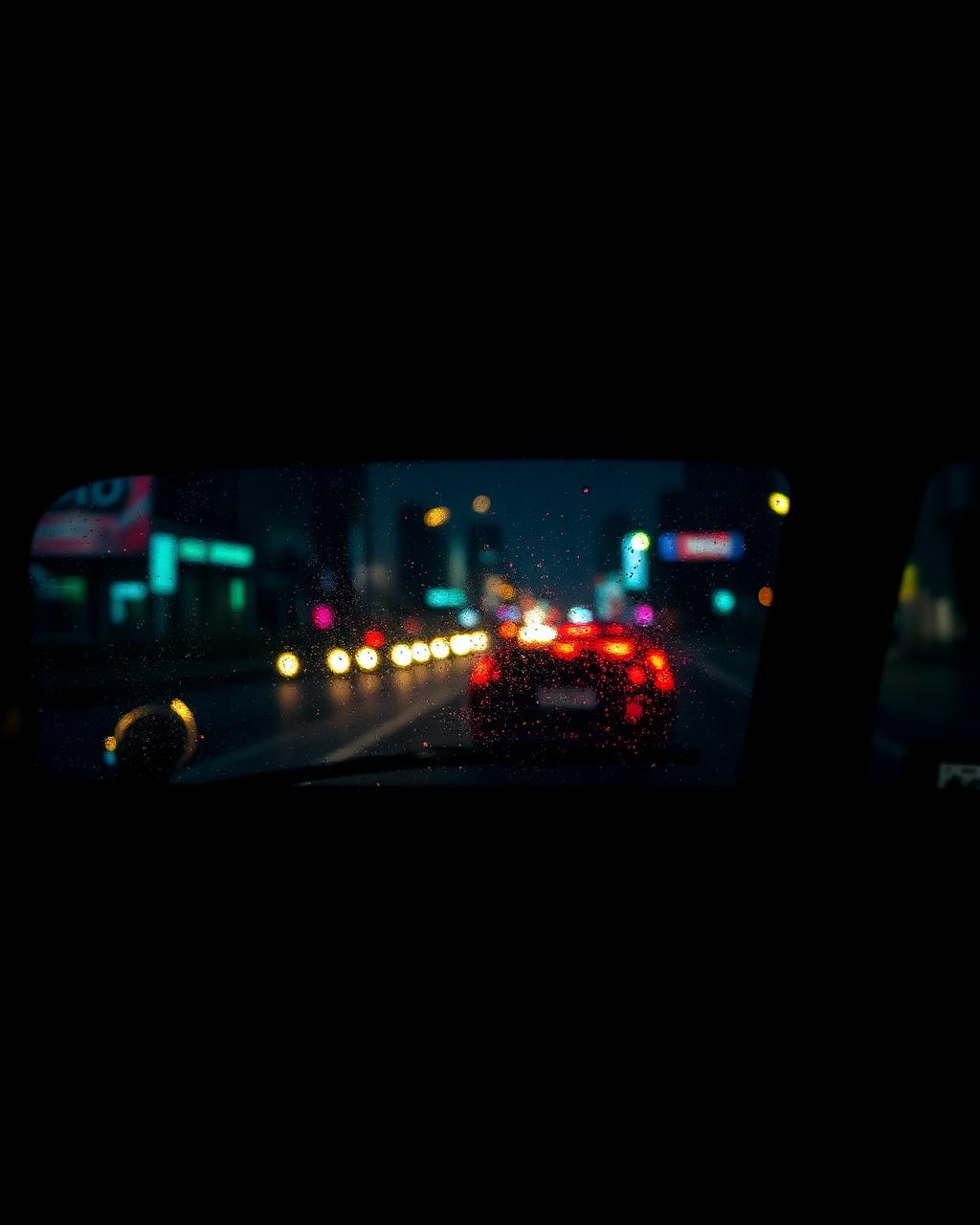
Maria Sarasvati Herrera faced a problem that most cinematographers will encounter at some point in their careers: how do you photograph a character's mental deterioration in real time, in a location you cannot control, while the location itself is moving? This is the challenge she solved in The Huntress at Sundance 2026, where a key sequence unfolds on an actual bus moving through Ciudad Juarez, Mexico.
The bus is not a controlled stage. It is an active vehicle carrying other passengers, moving through an uncontrolled city, with light changing as it travels, exterior environments shifting, and none of the typical production apparatus that would allow a cinematographer to manage exposure, composition, and visual consistency. The challenge, as the ASC described it, was to keep "the viewer immersed in the main character's mental deterioration, even during a complex sequence that unfolded on an active bus that moved throughout Ciudad Juarez, Mexico."
This constraint forces a fundamental decision about camera grammar: whose perspective does the camera represent? The conventional approach to shooting in a moving vehicle is to establish the geography of the space, to show us where the character is in relationship to other passengers, to ground us in the physical reality of the bus. Herrera chose differently. She committed to a camera grammar that follows the character's point of view and internal logic rather than the bus's actual route or the objective reality of its movement.
What this means practically is that the camera stops representing external space and starts representing internal state. The world outside the windows becomes irrelevant. The other passengers are present but not fully registered. The camera is inside the character's head, not observing the character from outside. This is a fundamentally different cinematographic decision than shooting "a scene on a bus." It is shooting the character's consciousness as if the bus is merely the location where that consciousness is unraveling.
The technical solution to this approach is camera placement, lens selection, and frameline discipline. By keeping the camera close to the character, by using angles that prioritize the character's face and body over the surrounding space, by cutting between intimate close-ups and disorienting wide shots that emphasize isolation rather than connectivity, Herrera creates a visual grammar that the viewer understands as interior rather than exterior. The bus is the setting, but the cinematography communicates that the setting is secondary to what is happening in the character's mind.
The uncontrolled light—changing as the bus moves through the city—becomes an asset rather than a problem. The inconsistency in exterior light reinforces the disorientation. If the cinematography were perfectly consistent, it would signal control, safety, a managed visual environment. Instead, the shifting light, the occasional harsh sun through windows, the moments when the character passes into shadow, these become evidence of a mind that cannot maintain stable perception.
For cinematographers facing unpredictable on-location challenges, the lesson Herrera demonstrates is that sometimes the constraint is the solution. The real bus, the uncontrolled light, the other passengers who might not stay out of frame—these are not problems to solve. They are the conditions that make the story possible. The cinematography does not fight the location. It commits to showing the location only as the character can perceive it, which is fragmentary, unreliable, and increasingly unstable.
Gear Recommendations
- DJI Ronin 4D-8K – Amazon
- Tiffen Variable ND Filter | Adorama – B&H Photo
- Blackmagic Pocket Cinema Camera 6K Pro | Adorama – B&H Photo
- SmallHD Ultra 7 Monitor | Adorama – B&H Photo
Note: Links above are affiliate links. Occupy Cinematography may earn a commission on qualifying purchases at no additional cost to you.