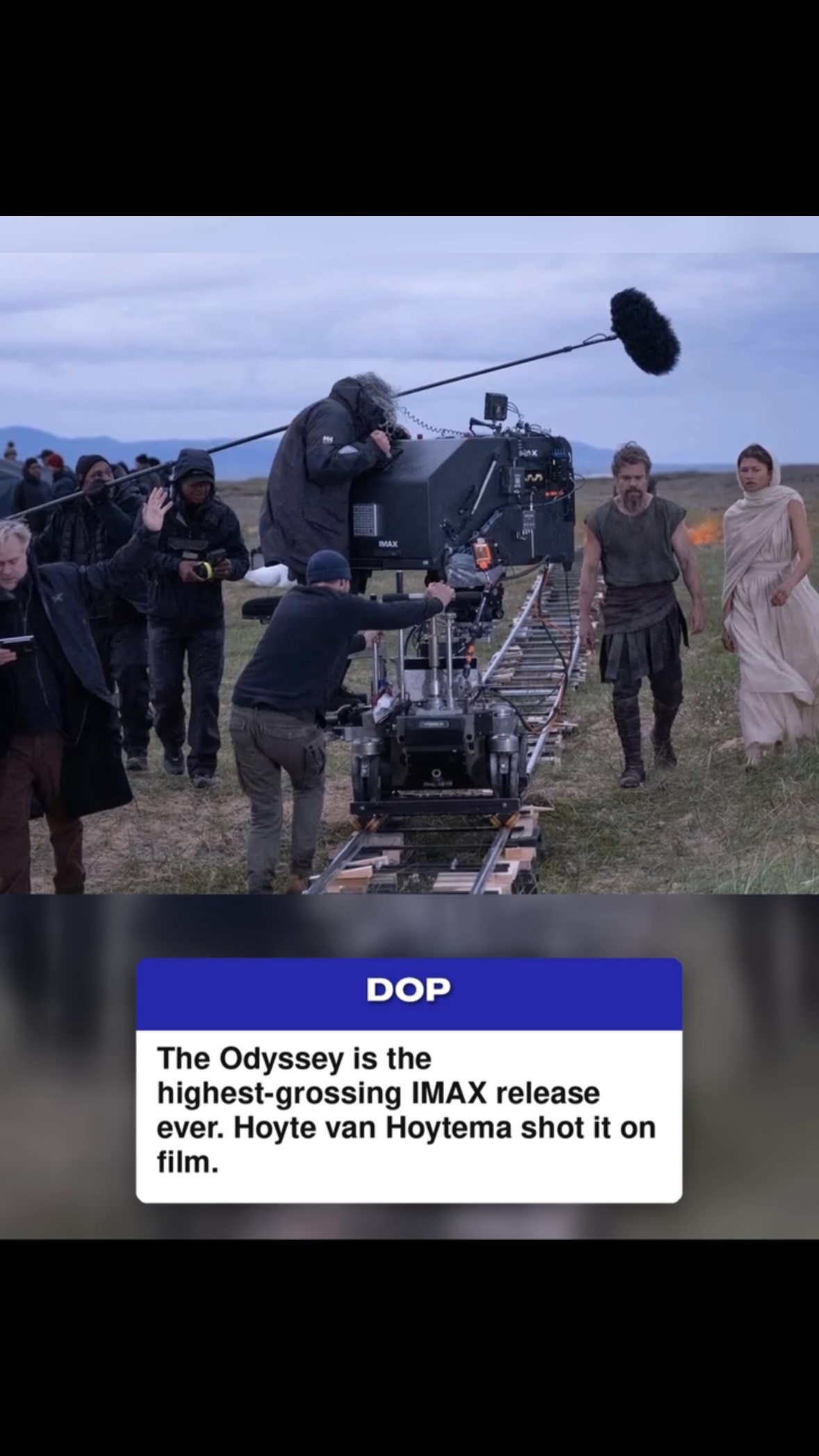
When Hoyte van Hoytema, ASC, FSF, NSC, embarks on a project, the industry leans in. His filmography is a masterclass in visual innovation, from the stark, tactile beauty of Tinker Tailor Soldier Spy to the breathtaking cosmic ballet of Interstellar and the nuanced historical tapestry of Oppenheimer. But with The Odyssey, van Hoytema didn't just push boundaries; he obliterated them, delivering a cinematic experience that was not only a technical marvel but also an unprecedented commercial success.
The Odyssey stands as a monumental achievement, primarily for being the first feature film ever shot entirely on IMAX film cameras. This wasn't merely a stylistic choice; it was a profound commitment to immersion, a decision that amplified every frame with unparalleled resolution and presence. The sheer audacity of this undertaking cannot be overstated. IMAX film cameras, known for their immense negative size (15-perf, 70mm), are notoriously bulky, loud, and demanding. Yet, van Hoytema and his team embraced these challenges, turning potential limitations into creative opportunities.
The Technical Triumph: Taming the IMAX Beast
One of the most significant hurdles in using IMAX film cameras for an entire feature, especially one requiring intimate dialogue scenes, is their operational noise. Traditional IMAX cameras are designed for spectacle, not quiet on-set recording. Van Hoytema, ever the innovator, tackled this head-on. He commissioned and developed custom sound housing, often referred to as 'blimps', to encase the cameras. This ingenious engineering allowed the massive 15/70mm cameras to run quiet enough to record pristine dialogue directly on set, a feat previously considered impractical, if not impossible, for extended narrative sequences. This technical breakthrough liberated the filmmakers, enabling them to capture the raw, unadulterated performances of the actors within the grand IMAX canvas, without resorting to extensive ADR.
“Hoyte van Hoytema didn't just push boundaries; he obliterated them, delivering a cinematic experience that was not only a technical marvel but also an unprecedented commercial success.”
The choice of lenses for The Odyssey would have been critical. Given the large format, van Hoytema likely opted for lenses capable of resolving the immense detail of the 15-perf 70mm negative, while also delivering the specific character he desired. IMAX-optimized lenses, often custom-built or heavily modified, would have been paired with the cameras to ensure sharpness across the expansive frame and to manage aberrations inherent in such large optics. The depth of field control on such a large sensor is also unique; even at wider apertures, the focus plane can feel incredibly deep, offering a different visual language compared to smaller formats.
Beyond the Technical: A Master's Visual Philosophy
Van Hoytema's cinematography is characterized by a meticulous approach to lighting, often favoring naturalistic sources and complex practical setups. For The Odyssey, working with the dynamic range and color rendition of IMAX film would have allowed for incredible latitude in capturing nuanced shadows and bright highlights, translating to a rich, textured image. The large format's ability to render fine detail, from fabric textures to environmental nuances, would have been paramount in building the immersive world of The Odyssey. His signature style, often employing a sense of visceral realism combined with epic scope, found its ultimate expression on this canvas.
The film's astounding box office performance, a staggering $1.677 billion globally, making it Universal's highest-grossing release in 114 years and the highest-grossing restricted-rating film ever, is a testament not just to the storytelling, but to the power of the cinematic experience it offered. This financial success sends a clear message to studios and exhibitors: audiences are willing to pay for premium, immersive cinema, especially when executed with such technical brilliance and artistic integrity. The Odyssey proved that the investment in large format film, despite its logistical challenges, can yield unparalleled returns, both artistically and commercially.
The Legacy of The Odyssey
The Odyssey, which opened on July 17th, has indelibly marked cinematic history. It's more than just a box office titan; it's a paradigm shift. Hoyte van Hoytema's work on this film will be studied for generations, not only for its technical ingenuity in taming the IMAX beast but for its profound impact on what audiences expect from a theatrical experience. It champions the immersive power of large format film and reinforces the idea that true cinematic spectacle, crafted with passion and precision, remains an irresistible draw in an increasingly fragmented media landscape. For cinematographers, it's a beacon, showing what's possible when vision meets relentless innovation.