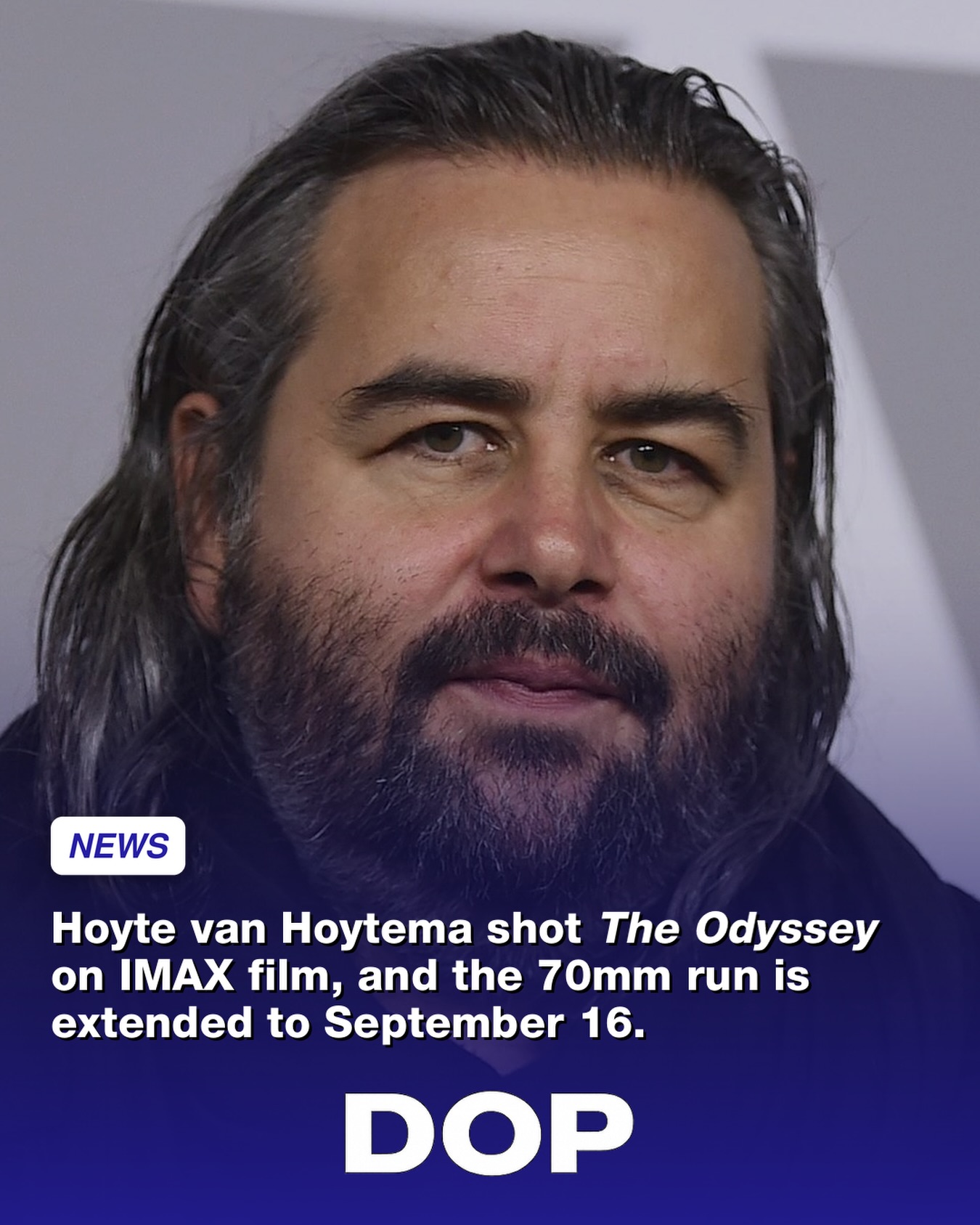
In an era increasingly dominated by digital acquisition, the name Hoyte van Hoytema has become synonymous with a fervent, almost evangelical, commitment to analog filmmaking, particularly the monumental canvas of IMAX. His collaboration with Christopher Nolan has not just redefined blockbusters but has also reignited a global passion for large-format celluloid. The recent extended run of his latest masterpiece, shot entirely on IMAX film cameras, is not merely a testament to its cinematic power, but a cultural phenomenon, a rallying cry for the tactile, immersive experience that only true 70mm IMAX can deliver.
Van Hoytema’s journey to becoming the high priest of large-format cinematography is a fascinating one. His early work, while critically acclaimed, often utilized more conventional digital or 35mm film formats. Yet, with each subsequent Nolan collaboration, from the cosmic grandeur of *Interstellar* to the visceral intensity of *Dunkirk*, the temporal gymnastics of *Tenet*, and finally, the atomic gravitas of *Oppenheimer*, his embrace of IMAX has deepened, becoming an integral part of his visual signature. He understands that IMAX isn't just a format; it's a philosophy, demanding a particular approach to composition, lighting, and narrative.
The Unyielding Power of IMAX 70mm
The decision to shoot *The Odyssey* entirely on IMAX film cameras was a bold, unprecedented move for a feature film. This wasn't merely about capturing spectacle; it was about immersing the audience in every texture, every subtle hue, every minute detail of the narrative. Van Hoytema's choice of the IMAX MKIII and MSM 9802 cameras, paired with Panavision Sphero 65 lenses, speaks volumes. These cameras, notoriously heavy and cumbersome, demand a meticulous, almost balletic, coordination from the camera department. Yet, the payoff is unparalleled: the sheer resolution, the incredible dynamic range, and the organic grain structure of 15-perf 70mm film stock create an image that feels alive, breathing with an almost three-dimensional quality that digital often struggles to replicate.
His lighting philosophy, particularly evident in his large-format work, often favors naturalistic sources and broad, expansive illumination that complements the wide aspect ratio of IMAX. Rather than relying on intricate, pinpoint lighting setups, he sculpts with light on a grand scale, allowing the environment to speak for itself while still maintaining a painterly quality. The color science, too, is inherently tied to the film stock itself, offering a richness and depth that digital grading often strives to emulate but rarely achieves with the same organic feel.
“IMAX isn't just a format; it's a philosophy, demanding a particular approach to composition, lighting, and narrative.”
The extended theatrical run of *The Odyssey* in IMAX 70mm is a direct consequence of this artistic commitment. In an age of streaming and home theaters, the unique experience of seeing a film projected in its intended format on a screen that fills your peripheral vision is a powerful draw. It's a communal, almost spiritual, event that transcends mere entertainment. The fact that only 41 venues worldwide are equipped to project IMAX 70mm film, and that IMAX itself had to train a new generation of projectionists, underscores the rarity and preciousness of this experience. It's a testament to the enduring power of film as a physical medium.
A Legacy Forged in Celluloid
Van Hoytema's filmography is a masterclass in visual storytelling, each project pushing the boundaries of what large-format cinematography can achieve. From the intimate, claustrophobic interiors of *Tinker Tailor Soldier Spy* (shot on 35mm) to the vast, awe-inspiring vistas of *Interstellar*, he consistently demonstrates an uncanny ability to match visual style to narrative intent. His work is characterized by a deep respect for natural light, a preference for practical effects over CGI whenever possible, and an unwavering commitment to the immersive power of the frame.
Looking ahead, the announcement that *Dune Part Three* will take on the IMAX mantle in December further cements this format's resurgence. It signals a growing recognition among filmmakers and studios that certain stories demand the grandeur and visceral impact that only large-format film can provide. Hoyte van Hoytema isn't just a cinematographer; he's a guardian of a cinematic tradition, proving that even in the digital age, the magic of celluloid, especially at its largest scale, remains irresistible.
His work inspires not just DPs and camera operators, but anyone who believes in the transcendent power of cinema. It's a reminder that the tools we choose profoundly shape the stories we tell, and that sometimes, the oldest tools offer the most profound experiences. The continued demand for *The Odyssey* in IMAX 70mm is a clarion call: long live film.
This article contains affiliate links. We may earn a small commission at no extra cost to you. Learn more.