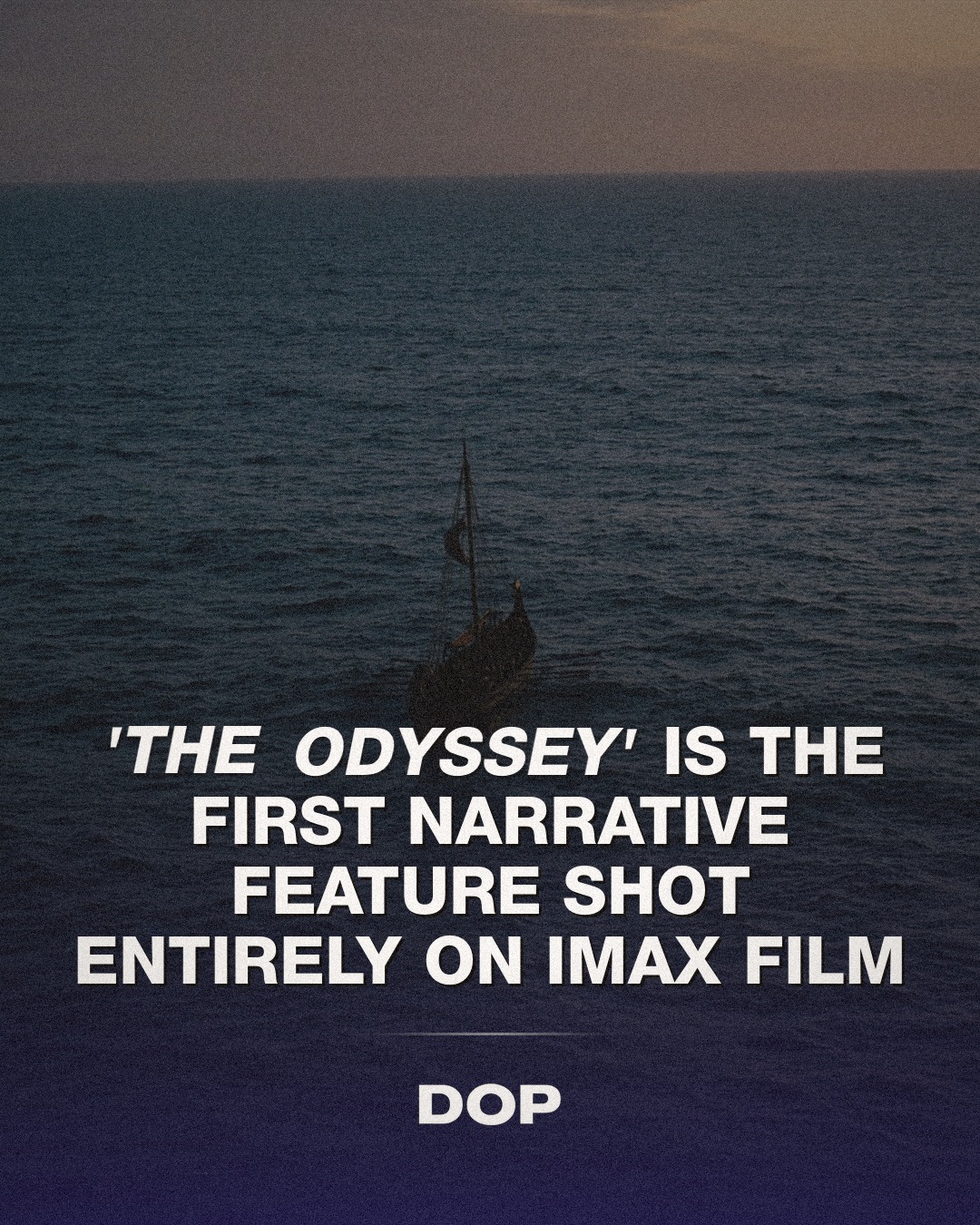
In the rarefied air of large-format cinematography, few names resonate with the authority and innovation of Hoyte van Hoytema, ASC, FSF, NSC. His collaborations with Christopher Nolan have consistently pushed the boundaries of cinematic spectacle, but with 2023's Oppenheimer, van Hoytema didn't just push; he redefined what was possible. The film stands as a monumental achievement, not least because every single frame was captured on Kodak 65mm, 15-perf film, making it the first narrative feature to embrace this colossal format from start to finish.
This wasn't merely a stylistic choice; it was a foundational commitment to immersive storytelling. The 15-perf IMAX format, with its expansive 1.43:1 aspect ratio, offers an unparalleled canvas, yielding an image resolution and depth that digital simply cannot replicate. For a story as grand and as intimate as J. Robert Oppenheimer's, the medium became an intrinsic part of the message. Van Hoytema, a veteran of Nolan's large-format ambitions since Interstellar, understood that the sheer physical presence of this film stock would imbue the narrative with a tactile reality, a historical weight that transcended conventional cinema.
The Audacity of Film: Sound and Silence in IMAX
One of the persistent challenges of shooting with IMAX cameras is their notorious acoustic footprint. These mechanical marvels, designed for maximum image acquisition, are hardly discreet. Their whirring mechanisms can often interfere with dialogue recording, leading some filmmakers to relegate them to action sequences or wide shots. However, van Hoytema and Nolan are not ones to shy away from a challenge; they confront it head-on. The decision to shoot Oppenheimer entirely on IMAX meant that this noise issue had to be addressed with ingenuity.
"You have to embrace the limitations as part of the creative process. The challenge of IMAX sound wasn't a problem to be solved, but a characteristic to be integrated into our method."
Van Hoytema famously conducted a test, capturing a child reading David Bowie's 'Sound and Vision' lyrics, to prove that usable sync sound could indeed be achieved. This wasn't about eliminating the camera's sound entirely, but about understanding its characteristics and mitigating its impact through meticulous microphone placement, sound baffling, and a carefully choreographed shooting process. It speaks volumes about the commitment to authenticity, if the image was to be as raw and unfiltered as possible, so too must the sound. This dedication ensures that the audience isn't just watching a film; they are experiencing it, with every subtle nuance of performance preserved.
Crafting Bespoke Optics: The Panavision Partnership
To truly harness the potential of the 15-perf IMAX negative, off-the-shelf lenses simply wouldn't suffice. The sheer size of the film gate demands optics capable of resolving immense detail across a vast field of view, free from distortion or falloff. This led to a bespoke collaboration with Panavision, a partnership that has historically yielded some of cinema's most iconic glass. Panavision engineered custom spherical lenses specifically designed for Oppenheimer's native 1.43:1 frame.
The core set, primarily a 50mm and 80mm, demonstrates van Hoytema's preference for focal lengths that feel naturalistic and immersive, avoiding extreme wide-angle distortions that might pull the audience out of the drama. These lenses were meticulously crafted to offer exceptional clarity and contrast, while retaining a cinematic character that complements the Kodak film stock. The choice of spherical over anamorphic was deliberate; spherical lenses are often favored for their pristine resolution and lack of optical artifacts, allowing the immense detail of the IMAX negative to shine through unimpeded. This technical synergy between film, camera, and custom glass is a testament to the uncompromising vision driving Oppenheimer's visual language.
The Color of History: Black & White IMAX and Color Science
One of the most striking visual elements of Oppenheimer is its alternating use of color and black-and-white cinematography. This wasn't a post-production trick but a fundamental decision made at the acquisition stage. Van Hoytema and Kodak collaborated to develop the first-ever black-and-white 65mm IMAX film stock, a monumental undertaking. The black-and-white sequences, often used to depict the more subjective and internal experiences of Oppenheimer, offer a stark, timeless quality, emphasizing texture and light over chromatic information. This deliberate shift in color palette acts as a powerful narrative device, guiding the audience through different perspectives and timelines.
The color sequences, conversely, are rich and vibrant, capturing the vibrant intellectual energy of the scientific community and the devastating power of the atomic bomb. Van Hoytema's lighting philosophy often leans towards naturalism, shaping light to reveal character and environment without drawing undue attention to itself. His meticulous attention to exposure and the inherent latitude of Kodak film stock allowed for a vast dynamic range, preserving highlights and shadows with exquisite detail. This careful balance of technical prowess and artistic intent solidified Oppenheimer's place as a landmark in cinematic craft.
A Legacy of Large Format
Hoyte van Hoytema’s work on Oppenheimer is more than just a technical showcase; it's a profound declaration of faith in the power of film and the immersive potential of large-format storytelling. From Interstellar's cosmic grandeur to Dunkirk's visceral chaos and Tenet's temporal gymnastics, his career with Nolan has been a masterclass in leveraging the medium to serve the narrative. By embracing the logistical challenges and technical demands of 15-perf IMAX for an entire film, van Hoytema didn't just make a movie; he crafted an experience, reminding us that in an increasingly digital world, the tangible magic of film continues to offer unparalleled depth, texture, and emotional resonance.